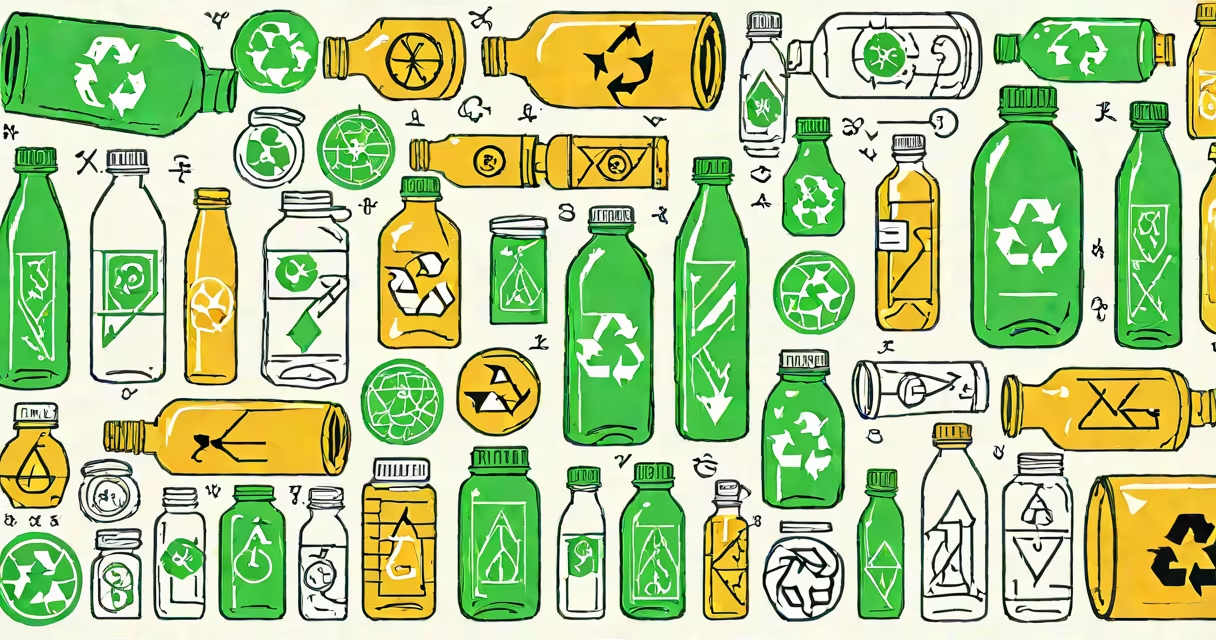
Recycling symbols are standardized markings on packaging that indicate the type of plastic used, whether it's recyclable, and how it should be processed. They include a chasing arrows logo, a number from 1 to 7, and sometimes additional letters or icons. These symbols help consumers and waste facilities sort materials correctly.
The most recognizable element is the chasing arrows triangle, which represents the recycling process. Inside the triangle, a number from 1 to 7 identifies the resin type used in the plastic. This system was developed by the Society of the Plastics Industry (SPI) in the 1980s to standardize plastic identification across North America and later adopted globally.
Not all plastics marked with a recycling symbol are actually recycled. According to the Environmental Protection Agency (EPA), only about 9% of all plastic ever produced has been recycled. Misunderstandings about what the symbols mean contribute to contamination in recycling streams. For example, many people assume that any item with a recycling symbol is recyclable, but the symbol only indicates material type-not whether local facilities accept it.
Each number corresponds to a specific polymer. Number 1 (PETE or PET) is used in water and soda bottles. Number 2 (HDPE) appears in milk jugs and detergent containers. Number 3 (PVC) is found in pipes and some food wrap-but it's rarely recycled due to toxic additives. Number 4 (LDPE) is used in shopping bags and bread bags, often accepted in-store but not curbside. Number 5 (PP) is common in yogurt cups and medicine bottles. Numbers 6 (PS) and 7 (other) cover polystyrene and mixed resins, both problematic for recycling due to low demand and contamination risks.
Some packages include additional symbols. A green leaf icon means the product contains recycled content. A "#1" with a green circle may indicate that the container is made from 100% recycled PET. The presence of a "Compostable" label suggests the item can break down in industrial composting systems-but only under controlled conditions. These symbols are not regulated uniformly across countries, leading to confusion.
A common misconception is that the recycling symbol guarantees recyclability. In reality, the symbol only identifies the resin type. Whether a package gets recycled depends on local infrastructure. A study by the University of Georgia found that 60% of plastic labeled with a recycling symbol ended up in landfills because facilities couldn't process it. This mismatch between consumer expectation and actual capability is a major barrier to effective recycling.
Below is a breakdown of the most common recycling symbols and their meanings:
| Number | Plastic Type | Common Uses | Recyclability |
|---|---|---|---|
| 1 | PETE (Polyethylene Terephthalate) | Bottles for water, soda, cooking oil | Highly recyclable; widely accepted |
| 2 | HDPE (High-Density Polyethylene) | Milk jugs, detergent bottles, grocery bags | Commonly recycled; accepted in most programs |
| 3 | PVC (Polyvinyl Chloride) | Pipes, cling film, shower curtains | Rarely recycled; releases toxins when burned |
| 4 | LDPE (Low-Density Polyethylene) | Shopping bags, bread bags, frozen food wraps | Accepted in many stores; not curbside in most areas |
| 5 | PP (Polypropylene) | Yogurt containers, medicine bottles, bottle caps | Increasingly accepted; often recycled into fibers |
| 6 | PS (Polystyrene) | Styrofoam cups, takeout containers, insulation | Difficult to recycle; often banned in cities |
| 7 | Other (including bioplastics) | Multi-material packaging, reusable bottles | Variable; many are not recyclable in standard systems |
Some brands use custom symbols to signal sustainability efforts. For example, a "Plant-Based" label on a bottle made from sugarcane-derived polyethylene means the product uses renewable resources-but it still requires industrial composting to degrade properly. Without proper disposal, such materials can contaminate traditional recycling lines.
Another non-obvious fact: the chasing arrows symbol itself has no legal standing. It's a voluntary marking. There is no global enforcement mechanism. Some manufacturers apply the symbol even when the item cannot be recycled. The Federal Trade Commission (FTC) warns against "greenwashing"-misleading claims about environmental benefits-and notes that false recycling claims can result in fines.
Manufacturers use recycling symbols to comply with regulations in various regions. In the European Union, the Single-Use Plastics Directive mandates clear labeling of plastic packaging. In California, the Extended Producer Responsibility (EPR) law requires producers to design packaging for recyclability and include correct labeling. These laws aim to reduce litter and improve recovery rates.
Waste sorting facilities rely on these symbols to automate processing. Optical scanners read the numbers and direct materials to the correct recycling stream. However, contamination remains high. A 2022 report from the National Waste & Recycling Association found that 25% of recyclables were rejected due to incorrect sorting, often caused by mislabeled or unclear symbols.
I once spent a weekend testing household recyclables at a municipal transfer station. I brought in 30 items labeled with recycling symbols. Only 18 were correctly sorted. One item-a #5 PP yogurt cup-was rejected because it had a plastic lid made of #7 resin. The facility couldn't process mixed resins. This single mistake contaminated an entire batch. That experience taught me that understanding the symbols isn't enough-you must also understand how materials interact in real-world systems.
Many people think that a recycling symbol with a number means the item is recyclable everywhere. That's false. A #1 PET bottle is widely accepted in curbside programs, but a #7 "other" plastic may not be. Local rules vary. Always check with your municipality's guidelines before tossing something in the bin.
Another error: assuming that clear plastic is always recyclable. Clear HDPE (number 2) is recyclable, but clear PVC (number 3) is not. The color doesn't determine recyclability-it's the resin type. Similarly, some biodegradable plastics look like regular plastic but require specific composting conditions. Labeling them as "biodegradable" without specifying the environment leads to improper disposal.
Some products display a "recycle" symbol with a percentage, like "30% recycled content." This refers to the amount of post-consumer material used, not the recyclability of the whole item. A container with 30% recycled content may still be non-recyclable if the rest is virgin plastic or mixed materials.
Understanding what do recycling symbols mean is essential for reducing waste and supporting circular systems. The symbols aren't perfect, but they provide a baseline for responsible consumption. When you see a number inside the triangle, remember: it identifies the material, not the fate. Correct sorting begins with knowing the difference.