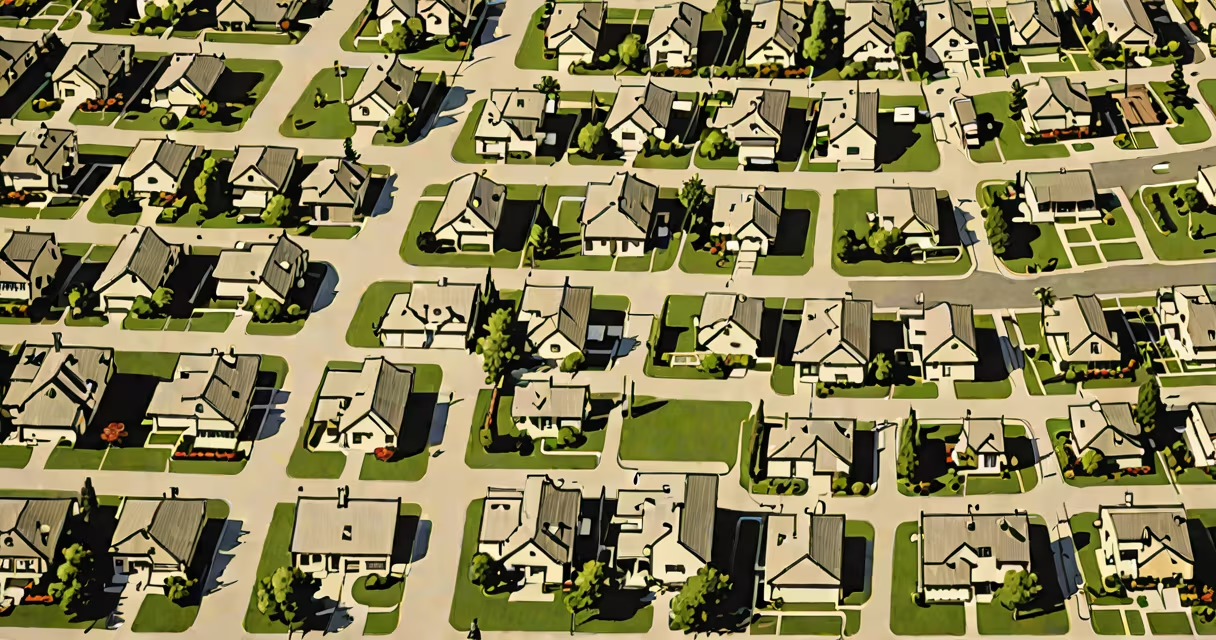
In real estate, a parcel is a specific, legally recognized piece of land with defined boundaries, often described by a legal description, plat map, or parcel ID. It is the fundamental unit of land ownership used in deeds, zoning, and taxation.
Parcels are created through land surveys and recorded in public records. Each has a unique identifier-such as a parcel number or PIN-that allows local governments and title companies to track ownership, assess property taxes, and enforce zoning laws. A single tract of land may be divided into multiple parcels during a subdivision process.
The term "parcel" applies to any standalone plot, whether residential, commercial, agricultural, or vacant. It is not interchangeable with "lot," though the two are often used together. A lot is typically a plot of land designated for development, while a parcel is a broader legal concept encompassing any defined land area.
Parcels are established using formal survey methods. Surveyors measure distances and angles from known reference points-such as monuments, road intersections, or GPS coordinates-to establish precise boundaries. These measurements are compiled into a legal description, which may follow one of several formats:
For example, a homeowner in rural Idaho might have a parcel described as "Section 12, Township 3 North, Range 4 West, T4N R4W." This format allows government agencies to locate the property without relying on street addresses.
Parcels vary based on purpose, size, and regulatory context. The following table outlines common parcel types and their applications:
| Type | Description | Common Use |
|---|---|---|
| Residential parcel | Land zoned for homes, typically under 1 acre | Single-family homes, condos, rental properties |
| Commercial parcel | Land intended for businesses, retail, or offices | Shopping centers, office parks, gas stations |
| Agricultural parcel | Land used for farming, grazing, or forestry | Crop production, livestock, timber harvesting |
| Vacant parcel | Unimproved land with no structures | Future development, conservation, or investment |
| Conservation parcel | Protected land set aside for ecological or historical reasons | Nature reserves, wildlife corridors, historic sites |
Parcels can also be classified by ownership status. For instance, a "fee simple" parcel means full ownership rights, while a "leasehold" parcel is owned by a landlord but leased to a tenant for a fixed period.
Every real estate transaction hinges on accurate parcel identification. A deed must describe the correct parcel to transfer ownership legally. If the legal description is incorrect-even by a few feet-the title may be unmarketable or subject to disputes.
Consider a case in Austin, Texas, where a buyer purchased a home based on a plat map showing a 0.7-acre parcel. After construction began, a survey revealed the actual parcel was 0.68 acres due to a measurement error. The discrepancy led to a delay in closing and required a correction filed with the county recorder's office. This illustrates how critical precision is in defining parcels.
Parcels also affect property value. A larger parcel with access to water or scenic views commands higher prices. Conversely, a parcel with easements-rights granted to others for utility lines or pathways-can limit development potential and reduce marketability.
Many people confuse "parcel" with "property." While related, they are not synonymous. A property can include multiple parcels-such as a farm with several fields or a developer's portfolio of lots. A parcel is a single, defined unit; a property is a collection of assets, including buildings, improvements, and land.
Another misconception is that parcel boundaries are visible on the ground. They are not. Fences, gates, and landscaping mark perceived edges, but legal boundaries are determined by surveys and recorded documents. A fence may encroach on a neighbor's parcel, creating a boundary dispute that requires a court ruling or settlement.
One non-obvious fact: parcel numbers change over time. Counties update parcel IDs during reassessments or when merging adjacent subdivisions. A parcel with a 2005 ID may have a different number in 2024. Always verify current records through the county assessor's website or a title search.
Take a 10-acre plot in Charlotte, North Carolina, owned by a developer. The site is subdivided into 20 residential parcels, each approximately 0.5 acres. The process begins with a civil engineer preparing a plat map, which shows lot lines, setbacks, and utility access. The map is submitted to the city planning department for approval.
Once approved, the county records each parcel with a unique number (e.g., 12345-01 through 12345-20). The developer sells lots individually. Each buyer receives a deed describing their parcel using the lot and block format. The county assessor assigns a tax ID based on the parcel number.
If a buyer later wants to build a pool, they must confirm the parcel's zoning allows such improvements. The city planner checks the parcel's legal description and verifies compliance with setback rules. Without a correctly defined parcel, this process would be impossible.
Understanding what a parcel means in real estate prevents costly errors in buying, selling, or developing land. It ensures clarity in ownership, reduces litigation risk, and supports transparent transactions.