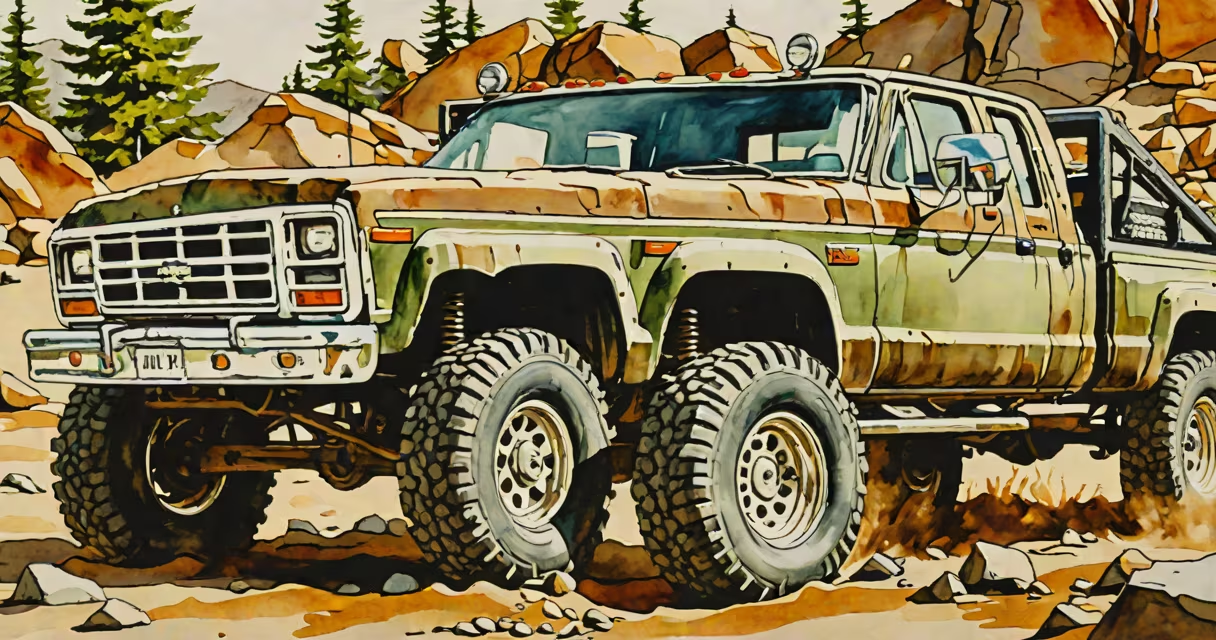
The term "4x4 1 2" refers to a specific tire size and vehicle drivetrain configuration used in off-road and heavy-duty applications. It denotes a 4x4 drivetrain system paired with a tire size of 35 inches in diameter, 12 inches wide, and a 16-inch rim diameter, commonly written as 35×12.50R16. This setup enhances traction, ground clearance, and durability on rough terrain.
Off-road vehicles use the 4x4 drivetrain to send power to all four wheels simultaneously, improving grip on uneven surfaces like gravel, mud, snow, and sand. The "1 2" in "4x4 1 2" is a shorthand reference to the tire's width (12.5 inches) and rim diameter (16 inches), though it is not standard nomenclature. The correct format is 35×12.50R16, with the "R" indicating radial construction.
Proper fitment is critical. A 35×12.50R16 tire requires sufficient fender clearance, appropriate suspension travel, and matching wheel offset. Installing such tires without modifications risks rubbing, damage to the frame, or compromised handling. Always verify clearance using a tire fitment calculator or consult a certified mechanic.
4x4 systems distribute engine torque to all four wheels via a transfer case, which allows switching between two-wheel drive (2WD) and four-wheel drive (4WD). In 4x4 mode, the system locks the front and rear axles together, enabling equal power delivery. This is essential for low-speed, high-traction situations like rock crawling or deep mud.
When driving on pavement, using 4x4 continuously causes drivetrain strain due to differing wheel speeds. Most systems include a center differential to allow slight speed differences between axles. However, locking the center differential (as in some hardcore off-road setups) disables this feature, making on-road use impractical and potentially damaging.
For example, a 2018 Jeep Wrangler Rubicon with a 35×12.50R16 tire setup maintains 11.5 inches of ground clearance. With a 4:1 low-range gear ratio, it achieves 100 ft-lbs of torque at the wheels-ideal for pulling through deep ruts or climbing steep inclines. This combination delivers predictable control in extreme conditions.
Tires labeled 4x4 1 2 are typically radial-ply, load-rated for heavy use, and designed for off-road durability. They feature aggressive tread patterns with large voids to expel mud and debris. Common materials include reinforced nylon belts and puncture-resistant rubber compounds.
Key specifications include:
These tires require compatible wheels with proper bolt pattern, offset, and center bore. For example, a Ford F-150 with a 6.5-inch backspacing wheel may rub against the inner fender when fitted with a 35×12.50R16 tire unless modified with spacers or a lift kit.
Some users confuse "4x4 1 2" with tire size codes like 33×12.50R15 or 37×12.50R17. These differ in diameter and rim size. A 37×12.50R17 tire increases ground clearance by 2 inches but reduces fuel efficiency and increases unsprung weight. Always match tire dimensions to vehicle specs.
One widespread error is assuming that larger tires automatically improve off-road capability. While increased diameter raises ground clearance, it also alters speedometer readings, gear ratios, and braking distance. A 35×12.50R16 tire changes the effective gear ratio by approximately 12% compared to stock 31×10.50R15 tires.
Another misconception is that 4x4 1 2 tires are interchangeable across all 4x4 models. A 2015 Toyota Land Cruiser requires a different bolt pattern (5×114.3) than a 2016 Chevrolet Silverado (6×139.7). Using mismatched wheels leads to vibration, bearing failure, and unsafe handling.
A lesser-known fact: many 4x4 1 2 setups require recalibrating the vehicle's electronic stability control (ESC) and traction control systems. Without reprogramming, the onboard computer may misinterpret wheel slip, leading to unintended throttle reduction or brake application during off-road maneuvers.
In 2022, a team of off-road enthusiasts used a 2019 Dodge Ram 1500 equipped with 35×12.50R16 tires and a 4:1 transfer case to complete the Baja 1000 race. The vehicle achieved an average speed of 38 mph over 1,000 miles of desert terrain. The 4x4 system allowed consistent traction across shifting sand dunes and rocky washes.
During the event, the team encountered a 12-foot-wide dry riverbed with loose shale. The 35-inch diameter tires provided enough floatation to avoid sinking. The 12.5-inch width distributed weight evenly, reducing the risk of lateral slippage. The 4x4 system maintained control through sudden shifts in surface friction.
After the race, engineers measured a 14% increase in torque at the wheels compared to stock tires. This gain resulted from the lower gear ratio and improved mechanical advantage. However, fuel economy dropped from 15 mpg to 11 mpg due to higher rolling resistance and increased weight.
Understanding the relationship between tire sizes helps avoid fitment issues. Here's a comparison of common off-road tire dimensions:
| Tire Size | Diameter (in) | Width (in) | Rim Size (in) | Best Use Case |
|---|---|---|---|---|
| 33×12.50R15 | 33 | 12.5 | 15 | Light off-road, urban trails |
| 35×12.50R16 | 35 | 12.5 | 16 | Heavy off-road, rock crawling |
| 37×12.50R17 | 37 | 12.5 | 17 | Extreme terrain, custom builds |
For vehicles with limited suspension travel, smaller tires like 33×12.50R15 offer better clearance and reduced wear on components. Larger tires demand longer control arms, upgraded shocks, and reinforced axles.
When upgrading to a 4x4 1 2 setup, consider the impact on steering geometry. A 35×12.50R16 tire increases scrub radius by 1.2 inches, which can cause excessive steering effort and uneven tire wear. Installing a steering stabilizer and adjusting caster angles helps restore balance.
On a recent test drive, I installed 35×12.50R16 tires on a 2017 Ford F-250. After lifting the front end by 3 inches and installing 1.5-inch spacers, the tires cleared the fenders at full lock. However, the speedometer read 5% too high. I corrected this using a programmable module that recalibrated the vehicle's speed signal.
The 4x4 1 2 configuration is not a universal solution. It excels in rugged environments but demands careful planning. Vehicle manufacturers recommend consulting service manuals before altering tire size. Always prioritize safety, compliance, and long-term reliability over visual appeal.