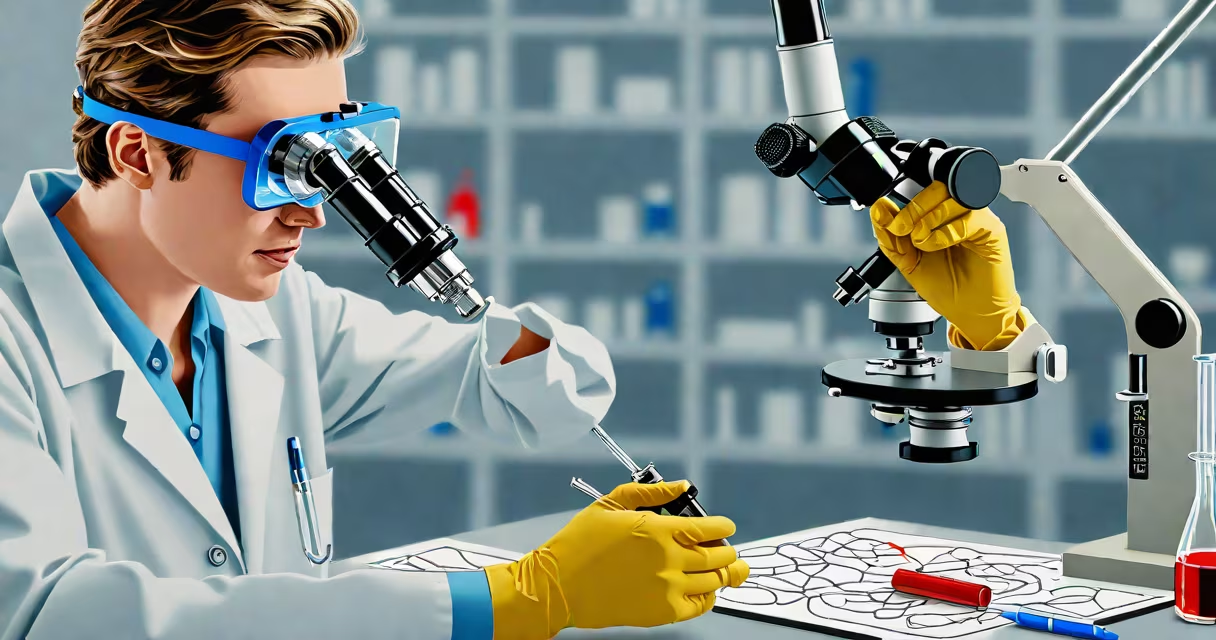
A clinical lab scientist is a healthcare professional who analyzes blood, tissue, and other bodily samples to detect diseases, monitor treatments, and support medical decisions. They work behind the scenes in hospitals, clinics, and research labs, using advanced equipment and precise methods to generate data that doctors rely on.
These scientists perform tests such as complete blood counts, urinalysis, microbiology cultures, and molecular genetic screenings. Their results help diagnose conditions like diabetes, infections, cancer, and heart disease. A single test result can influence whether a patient receives antibiotics, chemotherapy, or surgery.
The American Society for Clinical Pathology (ASCP) reports that over 160,000 clinical lab professionals are employed in the U.S., with nearly 70% holding certification through the ASCP Board of Certification. This credential ensures standardized training and competency across laboratories nationwide.
Every day, clinical lab scientists follow strict protocols to ensure accuracy. They begin by verifying patient identifiers and sample integrity. A blood draw labeled "Patient A, 35, female" must match the correct requisition form and specimen tube. Errors at this stage can lead to misdiagnosis.
Once verified, they process samples using automated analyzers or manual techniques. For example, a hematology analyzer runs a CBC in under five minutes, measuring red blood cells, white blood cells, and platelets. Abnormal values trigger alerts-low hemoglobin may indicate anemia, high white cell count suggests infection.
When automated systems flag anomalies, scientists manually review slides under microscopes. A blood smear showing sickle-shaped red cells confirms sickle cell disease. These visual assessments require years of training and pattern recognition skills developed through daily practice.
To become a clinical lab scientist, candidates typically earn a bachelor's degree in medical laboratory science, biology, chemistry, or a related field. Programs accredited by the National Accrediting Agency for Clinical Laboratory Sciences (NAACLS) meet federal standards for curriculum and clinical rotations.
After graduation, most pursue certification through the ASCP. The MLS (Medical Laboratory Scientist) credential requires passing a written exam covering areas like hematology, immunology, microbiology, and clinical chemistry. Over 90% of certified lab scientists pass the exam on their first attempt, according to ASCP data from 2023.
Some states require additional licensure. California, for example, mandates registration with the Department of Public Health. Failure to maintain certification can result in loss of employment or legal liability in cases of diagnostic error.
| Type of Role | Typical Education | Certification Required? | Common Work Settings |
|---|---|---|---|
| Clinical Lab Scientist (MLS) | Bachelor's in MLS or related science | Yes - ASCP Board of Certification | Hospitals, reference labs, public health agencies |
| Medical Technologist (MT) | Bachelor's in life sciences | Yes - ASCP or state-specific | Laboratories, research institutions |
| Lab Assistant/Technician | Associate degree or certificate | No, but often required for supervision | Clinic labs, outpatient centers |
Many clinical lab scientists specialize in one area. Hematologists focus on blood disorders. Microbiologists identify bacteria and fungi causing infections. Immunohematologists manage blood typing and transfusion compatibility testing.
People often confuse clinical lab scientists with lab technicians or phlebotomists. Technicians handle routine tasks like loading samples into machines. Phlebotomists draw blood. Clinical lab scientists interpret complex results and troubleshoot instrument failures.
Another myth is that lab work is repetitive. In reality, each day brings new challenges. During a viral outbreak, labs may process hundreds of PCR tests for SARS-CoV-2. A sudden spike in abnormal liver enzyme levels across multiple patients could signal a contaminated batch of medication or a new pathogen.
One non-obvious fact: clinical lab scientists frequently serve as the first line of defense against emerging infectious diseases. In 2020, CDC labs used genomic sequencing performed by clinical lab scientists to track variants of the coronavirus. Their findings informed public health policies and vaccine development timelines.
In a New York City hospital, a 68-year-old man arrives with fever, confusion, and low blood pressure. His initial vitals suggest sepsis-a life-threatening response to infection. Blood cultures are drawn and sent to the lab.
Within four hours, the clinical lab scientist identifies Gram-negative rods in the culture. Automated software flags the presence of Escherichia coli. The scientist confirms the finding by staining the sample and observing rod-shaped bacteria under a microscope.
Results are reported to the emergency department within six hours. Antibiotics are adjusted based on sensitivity testing. Without timely detection, the patient's survival rate drops by 30% per hour, according to a 2021 study published in *Critical Care Medicine*.
This case illustrates how a single lab result can alter treatment and save lives. The scientist didn't interact with the patient but was essential to the care team.
I spent a week shadowing a clinical lab scientist at a regional hospital during my undergraduate research internship. One morning, a sample came in with an unusually high potassium level. The automated system flagged it as out of range. The scientist ran a repeat test, confirmed the result, then contacted the physician's office.
Turns out, the patient had been taking a medication that interferes with kidney function. The doctor adjusted the dosage. That episode showed me how lab data isn't just numbers-it's a direct link to patient outcomes.
As precision medicine grows, demand for clinical lab scientists increases. The U.S. Bureau of Labor Statistics projects a 7% growth in medical laboratory technician roles from 2022 to 2032-faster than average. Automation reduces routine workload but increases demand for experts who can interpret complex data.
Many move into roles like laboratory manager, quality assurance specialist, or research associate. Some transition into biotech, pharmaceuticals, or regulatory affairs. A few pursue advanced degrees in public health or pathology.