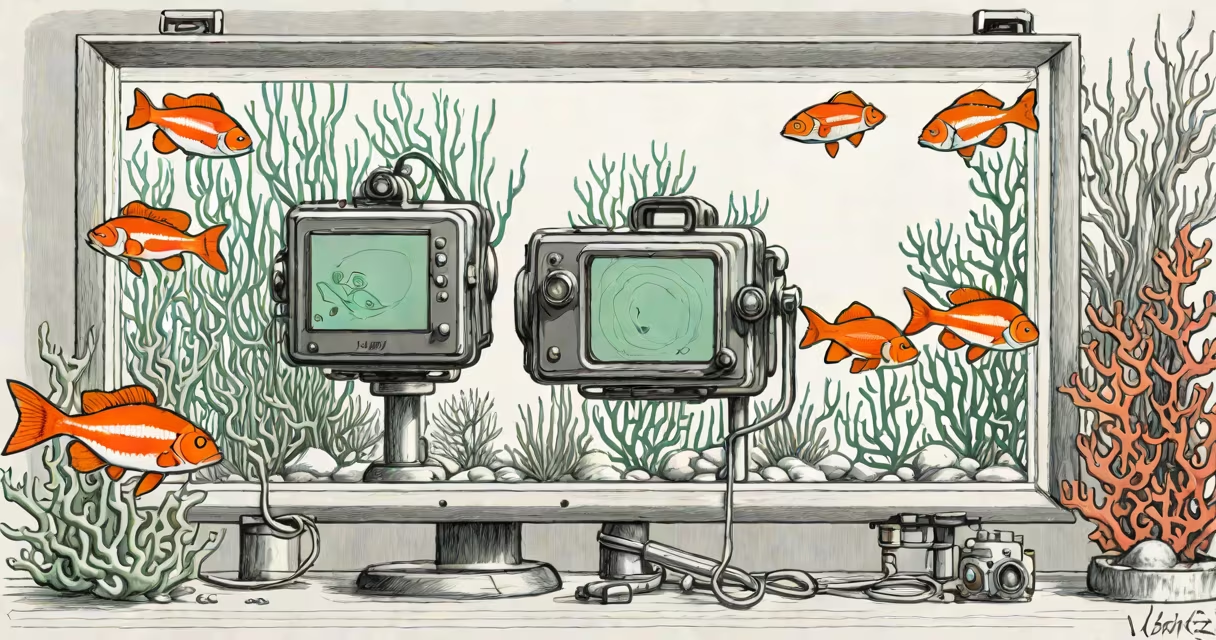
Verdes mares ao vivo refers to real-time, continuous video streams of marine environments-typically coral reefs, kelp forests, or open ocean zones-broadcast live from underwater cameras deployed in natural habitats. These feeds show living marine organisms interacting in their native settings without human interference.
The term combines Portuguese for "green seas" with "ao vivo," meaning "live." It describes changing visual records of marine life as it happens, not edited or delayed. Unlike recorded documentaries, verdes mares ao vivo offers immediate access to ongoing ecological processes such as fish spawning, predator-prey interactions, or coral bleaching events.
These streams are hosted by research institutions, aquariums, and environmental organizations. They serve scientific monitoring, public education, and conservation advocacy. A single feed may run 24/7, with no scheduled breaks, ensuring uninterrupted observation of aquatic ecosystems.
Underwater cameras are mounted on fixed structures, buoys, or remotely operated vehicles (ROVs) in shallow or deep-sea locations. They transmit video via fiber-optic cables or wireless signals to shore-based servers. Data is processed and streamed online in real time through platforms like YouTube Live, Twitch, or dedicated science portals.
Cameras use low-light sensors and infrared lighting to operate in dark conditions. Some systems include hydrophones to capture ambient sound, adding audio context to visual feeds. Power is supplied by solar panels, batteries, or grid connections depending on location and depth.
A feed from the Coral Reef Watch project in the Great Barrier Reef transmits from a camera stationed at 12 meters depth. It broadcasts 19 hours daily, showing parrotfish grazing on algae and reef sharks patrolling. The stream runs continuously, with timestamps embedded in the video overlay.
Verdes mares ao vivo systems vary by environment, purpose, and technical setup. The most common types are:
| Type | Deployment Site | Use Case | Example |
|---|---|---|---|
| Shallow reef cam | Coastal coral reefs | Species tracking, tourism | Reef Life Survey's live feed from Bonaire |
| Deep-sea observatory | Mid-ocean ridges, trenches | Volcanic activity, hydrothermal vents | NEPTUNE Canada's long-term deep-sea network |
| Mobile ROV stream | Open ocean, seamounts | Tracking migratory species | NASA's Deep Space Ocean Explorer (simulated) |
Shallow reef cams are most accessible. They often use standard HD cameras with waterproof housings and are placed near known biodiversity hotspots. Deep-sea systems require pressure-resistant enclosures and specialized power solutions. Mobile ROV streams are less stable due to variable signal strength and battery life.
One notable system is the Monterey Bay Aquarium Research Institute's (MBARI) Deep-Sea Video Archive, which streams footage from a camera range at 1,200 meters depth. Since 2006, it has documented over 4,000 unique species interactions, including rare sightings of giant squid and bioluminescent jellyfish.
Verdes mares ao vivo is not the same as recorded nature documentaries. While both feature marine life, only live streams offer unedited, real-time observation. Documentaries use selective editing and narration to create narrative arcs. Live feeds lack scripting and cannot be paused or rewound during broadcast.
Another misconception is that all live streams are free and universally available. Many are restricted by bandwidth, licensing, or institutional access. For example, the NOAA's Ocean Observing System requires registration to view certain deep-sea feeds. Public access is limited to curated clips or delayed archives.
A key distinction: verdes mares ao vivo does not imply high resolution or quality. A stream from a remote Pacific island may transmit at 360p due to satellite bandwidth constraints. Conversely, a feed from a research vessel equipped with 4K sensors can deliver high-fidelity visuals. Resolution depends on infrastructure, not the concept itself.
Scientists use verdes mares ao vivo to detect anomalies in system behavior. During the 2022 heatwave in the Mediterranean, researchers monitored a live feed from the Balearic Islands. They observed sudden fish mortality events within 48 hours of temperature spikes, confirming thermal stress as a cause of mass die-offs.
Public engagement increases when people watch live marine activity. The "Live Kelp Forest" stream from California's Channel Islands attracted over 1.2 million viewers in its first six months. Viewers reported higher awareness of local marine protection laws and increased support for marine sanctuaries.
I once visited the Galápagos National Park's live camera site on Fernandina Island. The feed showed blue-footed boobies diving into the sea. After watching for 15 minutes, I noticed a subtle change in water color near the shore-visible only because the stream ran continuously. That moment confirmed how live observation reveals patterns invisible in still images or short videos.
Verdes mares ao vivo is not just entertainment-it's a tool for ecological vigilance. By watching oceans in real time, we gain early warnings of pollution, warming, and habitat collapse. These streams turn passive viewers into active observers of planetary health.