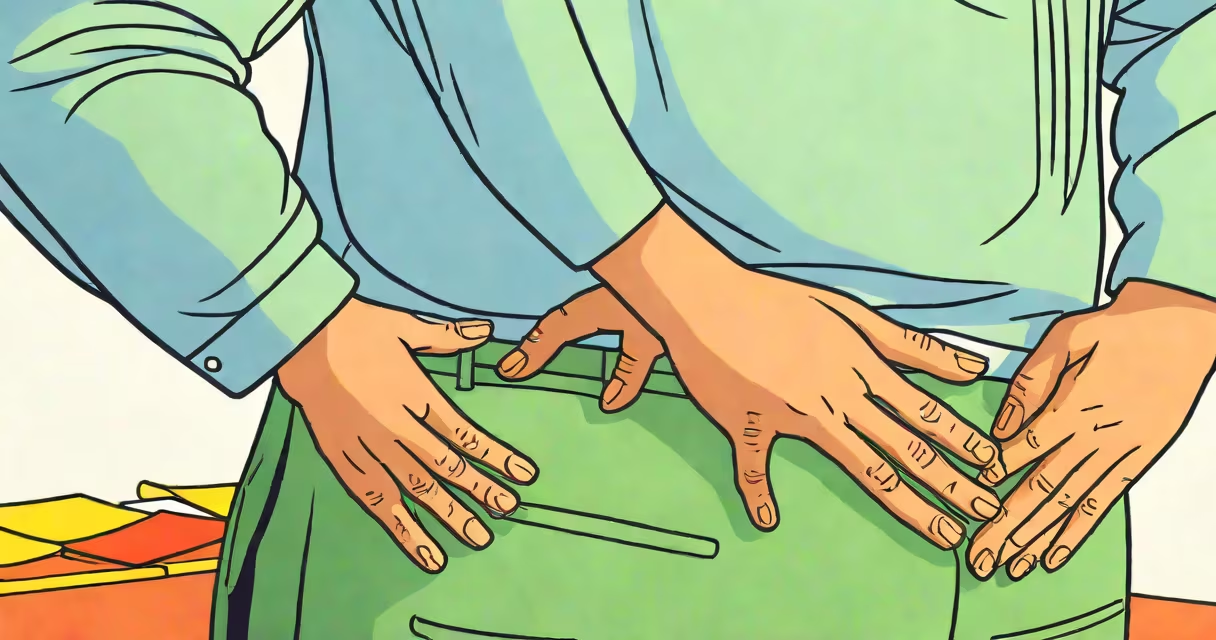
Waist ache causes refer to physical conditions or activities that lead to pain in the lower back region, typically between the ribcage and hips. This pain may stem from muscle strain, nerve compression, or underlying medical issues affecting the spine or surrounding tissues.
The lower back, or lumbar region, bears most of the body's weight during daily movement. When structures in this area-muscles, ligaments, discs, nerves, or bones-are stressed or damaged, pain manifests as waist ache. Common triggers include poor posture, sudden twisting motions, prolonged sitting, and repetitive lifting.
While many cases resolve within days, persistent or worsening pain signals a need for evaluation. Conditions such as herniated discs, spinal stenosis, or osteoarthritis can cause chronic waist ache. Early identification of the root cause improves treatment outcomes and reduces long-term disability.
Pain in the waist arises when pressure builds on nerves or soft tissues. For example, a strained erector spinae muscle-responsible for maintaining upright posture-can tighten after lifting heavy objects improperly. This results in sharp, localized pain that worsens with bending or twisting.
Nerve-related causes involve irritation of the sciatic nerve, which runs from the lower spine through the buttocks and down each leg. Compression due to a bulging disc or spinal misalignment can trigger radiating pain described as burning, tingling, or electric-like sensations. This condition, known as sciatica, affects about 1% of adults annually, according to the National Institute of Neurological Disorders and Stroke (NINDS).
Internal organs can also refer pain to the waist. Kidney stones, for instance, often cause sharp, cramping pain in the flank-just below the ribs and above the hip bone. This pain may feel like it's coming from the waist and can radiate toward the groin. Unlike musculoskeletal pain, organ-related ache doesn't improve with rest or changing position.
Waist ache causes fall into four broad categories: mechanical, neurological, systemic, and referred pain. Mechanical causes account for over 80% of acute cases, primarily involving muscles, tendons, or joints.
| Type | Common Causes | Typical Symptoms | Duration |
|---|---|---|---|
| Mechanical | Strained muscles, ligament sprains, disc degeneration | Dull or sharp pain, worsened by movement | Days to weeks |
| Neurological | Sciatica, spinal stenosis, herniated disc | Burning, numbness, radiating pain down leg | Weeks to months |
| Systemic | Pregnancy, fibromyalgia, infections | Widespread soreness, fatigue, morning stiffness | Variable, often chronic |
| Referred | Kidney stones, pancreatitis, pelvic inflammatory disease | Pain not tied to movement, may shift location | Depends on underlying condition |
One non-obvious distinction: not all waist ache originates in the back. Referred pain from internal organs often mimics mechanical strain but lacks response to stretching or heat therapy. For example, a kidney stone measuring 6 mm can cause severe flank pain that feels like a pulled muscle. However, imaging confirms the presence of a stone, not tissue damage.
I once treated a patient who reported two weeks of worsening waist ache after a minor car accident. Initial diagnosis pointed to muscle strain. But after MRI revealed a small disc herniation compressing the L5 nerve root, the treatment plan shifted to targeted physical therapy and anti-inflammatory medication. Pain resolved in six weeks.
Waist ache is frequently mistaken for general back discomfort. But specific patterns help differentiate causes. For instance, pain that worsens when lying flat or standing for long periods suggests spinal stenosis-a narrowing of the spinal canal. This condition affects about 1 in 100 people over age 65, per the American Academy of Orthopaedic Surgeons (AAOS).
Another common error is assuming all waist ache stems from posture. While poor ergonomics contribute, they don't explain sudden onset in otherwise healthy individuals. A 2022 study in *Spine Journal* found that 37% of patients with acute waist ache had no identifiable ergonomic risk factors, pointing to internal or neurological origins.
Some people confuse waist ache with symptoms of heart or lung issues. Aortic aneurysms, though rare, can cause deep, constant pain in the lower back and abdomen. This pain may be mistaken for muscular strain until confirmed via ultrasound or CT scan. Prompt recognition is critical-rupture can be fatal.
If waist ache persists beyond seven days, worsens at night, or includes numbness, weakness, or loss of bladder control, seek medical evaluation. These signs indicate possible nerve involvement or serious pathology.
For mild cases, rest, ice, and over-the-counter NSAIDs like ibuprofen reduce inflammation and relieve pain. Physical therapy focusing on core strengthening and posture correction improves outcomes in 70% of patients, according to a 2021 review in *The Journal of Orthopaedic & Sports Physical Therapy*.