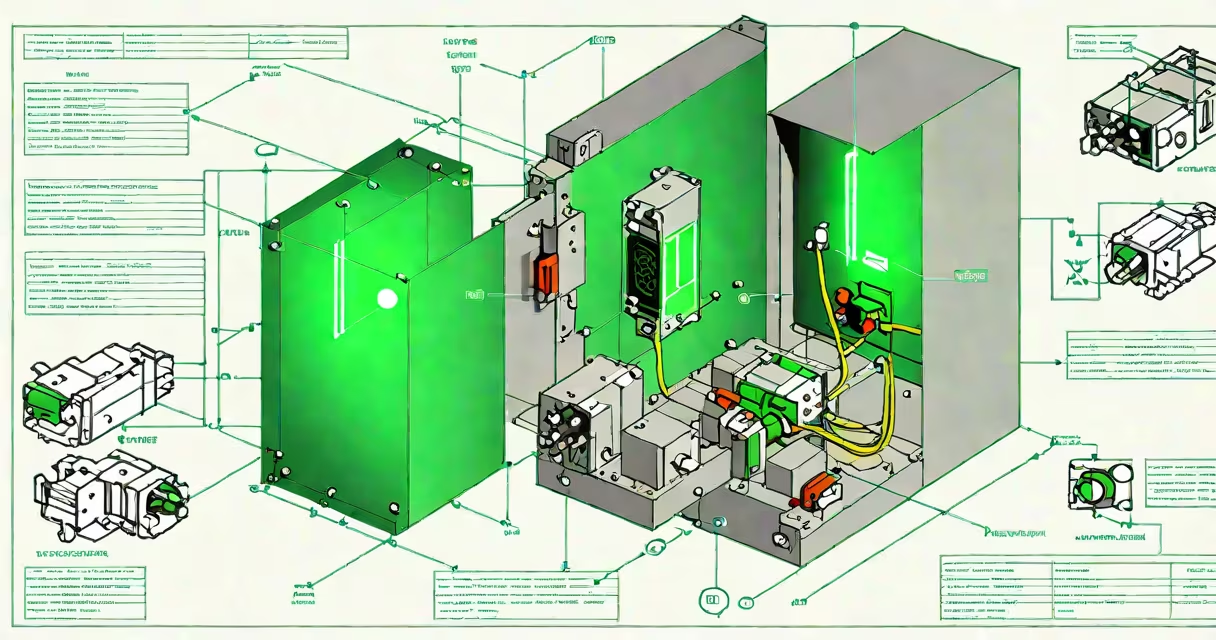
A proximity reader is an electronic device that identifies and authenticates individuals using radio frequency identification (RFID) signals from a card, fob, or smartphone, enabling secure access without physical contact. It operates within a few inches of the credential and communicates with a central access control system to grant or deny entry.
Proximity readers form the frontline of modern access control systems. They detect RFID signals emitted by authorized credentials and validate them against a database of approved users. Once verified, the system triggers a door release, logs the event, and may send alerts for unauthorized attempts. These devices are widely deployed in office buildings, data centers, hospitals, and residential complexes.
The core function of a proximity reader is not to store user data-it acts as a gatekeeper. It reads the unique identifier embedded in a credential's RFID chip and forwards that ID to a controller, which checks permissions. This separation ensures scalability and centralized management. A single reader can serve hundreds of users through integration with software platforms like Salto Systems or HID Access Manager.
When a credential-such as a plastic badge with an embedded coil-is brought near a proximity reader, the reader emits a low-frequency electromagnetic field (typically 125 kHz or 13.56 MHz). The credential's internal antenna picks up this field, powers its microchip, and transmits a stored ID back to the reader via modulated signal.
The reader decodes the ID and sends it to a central access control panel. That panel compares the ID against a database of authorized users. If the ID matches a valid entry, the system triggers a relay to enable the door. The entire process takes less than 0.5 seconds.
For example, in a corporate campus, an employee swipes their proximity badge near a reader mounted beside a secure server room door. The reader captures the signal, validates the ID against the company's access list, and unlocks the door. The event is logged in real time, including timestamp, location, and user ID. This creates an audit trail useful for compliance and incident investigation.
Proximity readers differ primarily by frequency and communication protocol. The most common types are based on 125 kHz and 13.56 MHz standards, each suited to different environments.
| Frequency | Common Use Cases | Range | Security Level |
|---|---|---|---|
| 125 kHz | Legacy access systems, older facilities | 1-3 inches | Low (vulnerable to cloning) |
| 13.56 MHz (NFC/ISO 14443) | Modern systems, smartphones, smart cards | 1-4 inches | High (supports encryption and mutual authentication) |
While 125 kHz readers are still used due to low cost and wide compatibility, they are increasingly replaced by 13.56 MHz models. The latter support advanced features such as encrypted data transmission and changing key exchange, reducing risks of skimming or replay attacks.
Some newer systems integrate with mobile devices. For instance, Apple Wallet and Google Pay allow users to pair their smartphones with access control systems. When the phone is held near a 13.56 MHz reader, the system verifies the tokenized credential stored in the device's secure enclave. This eliminates the need for physical cards altogether.
Proximity readers are standard in commercial and industrial settings requiring controlled access. They balance security, convenience, and scalability. In healthcare, they restrict access to medication storage areas. In finance, they protect vaults and trading floors. In education, they manage student and staff entry to labs and administrative offices.
One notable deployment is at the University of California, San Diego. Their campus-wide access system uses 13.56 MHz proximity readers integrated with a cloud-based platform. Over 20,000 students and staff use university-issued badges to enter dormitories, libraries, and research labs. The system logs all entries and automatically revokes access when a user graduates or leaves employment.
Proximity readers also improve visitor management. When a guest arrives, staff issue temporary credentials-often color-coded and time-limited-that work only during specified hours. After expiration, the reader rejects the card, preventing unauthorized reuse.
Many assume proximity readers are inherently secure because they don't require contact. This is incorrect. Low-frequency 125 kHz systems can be cloned using off-the-shelf tools like the Proxmark3. A hacker can capture the signal from a nearby badge and replicate it within minutes.
According to NIST Special Publication 800-111, "RFID-based access control systems are vulnerable to eavesdropping and replay attacks unless properly secured." The solution lies in using higher-frequency systems with encryption and mutual authentication protocols.
Another misconception is that proximity readers work over long distances. In reality, most operate within 2 inches of the credential. A reader placed too far from the card may fail to read it, especially if the card is shielded by metal or thick material. This limits usability in environments with cluttered pockets or bulky jackets.
I once tested a 125 kHz reader in a warehouse setting. An employee carried their badge in a metal tool pouch. The reader failed to recognize it until the badge was removed. Moving the card closer resolved the issue-demonstrating how physical barriers affect performance.
Proximity readers are often compared to biometric scanners, PIN pads, and magnetic stripe readers. Each has trade-offs in speed, cost, and privacy.
Biometric systems (fingerprint, facial recognition) offer high accuracy but raise privacy concerns. They store sensitive personal data and require strict compliance with regulations like GDPR and CCPA. Proximity readers avoid storing biometrics-they only transmit IDs.
Magnetic stripe cards are cheaper but degrade quickly and are easily duplicated. A single swipe can be copied with a $20 reader. Proximity cards resist wear and are harder to clone, especially when using encrypted protocols.
PIN entry is simple but prone to shoulder surfing and password sharing. Combining PINs with proximity cards adds multi-factor authentication, improving security. Many modern systems require both a card and a PIN to enable doors.
Understanding what is a proximity reader clarifies its role in securing physical spaces. It is not a standalone security tool but a component of a larger access control architecture. Its strength lies in speed, reliability, and integration with digital systems.
For organizations upgrading their security infrastructure, choosing a 13.56 MHz reader with encryption support is essential. Avoid legacy 125 kHz systems unless they're isolated and not connected to networks. Always test reader placement and credential range during installation.