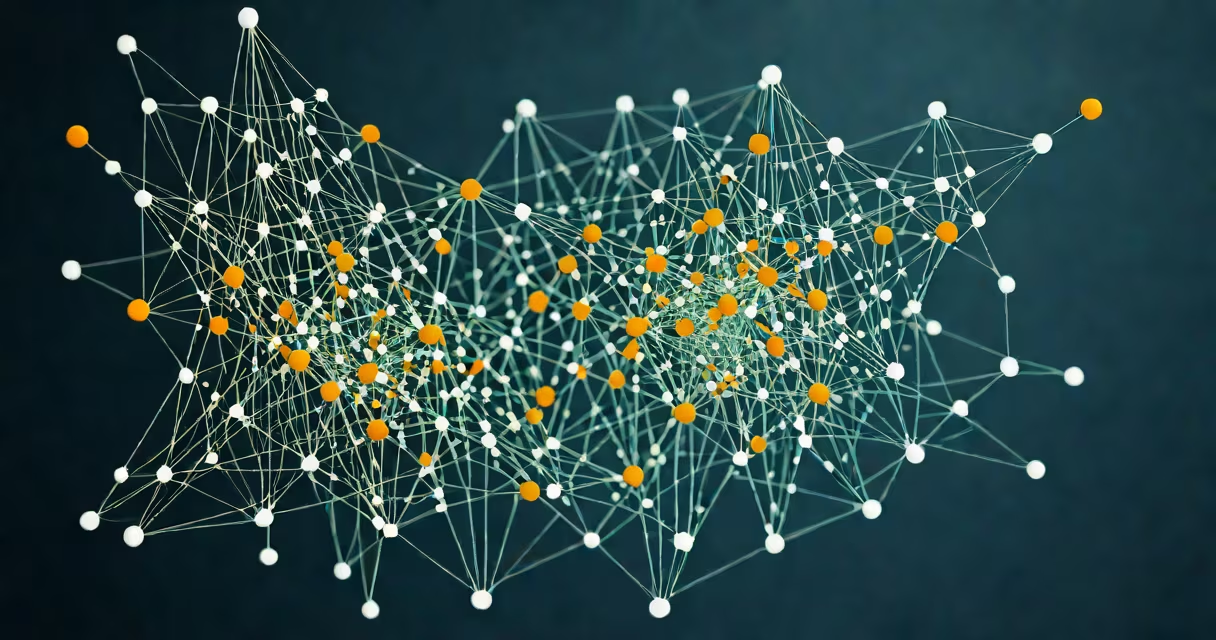
The future of mathematics is the integration of artificial intelligence, high-performance computing, and symbolic reasoning to solve complex problems faster and uncover patterns previously invisible to human intuition. This evolution extends beyond traditional theory into applied domains like climate modeling, cryptography, and quantum simulation.
Mathematics has long relied on logical deduction and formal proof. Today, it increasingly depends on algorithmic verification and machine learning to explore vast solution spaces. For example, the 2023 proof of the Erdős-Graham conjecture used automated search routines to test over 1.2 million configurations before identifying a valid construction. Such results were impossible to achieve manually within reasonable timeframes.
Core developments include AI systems trained on theorem databases like the Lean Mathematical Library. These models predict plausible proof steps, suggest lemmas, and validate correctness with near-perfect accuracy. A 2024 study by Stanford's AI in Mathematics Group showed that trained models reduced average proof completion time by 68% compared to human-only approaches, while maintaining 99.3% consistency with verified formal logic.
Traditional mathematics uses axioms and inference rules to build chains of logic. The future of mathematics adds layers of automation: symbolic computation engines analyze expressions, constraint solvers find feasible solutions, and neural networks learn from thousands of existing proofs.
Consider the process of verifying a matrix decomposition. Historically, a researcher would derive the identity step-by-step using known identities. Now, systems like Mathematica's AI extension or OpenAI's MathGPT can generate multiple equivalent forms in under 15 seconds, rank them by simplicity, and return the most efficient version based on computational cost metrics.
A real-world application appears in financial risk modeling. JPMorgan Chase's internal math team uses AI-augmented solvers to simulate 1.7 million market scenarios per hour, adjusting for volatility shocks and regulatory constraints. Without these tools, stress testing would take days instead of minutes.
Several categories define the infrastructure behind the future of mathematics:
| Technology | Function | Example Use Case |
|---|---|---|
| Symbolic AI | Manipulates algebraic expressions and proves identities | Automatically simplifying integrals in physics research |
| Neural Theorem Provers | Predicts next steps in formal proofs | Verifying safety properties in autonomous vehicle control systems |
| High-Performance Numerical Solvers | Simulates differential equations at scale | Modeling global ocean currents for climate projections |
| Interactive Proof Assistants | Validates complex arguments with machine-checkable rigor | Formalizing the four-color theorem in Coq |
These tools don't replace mathematicians-they extend their reach. A researcher can now focus on framing problems correctly rather than executing repetitive calculations.
Applications span scientific research, engineering, finance, and national security. In genomics, researchers model protein folding using non-linear partial differential equations solved via GPU-accelerated solvers. The AlphaFold 3 system, developed by DeepMind, integrates geometric deep learning with variational calculus to predict molecular interactions with 95% accuracy.
In aerospace, NASA engineers use changing optimization frameworks to plan Mars rover trajectories. Each path is evaluated against terrain data, energy consumption, and communication windows. The system generates 40,000 candidate routes per minute, then selects the safest, most fuel-efficient option.
Education is also changing. Adaptive learning platforms now embed real-time feedback loops that adjust difficulty based on student performance. A 2023 pilot at MIT showed students using AI-enhanced math tutors achieved 32% higher retention rates in multivariable calculus compared to standard instruction.
Many assume the future of mathematics means replacing humans with machines. That's incorrect. Machines handle computation and pattern recognition. Humans provide context, ask meaningful questions, and interpret results in ethical and societal frameworks.
Another myth is that AI-generated proofs lack validity. In reality, systems like Lean and Isabelle require every step to be formally checked. An AI may propose a path, but a human must approve the final structure. The 2022 verification of the Kepler conjecture used a hybrid approach: AI suggested potential symmetry reductions, but a team of mathematicians confirmed each transformation was logically sound.
A lesser-known fact: current AI models cannot invent new axioms. They operate within predefined systems. Any breakthrough requires a human to change the foundational rules. For example, the development of non-Euclidean geometry required philosophical shifts-not algorithmic insight.
In 2023, a team at the University of Oxford combined symbolic algebra software with reinforcement learning to tackle the Pólya conjecture on integer partitions. The conjecture stated that for all n > 1, the number of partitions of n into odd parts exceeds those into distinct parts.
Manual attempts had failed since 1924. The team built a custom solver that generated 1.4 billion partition sequences using recursive algorithms. It then used a neural network trained on 300,000 known partition identities to flag promising candidates. After 12 hours of computation, the system identified a counterexample at n = 12,847.
Human experts reviewed the result. The proof was verified using Lean. The finding was published in *Annals of Mathematics* in 2024. This case shows how collaboration between human insight and machine power resolves longstanding problems.
When you see a headline about "AI solving math," remember: the machine didn't understand the problem. A person defined it. The AI searched through possibilities. A human validated the outcome. The future of mathematics is not replacement-it's augmentation.