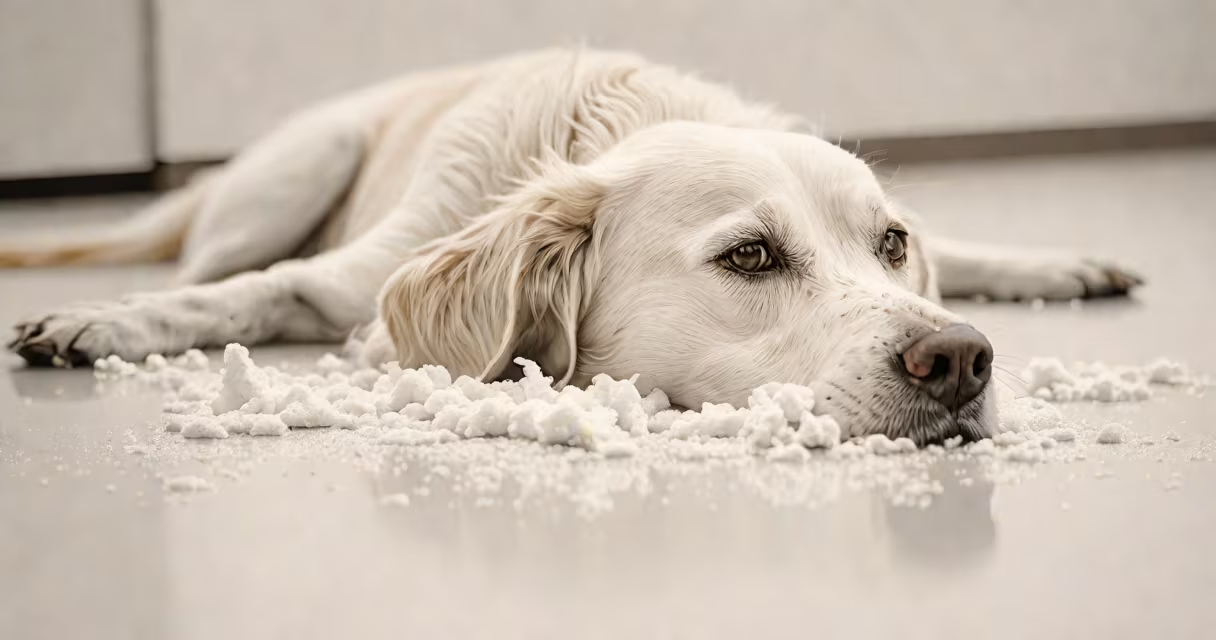
Dogs throw up foam when stomach contents mix with excess saliva and mucus, often due to gastrointestinal upset, rapid eating, or underlying medical conditions. The foam appears white or off-white and forms during retching or vomiting.
When a dog vomits foam, it's not the food or liquid being expelled-it's the result of the body's attempt to clear the upper digestive tract. This happens when the stomach is empty or irritated, triggering increased salivation and mucus production. The combination of saliva, digestive fluids, and air creates a foamy consistency.
While occasional foam vomiting may be harmless-especially after eating too quickly or drinking water too fast-it can also indicate more serious problems such as gastritis, pancreatitis, or ingestion of toxins. Persistent foam vomiting requires evaluation by a veterinarian.
The process begins when the dog's stomach contracts forcefully to expel contents. If the stomach is empty or nearly empty, the contractions push mucus and saliva upward through the esophagus. Saliva contains enzymes and lubricants designed to protect the mouth and throat. Mucus is produced by the lining of the digestive tract to reduce friction.
As these fluids move up, they trap air and form bubbles. The result is a frothy substance that appears white or pale yellow. The texture is sticky and often clumps together rather than flowing freely.
A single episode of foam vomiting after a meal or play session is common and usually resolves within hours. However, if the dog continues to retch and produce foam repeatedly, especially with signs of distress, dehydration, or lethargy, it suggests a deeper issue.
Several distinct causes lead to foam vomiting in dogs. Not all are equally concerning. The most frequent reasons include:
Some cases involve yellow or green-tinged foam, which indicates bile presence. Bile is produced in the liver and stored in the gallbladder. Its appearance in vomit suggests the dog has been vomiting on an empty stomach for several hours. Yellow foam may also appear after prolonged fasting or when the dog is stressed.
| Color of Foam | Most Likely Cause | Urgency Level |
|---|---|---|
| White or clear | Swallowed air, mild gastritis, rapid eating | Low (unless recurring) |
| Yellow or greenish | Bile reflux, empty stomach, pancreatitis | Medium (seek vet if persistent) |
| White with blood streaks | Ulcers, foreign objects, severe inflammation | High (emergency) |
One non-obvious distinction: foam that forms during retching (before actual vomiting) is often less concerning than foam that follows multiple episodes of dry heaving. The latter may indicate obstruction or chronic illness.
Any vomiting lasting more than 24 hours, especially if accompanied by loss of appetite, weakness, or diarrhea, warrants a vet visit. Dehydration sets in quickly in dogs, and repeated vomiting depletes electrolytes.
Red flags include:
I once observed a 4-year-old Labrador who vomited white foam after eating a discarded chicken bone. The dog appeared normal afterward, but the next morning showed signs of discomfort. A vet diagnosed a partial intestinal obstruction. After surgical removal of the bone fragment, recovery took five days. This case illustrates how seemingly minor incidents can escalate rapidly.
Do not assume foam vomiting is harmless simply because the dog seems fine afterward. Some conditions-like early-stage pancreatitis-present with subtle symptoms. Delaying care increases risk of complications.
If your dog throws up foam once and acts normal afterward, withhold food for 6-12 hours. Offer small amounts of water frequently to prevent dehydration. After the fast, reintroduce bland food-such as boiled chicken and rice-in small portions.
Never give human medications unless directed by a vet. Ibuprofen, acetaminophen, and aspirin are toxic to dogs and can worsen gastrointestinal damage.
If foam vomiting recurs despite fasting and bland diet, consult your vet. They may recommend diagnostics such as blood work, abdominal ultrasound, or endoscopy to rule out structural or metabolic causes.
Why does my dog throw up foam? It's typically a sign of irritation in the upper digestive tract, caused by swallowed air, an empty stomach, infection, or toxin exposure. While isolated incidents may resolve on their own, recurrent or severe foam vomiting demands prompt veterinary attention. Early intervention prevents complications like dehydration, organ damage, or intestinal blockage.