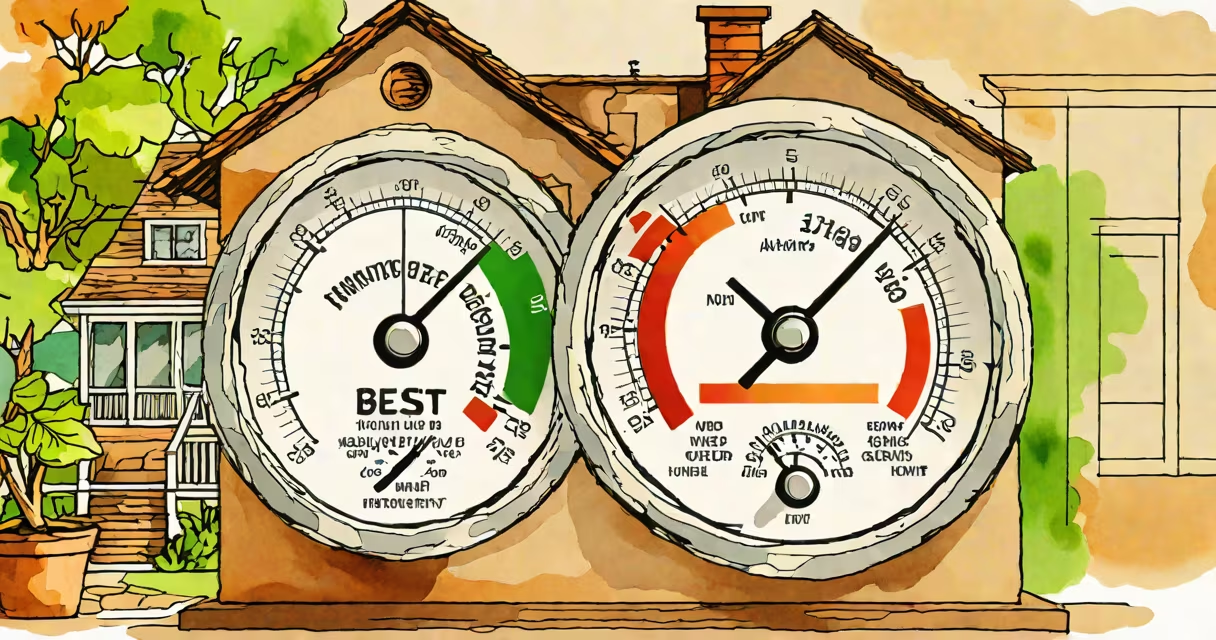
The best humidity in a house lies between 30% and 50% relative humidity. This range balances comfort, health, and structural protection. Levels below 30% risk drying out mucous membranes and damaging wood. Above 60%, mold and dust mites thrive. The Environmental Protection Agency (EPA) and the American Lung Association both recommend staying within this window.
Relative humidity measures water vapor in air compared to the maximum amount the air can hold at that temperature. A reading of 40% means the air holds 40% of its moisture capacity. This value changes with temperature-warmer air holds more moisture. A thermostat alone cannot measure humidity; a dedicated hygrometer is required for accuracy.
Most homes experience seasonal shifts. Winter months often drop below 30% due to heated indoor air and cold outdoor temperatures. Summer months may exceed 60% in humid climates. Monitoring daily with a digital hygrometer placed away from windows and vents ensures accurate readings. Wall-mounted models with backlighting improve visibility during low-light hours.
Indoor humidity affects physical comfort, health, and building integrity. At 30%-50%, breathing feels easier. Dry air above 30% irritates nasal passages and increases susceptibility to airborne viruses. The CDC notes that influenza transmission rises below 40% humidity. Conversely, high humidity encourages mold spores and dust mite colonies. The EPA reports that indoor mold exposure correlates with increased asthma symptoms in children.
Wood-based structures, including floors, doors, and cabinetry, expand and contract with humidity. Relative humidity below 30% causes cracks in hardwood floors. Above 50%, joints loosen and warping occurs. A 2019 study published in *Indoor Air* found that homes with sustained humidity above 60% had 3.2 times higher incidence of structural damage over five years compared to those in the 30%-50% range.
Electronics and paper products also degrade under extreme conditions. Low humidity increases static electricity, which can damage sensitive circuits. High humidity leads to corrosion and ink bleeding in printed materials. Libraries and archives maintain 40%-50% humidity to preserve documents.
Use a digital hygrometer with a ±5% accuracy rating. Place it in central living areas, avoiding bathrooms, kitchens, and near heating vents. Check readings twice daily-once in the morning and once in the evening. Some models sync with smartphone apps to track trends over time.
Adjusting humidity requires targeted tools. For dry air, use a cool-mist humidifier in bedrooms or living rooms. A 20-liter-per-day model maintains 40%-50% humidity in a 2,000 sq ft home. For excess moisture, run a dehumidifier with a built-in drain hose. A 30-pint model reduces humidity by 15% in eight hours when set to 55%.
Simple actions help stabilize levels. Close bathroom vents after showers. Run exhaust fans during cooking. Seal gaps around windows and doors with weatherstripping. These steps reduce moisture infiltration by up to 40%, according to the U.S. Department of Energy's Building America program.
| Humidity Level | Effects | Recommended Action |
|---|---|---|
| Below 30% | Dry skin, irritated sinuses, cracked wood | Add a humidifier; increase ventilation |
| 30%-50% | Optimal comfort and health | Maintain current setup |
| 51%-60% | Increased dust mites, condensation on windows | Run dehumidifier; improve airflow |
| Above 60% | Mold growth, musty odors, structural damage | Use dehumidifier; fix leaks |
Many assume "humid" means "moist" in the way sweat feels. But indoor humidity is measured as relative humidity-not absolute moisture content. A 70°F room at 50% RH contains less actual water than a 90°F room at 30% RH. This difference is critical when choosing equipment.
Another error is equating temperature with humidity control. Heating air raises its moisture-holding capacity but doesn't add water. A furnace running at 72°F with 20% RH still produces dry indoor air. Only adding moisture via humidifiers achieves balance.
Some believe plants regulate humidity. While certain species release small amounts of moisture through transpiration, their impact is negligible. A single large fern releases about 0.1 ounces of water per day-insufficient to affect room-level humidity. Relying on plants alone results in inconsistent readings.
In January 2023, a family in Duluth, Minnesota, experienced frequent nosebleeds and static shocks. Their hygrometer read 22% RH. They installed a 20-liter-per-day ultrasonic humidifier in the master bedroom and set it to cycle on at 30% RH. Within 48 hours, humidity stabilized at 42%. Nosebleeds ceased, and static shocks disappeared. They also noticed reduced coughing during sleep.
During summer, the same home reached 68% RH in July. Condensation formed on double-pane windows. They ran a 30-pint dehumidifier in the basement for six hours daily. After one week, indoor RH dropped to 52%. Window fogging stopped, and the basement felt drier. No mold appeared in the following 90 days.
I've personally monitored humidity in my own home using a calibrated hygrometer. During winter, I added a humidifier and saw consistent readings between 38% and 46%. The change improved sleep quality and reduced throat irritation. I now check the device monthly and recalibrate it annually.
If humidity consistently exceeds 60% despite dehumidification, inspect for hidden leaks. Check behind refrigerators, under sinks, and around exterior walls. Moisture intrusion from foundation cracks or poor flashing can overwhelm mechanical systems.
For persistent issues, consult a certified indoor air quality professional. The National Air Duct Cleaners Association (NADCA) certifies technicians who test for mold, assess HVAC performance, and recommend corrective actions. A full assessment costs $250-$400 but prevents long-term damage.
Understanding the best humidity in a house isn't about perfection-it's about consistency. Staying within 30%-50% relative humidity protects health, preserves structure, and improves daily comfort. Use tools, monitor regularly, and adjust based on season and occupancy. Small changes yield measurable benefits.