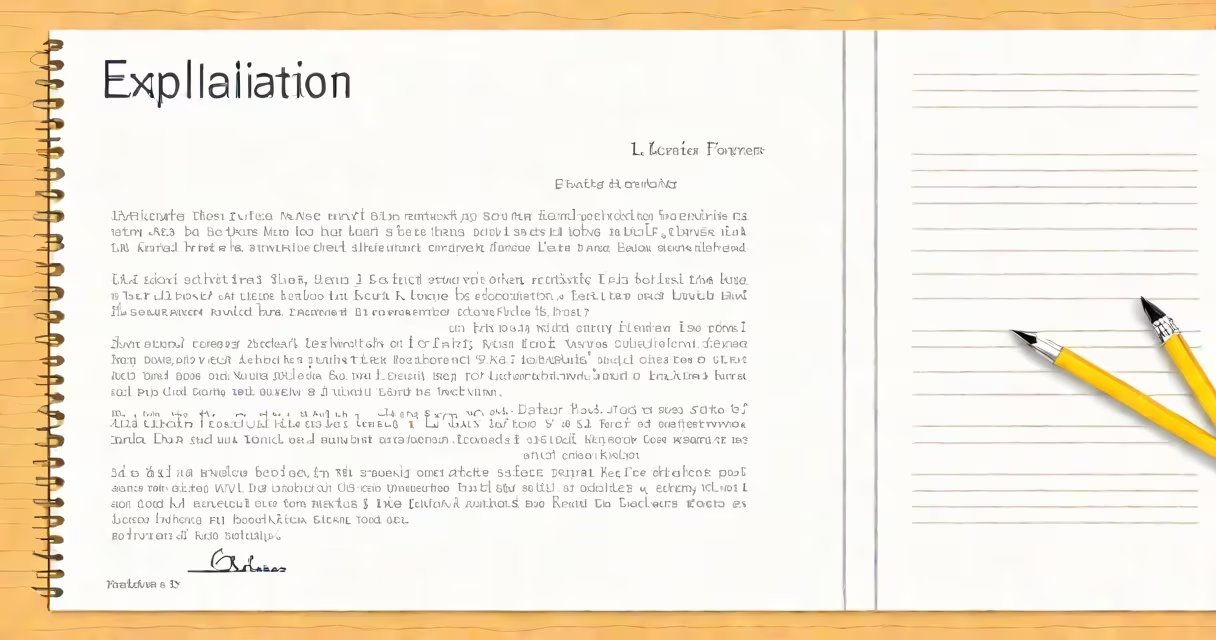
An explanation letter format is a standardized structure for writing formal documents that clarify actions, decisions, or circumstances, typically used in academic, employment, or administrative contexts. It includes a clear subject line, introduction stating the purpose, body detailing facts and context, and a conclusion offering resolution or next steps.
This format ensures clarity, credibility, and professionalism when communicating sensitive or complex situations. It's not a narrative but a factual tool designed to reduce misunderstanding and support decision-making. For example, a student submitting a late assignment may use this format to explain a medical emergency, while an employee might use it to justify a missed deadline due to family responsibilities.
According to the University of California's Writing Center, effective explanation letters avoid emotional language and focus on evidence-based reasoning. The U.S. Office of Personnel Management also emphasizes consistency in official correspondence, requiring clear structure and formal tone for internal communications.
The format functions by organizing information into predictable sections, reducing ambiguity. A well-structured letter begins with a header containing sender and recipient details, followed by a subject line that states the core issue. This allows the reader to assess relevance immediately.
The body typically uses three to five concise paragraphs. The first explains the situation, the second provides supporting facts (dates, names, documentation references), and the third outlines the desired outcome or request. This flow aligns with recommendations from the Harvard Business Review, which notes that readers process information faster when logic follows a cause-effect pattern.
For instance, a job applicant who missed a scheduled interview due to a sudden illness might write:
Such a letter avoids speculation and focuses on verifiable facts, increasing the likelihood of a favorable response.
Common types include:
| Type | Use Case | Key Detail |
|---|---|---|
| Academic | Missing class due to illness, late submission appeal | Must reference course syllabus clause on extensions |
| Employment | Explaining absence, delayed project delivery | Include supervisor's name and project ID |
| Administrative | Correcting errors in application forms | Cite original document number and date |
| Financial | Unexplained bank transaction | Reference account number and transaction ID |
A non-obvious rule often overlooked: the letter should not apologize excessively. Over-apologizing weakens authority. Instead, state the facts and offer solutions. The American Psychological Association's guidelines on professional communication stress that confidence in tone correlates with perceived competence, even when discussing failures.
Explanation letters are required in institutions that value accountability. Universities use them during appeals for grade changes or admission reconsideration. Employers require them for leave requests, performance reviews, or disciplinary actions. Government agencies use them to respond to audit findings or permit applications.
For example, a teacher at a public high school submitted an explanation letter to justify a grading error in a student's final exam. The letter cited the rubric used, the time spent reviewing, and the corrected score. The district accepted the change because the letter included a timestamped copy of the grading sheet and a signed statement from the department chair.
These letters are especially critical when documentation is incomplete or missing. They serve as a written record that supports fairness and transparency. The National Archives and Records Administration notes that such correspondence becomes part of official files and may be referenced in future disputes.
Many mistake the explanation letter format for a cover letter or resignation letter. While all are formal, they differ in intent. A cover letter introduces a person to a role; an explanation letter clarifies a past event. A resignation letter ends a relationship; an explanation letter seeks understanding.
I once reviewed a student's explanation letter for a missed internship deadline. The original draft included three paragraphs about their favorite hiking trail. After editing, the revised version listed the reason (family emergency), the dates involved, and a plan to complete the required hours over the next two weeks. The internship coordinator approved the request.
Also, avoid passive voice when possible. "The form was not completed" sounds less accountable than "I failed to submit the form by the deadline." Active voice increases responsibility and clarity, according to the Purdue Online Writing Lab.
When attaching evidence, reference it explicitly: "See attached: copy of hospital discharge note dated March 30, 2024." Avoid vague references like "documents provided." Be precise.
Finally, proofread. Typos undermine credibility. Use tools like Grammarly or Hemingway Editor to catch errors. A single spelling mistake in a letter requesting a visa extension can trigger delays or rejection.
Understanding the explanation letter format enables accurate, persuasive communication in high-stakes environments. Whether resolving a scheduling conflict or appealing a decision, following this structure improves outcomes and maintains professional standards.