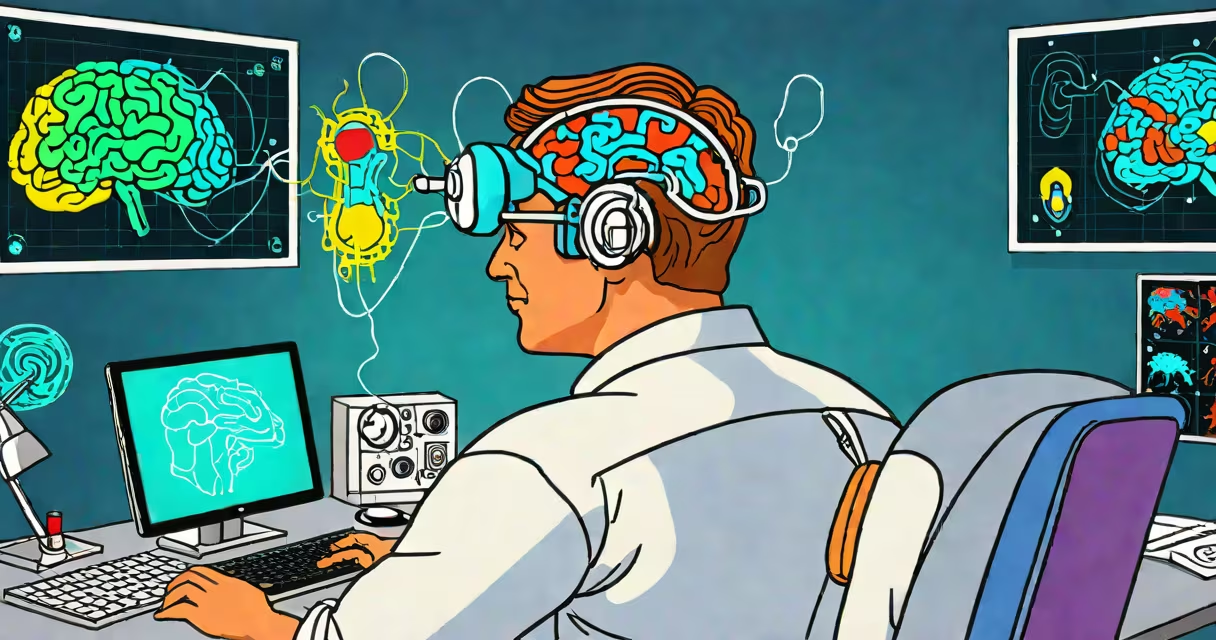
Spatial cognition is the mental process by which individuals perceive, represent, and reason about spatial relationships in their environment. It enables navigation, object manipulation, and understanding of physical layouts-from finding your way through a city to assembling furniture from instructions.
This cognitive function involves multiple brain regions, including the hippocampus and parietal cortex, and operates across sensory modalities. It is not limited to vision; people who are blind develop spatial representations using auditory and tactile cues. Research shows that spatial cognition develops early in life and remains adaptive throughout adulthood.
According to the National Institutes of Health, spatial cognition underpins critical functions such as route planning, mental rotation of objects, and spatial memory. These abilities are essential for everyday tasks like driving, playing sports, or reading maps. Deficits in spatial cognition are linked to neurological conditions such as Alzheimer's disease and developmental disorders like dyslexia.
The brain constructs internal models of space through sensory input and motor feedback. When you walk into a room, visual cues (doorways, lighting patterns) and proprioceptive signals (body position, movement) combine to form a changing representation of the environment. This model updates in real time as you move.
Neuroscience identifies place cells in the hippocampus that fire when an animal occupies a specific location. Grid cells in the entorhinal cortex generate a hexagonal coordinate system that helps track distance and direction. Together, they form a neural GPS. A 2014 study published in *Nature* demonstrated that grid cell activity in rats corresponds to a stable metric structure for spatial navigation, even in darkness.
Humans rely on similar mechanisms. When going through unfamiliar areas, we often use landmarks-trees, buildings, signs-to anchor our position. This strategy reduces reliance on precise measurements and increases efficiency. However, over-reliance on landmarks can lead to errors when they're removed or altered, such as during urban redevelopment.
Spatial cognition comprises several interrelated processes: spatial perception, spatial memory, spatial reasoning, and spatial attention. Each contributes uniquely to how we interpret and interact with space.
| Component | Description | Example |
|---|---|---|
| Spatial Perception | Interpreting spatial layout from sensory input | Seeing a staircase and knowing it leads upward |
| Spatial Memory | Recalling locations and routes | Remembering where you parked your car in a mall |
| Spatial Reasoning | Manipulating mental images of objects or spaces | Visualizing how a bookshelf fits in a corner |
| Spatial Attention | Focusing on relevant spatial features | Noticing a red door while ignoring green walls |
These components are not isolated. For instance, when solving a jigsaw puzzle, you use spatial perception to see piece shapes, spatial memory to recall where pieces have been tried, spatial reasoning to rotate pieces mentally, and spatial attention to filter out distracting colors or textures.
A lesser-known fact: spatial cognition varies between individuals. Some people have superior spatial visualization skills, enabling high performance in fields like architecture, surgery, and aviation. Others struggle with map reading or parking maneuvers. This variation is partly genetic but also shaped by experience-especially early exposure to spatial tasks.
Many assume spatial cognition is purely visual. But research from the University of California, Berkeley, confirms that blind individuals develop highly accurate spatial representations using sound and touch. Echo-location, used by some blind navigators, allows them to detect object size, shape, and distance through reflected sound waves.
Another misconception is that spatial skills are fixed. In reality, training improves performance. A 2016 study in *Psychological Science* showed that just 10 hours of spatial reasoning exercises increased scores on standardized tests by 12-15 points. These gains were sustained over six months, indicating lasting neural adaptation.
Some confuse spatial cognition with spatial awareness. While related, they differ: spatial awareness is the immediate detection of objects in proximity (e.g., sensing someone is behind you), whereas spatial cognition involves constructing and manipulating complex spatial models over time.
Consider a firefighter entering a smoke-filled building. Visibility is near zero. They rely entirely on spatial cognition: memorized floor plans, tactile cues from walls, and auditory signals from teammates. Their brain integrates these inputs to maintain orientation and locate exits-often faster than relying on visual maps.
Another example: surgeons performing laparoscopic procedures. They operate using video feeds from tiny cameras, not direct sight. Hand-eye coordination depends on mental rotation of the surgical field. Studies show that surgeons with stronger spatial cognition perform fewer errors and complete operations faster.
I once observed a group of first-year engineering students attempting to assemble a modular robot from a flat kit. Only those who verbally described the spatial relationships-"the gear must be above the axle, rotated 90 degrees"-completed the task correctly. Those who relied solely on trial-and-error failed repeatedly. This demonstrates how explicit spatial reasoning enhances learning and execution.
Urban planners also depend on spatial cognition. When designing pedestrian-friendly zones, they analyze foot traffic patterns, visibility angles, and obstacle placement. Tools like GIS (Geographic Information Systems) extend human spatial cognition by storing and analyzing spatial data at scale. But even advanced software requires users to understand spatial logic to avoid misinterpretation.
Spatial cognition influences education, medicine, design, and artificial intelligence. In classrooms, teaching geometry through hands-on manipulation improves retention. In AI, robots must simulate spatial reasoning to go through homes or factories. Self-driving cars use spatial cognition algorithms to predict pedestrian movements and adjust trajectories.
Deficits in spatial cognition are associated with developmental delays. Children with ADHD often struggle with spatial tasks, such as copying geometric figures or judging distances. Early intervention programs focusing on spatial play-like block-building or maze-solving-can mitigate these challenges.
For older adults, spatial decline correlates with reduced mobility and increased fall risk. A 2020 study in *The Lancet Neurology* found that maintaining spatial skills through mental exercises delayed cognitive decline by up to two years. Simple activities like going through new routes or rearranging furniture help preserve spatial networks.
Understanding spatial cognition offers practical insight into how people learn, adapt, and interact with environments. It is not a single skill but a network of interconnected mental processes rooted in biology and shaped by experience.
For deeper exploration of foundational cognitive processes, explore the core mechanisms of human cognition.