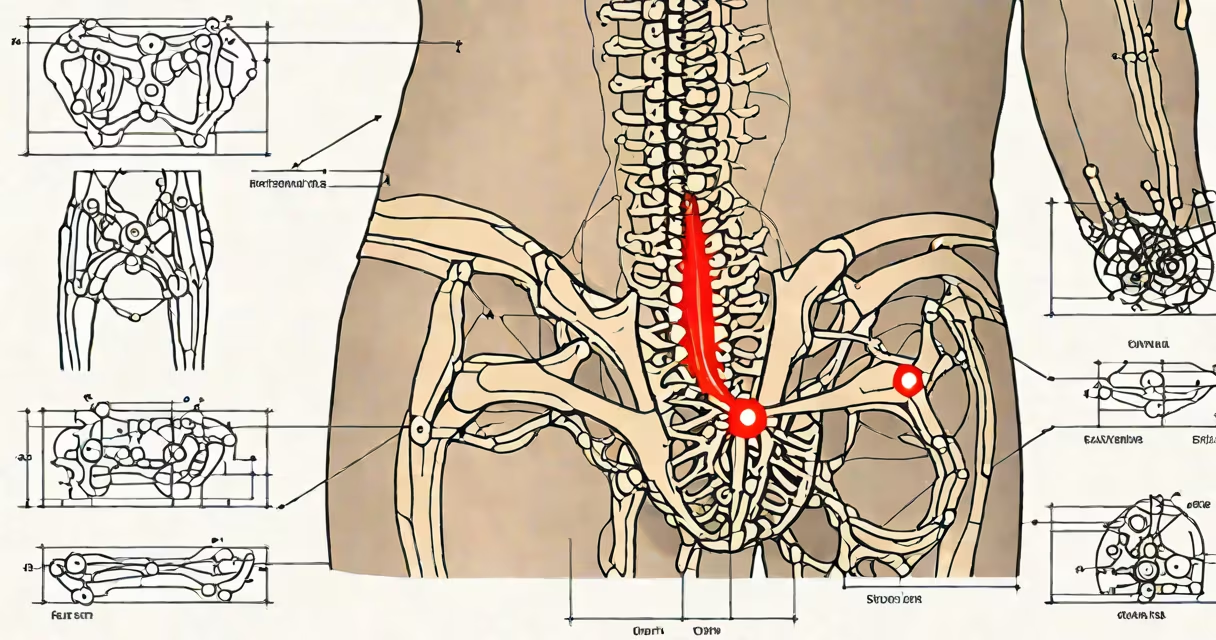
Left sacral pain is discomfort originating in the left side of the sacrum-the triangular bone at the base of the spine formed by fused vertebrae. It typically presents as a dull ache, sharp stab, or burning sensation in the lower back, buttock, or hip area, and may worsen with prolonged sitting, standing, or twisting.
The sacrum connects the spine to the pelvis via the sacroiliac (SI) joints. Dysfunction in these joints is the most common cause of left sacral pain. When the SI joint becomes inflamed or misaligned, it disrupts normal movement and can irritate nearby nerves. This condition affects approximately 15-30% of people with chronic low back pain, according to the American Academy of Physical Medicine and Rehabilitation.
Other contributors include muscle strain from lifting, poor posture, pregnancy-related changes in pelvic alignment, or trauma such as a fall. Nerve compression-particularly from a herniated disc or spinal stenosis-can also mimic sacral pain by affecting the sciatic nerve root. A 2021 study in Spine Journal found that 42% of patients with unilateral lower back pain had a primary diagnosis of sacroiliac joint dysfunction after MRI and diagnostic injections confirmed the source.
Pain begins when mechanical stress or inflammation alters the normal function of the sacroiliac joint. These joints are designed to absorb shock and stabilize the pelvis during walking, running, or bending. When they become too mobile or too stiff, the surrounding ligaments and muscles compensate, leading to fatigue and pain.
For example, a 34-year-old office worker reported persistent left sacral pain after six months of daily desk work with minimal movement. Imaging showed no disc herniation, but a diagnostic injection into the left SI joint relieved symptoms for 48 hours-confirming the joint as the source. After physical therapy focusing on core stability and SI joint mobilization, pain resolved within eight weeks.
Neurological signs such as numbness, tingling, or weakness in the left leg suggest nerve involvement beyond the SI joint. In such cases, imaging like MRI is necessary to rule out lumbar radiculopathy or cauda equina syndrome-a rare but serious condition requiring urgent care.
Left sacral pain varies by underlying cause. The following table outlines the most frequent categories, their typical triggers, and distinguishing features:
| Type | Primary Cause | Typical Trigger | Distinguishing Feature |
|---|---|---|---|
| Sacroiliac joint dysfunction | Joint instability or stiffness | Prolonged sitting, stair climbing | Pain localized to the left buttock, may radiate to thigh |
| Muscle strain | Overuse or sudden twist | Lifting heavy objects, sports | Sharp pain during movement, improves with rest |
| Nerve compression | Herniated disc, spinal stenosis | Bending forward, prolonged standing | May include leg weakness or altered reflexes |
| Pregnancy-related | Relaxin hormone loosening ligaments | Third trimester, childbirth | Often bilateral, but asymmetry possible |
A key distinction often missed is that sacral pain rarely causes true sciatica. True sciatica involves radiating pain along the entire sciatic nerve path-from the lower back through the glute, down the back of the thigh, and into the calf. If pain stops at the hip or upper thigh, the source is likely the SI joint, not the sciatic nerve root.
Left sacral pain is frequently mislabeled as general lower back pain. But the sacrum is a unique structure: it's not a single vertebra but five fused bones forming a stable base. Its position and function differ from the lumbar spine above it.
One non-obvious fact: the left sacral pain may originate from the right side of the body due to referred pain patterns. For example, a tumor in the left kidney can refer pain to the left sacral region. Similarly, gynecological conditions like endometriosis can cause pelvic pain that mimics sacral discomfort. A 2019 review in Journal of Women's Health noted that 12% of women with chronic pelvic pain were initially misdiagnosed with musculoskeletal issues.
Another common confusion is mistaking sacral pain for hip joint problems. Hip osteoarthritis typically causes groin pain and limited internal rotation. Sacral pain usually affects the posterior pelvis and is aggravated by weight-bearing activities like standing or walking.
Accurate diagnosis requires clinical evaluation. Doctors assess pain location, movement patterns, and neurological function. Imaging such as X-ray or MRI is used only when red flags appear-such as unexplained weight loss, fever, or bowel/bladder changes.
First-line treatment includes activity modification, physical therapy targeting the core and gluteal muscles, and NSAIDs for inflammation. A 2020 randomized controlled trial published in Physical Therapy found that patients with SI joint dysfunction who completed a 6-week program of targeted exercises experienced a 60% reduction in pain scores compared to controls.
Injections into the SI joint provide temporary relief for 40-60% of patients, according to the North American Spine Society. For refractory cases, radiofrequency ablation or surgical fusion may be considered-but these are reserved for severe, disabling pain after conservative management fails.
Left sacral pain is not a single condition but a symptom of multiple systems-musculoskeletal, neurological, and sometimes visceral. Identifying the true source ensures effective treatment and prevents unnecessary interventions.