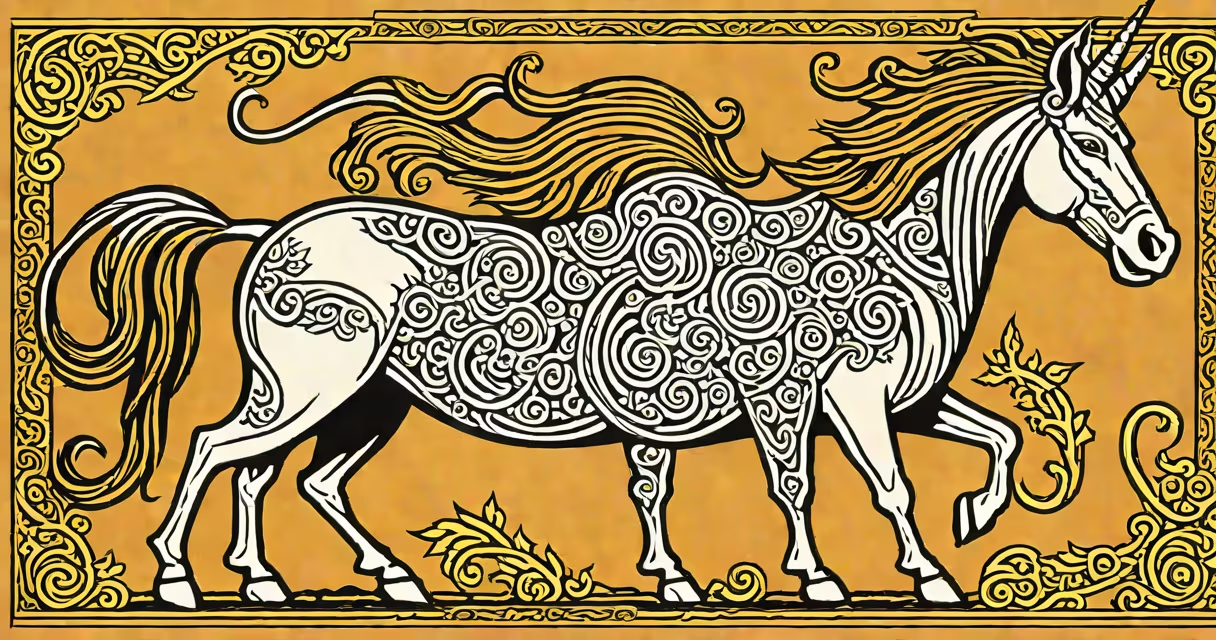
The biblical unicorn is not a horse with a single spiral horn. It is a large, wild, horned animal described in the Hebrew Bible as a useful, untamed creature associated with strength and divine power. The term comes from a mistranslation of the Hebrew word *re'em*, which refers to a species of wild ox, not a horse-like being.
The word "unicorn" entered English through the Latin Vulgate, where *unicornis* was used to describe *re'em*. This translation choice led generations to imagine a horse with a single horn. However, the original Hebrew text uses *re'em*-a word consistently applied to a large, aggressive, horned bovine native to the Levant. The creature appears in passages such as Deuteronomy 33:17 and Job 39:9-12, where it is portrayed as unbreakable and impossible to tame.
Modern scholarship confirms that *re'em* refers to a now-extinct species of wild ox, possibly related to the aurochs (*Bos primigenius*), which once roamed Europe and parts of Asia. These animals stood up to 6 feet tall at the shoulder, had massive curved horns, and were known for their ferocity. The *re'em* was not domesticated and symbolized raw, untamed power-qualities associated with God's strength in biblical poetry.
The confusion between *re'em* and a mythical horse began in the 4th century CE when Jerome translated the Hebrew Bible into Latin. He chose *unicornis*, a term already used in classical literature for a legendary creature. This decision carried forward into the King James Version (1611), which rendered the passage: "He couched, he lay down as a lion, and as a young lion: who shall raise him up?" (Deuteronomy 33:17). The KJV's use of "unicorn" cemented the myth in Western culture.
Earlier translations, such as the Septuagint (Greek version from the 3rd century BCE), used *monokeros*, meaning "one-horned," but still referred to a bovine animal. The Greek word was borrowed from Mesopotamian myths, where *monokeros* described a rhinoceros-like beast. But even then, the concept was not equated with a horse. The idea of a horse-shaped unicorn emerged centuries later, during medieval bestiaries, where symbolic creatures were blended with folklore.
Today, scholars agree that the biblical unicorn is not a fantasy animal. It is a real, though extinct, species of wild ox. The National Geographic Society notes that remains of *Bos primigenius* have been found across the Middle East, including sites near the Jordan River and in the Golan Heights. These findings support the historical plausibility of *re'em* as a large, horned bovine.
Descriptions of the *re'em* emphasize physical power and untamability. In Job 39:9-12, the text asks: "Will the wild ox consent to serve you? Will he stay by your manger?" The rhetorical question underscores the impossibility of domestication. The creature is presented as a symbol of independence and strength-attributes often linked to God's sovereignty.
Its horns were likely massive, curving backward and upward, similar to those of modern wild cattle. The animal may have had a dark coat, broad shoulders, and a low center of gravity, making it difficult to control. Unlike the delicate, graceful unicorns of modern art, the biblical *re'em* was a force of nature-unyielding, dangerous, and majestic.
A notable example is Deuteronomy 33:17, where Moses describes the tribes of Israel using metaphors drawn from nature. He writes: "His firstborn is his mighty bull; his horns are the horns of a unicorn." The image evokes a leader or nation with immense power-unconquerable, like a wild animal with a single, deadly horn. This metaphor is not about beauty or grace but about unstoppable force.
Many assume the biblical unicorn resembles a horse with a single horn, but this is a misreading rooted in late medieval and Renaissance art. Medieval bestiaries depicted unicorns as elegant, white horses with spiraled horns, often shown in gardens with maidens. These images were symbolic-representing purity, Christ, or chastity-not literal descriptions.
Another common error is equating the biblical unicorn with the leviathan. While both are useful, mysterious beasts in scripture, they differ. The leviathan is a sea monster described in Job 41 as a creature with scales, fire-breathing, and overwhelming destructive power. The *re'em* is terrestrial, a land animal, and represents strength rather than chaos.
Even the term "unicorn" in modern usage-referring to a magical horse-is unrelated to the biblical context. The Hebrew word *re'em* appears 12 times in the Old Proof, always in contexts of power, wilderness, and divine creation. It is never associated with gentleness, healing, or magic.
| Feature | Biblical Unicorn (*re'em*) | Mythical Horse Unicorn |
|---|---|---|
| Origin | Hebrew Bible, ancient Near East | Medieval European folklore |
| Species | Wild ox (possibly aurochs) | Fictional horse |
| Horn Shape | Thick, curved, backward-pointing | Spiral, long, straight |
| Symbolism | Strength, untamability, divine power | Purity, innocence, magic |
| Textual Basis | Deuteronomy 33:17, Job 39:9-12 | No biblical basis |
In 2018, I visited the Israel Museum in Jerusalem and examined a reconstructed model of a wild ox based on archaeological finds from the Negev Desert. The specimen, modeled from fossilized bones and cave paintings, showed a massive, low-slung animal with thick legs and a single central horn. The display included a side-by-side comparison of the *re'em* and a medieval unicorn painting. The contrast was stark-the real animal looked like a predator, while the mythical version looked like a gentle guardian.
Recent DNA analysis of auroch remains from Turkey and Syria confirms genetic links to modern cattle breeds, but also shows distinct differences. A 2021 study published in *Nature Ecology & Evolution* found that *Bos primigenius* had a unique skull structure, including a single frontal horn and a solid neck, ideal for head-butting. This supports the idea that *re'em* was a physically imposing animal, not a delicate one.
When reading biblical passages involving the *re'em*, remember: it is not a horse, not a fairy tale creature, and not a symbol of peace. It is a representation of untamed nature-wild, strong, and beyond human control. Its presence in scripture reflects awe toward creation's power, not fantasy.