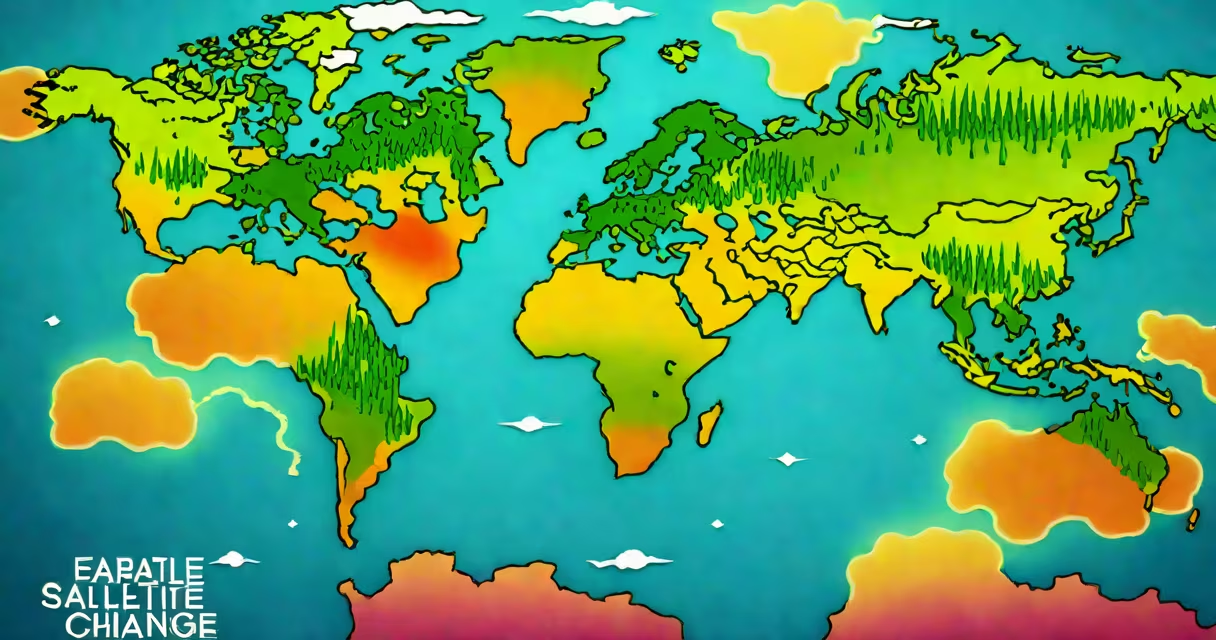
Human activities releasing greenhouse gases-primarily carbon dioxide, methane, and nitrous oxide-are the dominant cause of climate change since the late 19th century. Natural processes like volcanic eruptions and solar cycles play minor roles compared to industrial-era emissions.
Climate change results from an imbalance in Earth's energy budget. When greenhouse gases accumulate in the atmosphere, they trap heat that would otherwise escape into space. This process, known as the enhanced greenhouse effect, leads to rising global temperatures, shifting weather patterns, and long-term environmental shifts.
The Intergovernmental Panel on Climate Change (IPCC) states that human influence on the climate system is clear and has been detected in every continent and ocean. Since pre-industrial times, global average surface temperature has increased by 1.2°C, with most of that rise occurring since 1970.
Greenhouse gases absorb infrared radiation emitted by Earth's surface and re-radiate it in all directions, including back toward the surface. This traps heat in the lower atmosphere. The main contributors are carbon dioxide (CO₂), methane (CH₄), and nitrous oxide (N₂O).
Carbon dioxide accounts for about 76% of global greenhouse gas emissions from human activities. It comes primarily from burning fossil fuels-coal, oil, and natural gas-for electricity, transportation, and industry. Deforestation also reduces CO₂ absorption, increasing net atmospheric concentrations.
Methane, though less abundant, has a global warming potential 28 times greater than CO₂ over a 100-year period. Major sources include livestock digestion (enteric fermentation), rice paddies, landfills, and fossil fuel extraction. Nitrous oxide, released from agricultural fertilizers and industrial processes, persists in the atmosphere for over 100 years and contributes to ozone depletion.
Energy production and transportation together account for nearly 60% of global CO₂ emissions. Power plants burning coal and natural gas emit large volumes of CO₂ during electricity generation. Vehicles powered by gasoline or diesel release CO₂ with each combustion cycle.
Agriculture contributes around 12% of global greenhouse gas emissions. Livestock, especially cattle, produce methane through belching and manure management. Synthetic nitrogen fertilizers release N₂O, which forms when microbes break down excess nitrogen in soil.
Land-use changes, particularly deforestation in tropical regions, reduce the planet's capacity to absorb CO₂. The Amazon rainforest, once a net carbon sink, now emits more CO₂ than it absorbs due to logging and fires. Replacing forests with farmland or urban areas releases stored carbon and diminishes future sequestration potential.
| Source | Primary Gas | Annual Global Contribution (%) | Example Activity |
|---|---|---|---|
| Fossil fuel combustion | CO₂ | 65% | Power plants, cars, planes |
| Agriculture | CH₄, N₂O | 12% | Cattle farming, fertilizer use |
| Deforestation | CO₂ | 10% | Clearing tropical forests for palm oil or pasture |
| Industrial processes | CO₂, F-gases | 8% | Cement production, refrigerant leaks |
Fluorinated gases-used in air conditioning and electronics manufacturing-have extremely high global warming potentials. Although they make up less than 1% of total emissions, their impact per molecule is thousands of times stronger than CO₂.
Many assume climate change is purely a natural phenomenon driven by solar cycles or volcanic activity. However, satellite measurements show that solar irradiance has remained stable since the 1950s while global temperatures have risen sharply. Volcanic emissions are episodic and short-lived, unlike continuous anthropogenic emissions.
Another myth is that individual actions don't matter because large industries are the main source. While systemic change is essential, personal choices collectively influence demand and policy. For example, reducing meat consumption can lower agricultural emissions by up to 30% per person annually.
A lesser-known fact: aerosols from industrial pollution temporarily mask some warming by reflecting sunlight. As clean air regulations reduce particulate emissions, the full warming effect of greenhouse gases becomes more apparent. This is why global temperatures accelerated after the 1970s despite ongoing efforts to reduce pollution.
In summer 2023, Western Europe experienced record-breaking temperatures. France saw highs above 45°C (113°F), and Germany recorded its hottest June on record. Scientists analyzed atmospheric conditions using climate models and concluded that such extreme events were made 10 to 20 times more likely due to human-induced climate change.
Using data from the World Weather Attribution network, researchers found that without the increase in global temperatures from greenhouse gas emissions, the likelihood of such heatwaves would have been negligible. The study attributed the event to a combination of persistent high-pressure systems and elevated baseline temperatures caused by decades of CO₂ accumulation.
This example illustrates how climate change isn't just a future threat-it's already altering weather extremes. The frequency and intensity of heatwaves, droughts, and storms are increasing, directly linked to rising greenhouse gas levels.
Coastal cities face higher risks from sea level rise, which results from thermal expansion of oceans and melting glaciers. The Greenland ice sheet lost an average of 279 billion tons of ice per year between 1993 and 2019, according to NASA's GRACE satellite mission. This melt contributes to rising sea levels, threatening infrastructure and displacing communities.
Regions dependent on agriculture, such as sub-Saharan Africa and South Asia, are vulnerable to changing rainfall patterns. Droughts in the Horn of Africa have led to food shortages affecting over 20 million people. These impacts are amplified by climate change, which alters seasonal timing and increases variability.
Understanding what factors contribute to climate change enables better policy decisions. Countries that set ambitious emissions targets based on scientific consensus-like the EU's 2030 climate plan-achieve faster decarbonization. The U.S. Inflation Reduction Act of 2022 allocated $370 billion to clean energy and emissions reduction, aiming to cut emissions by 50% below 2005 levels by 2030.
Knowing the causes is the first step toward action. Individuals can reduce their carbon footprint by switching to electric vehicles, adopting plant-based diets, and supporting renewable energy policies. Communities can advocate for green infrastructure and sustainable zoning laws.
Climate change is not a distant threat. It is unfolding now, shaped by identifiable human activities. Addressing it requires confronting the root causes: fossil fuel dependence, unsustainable land use, and industrial overconsumption. The science is unambiguous. The solutions exist. What remains is political will and collective commitment.