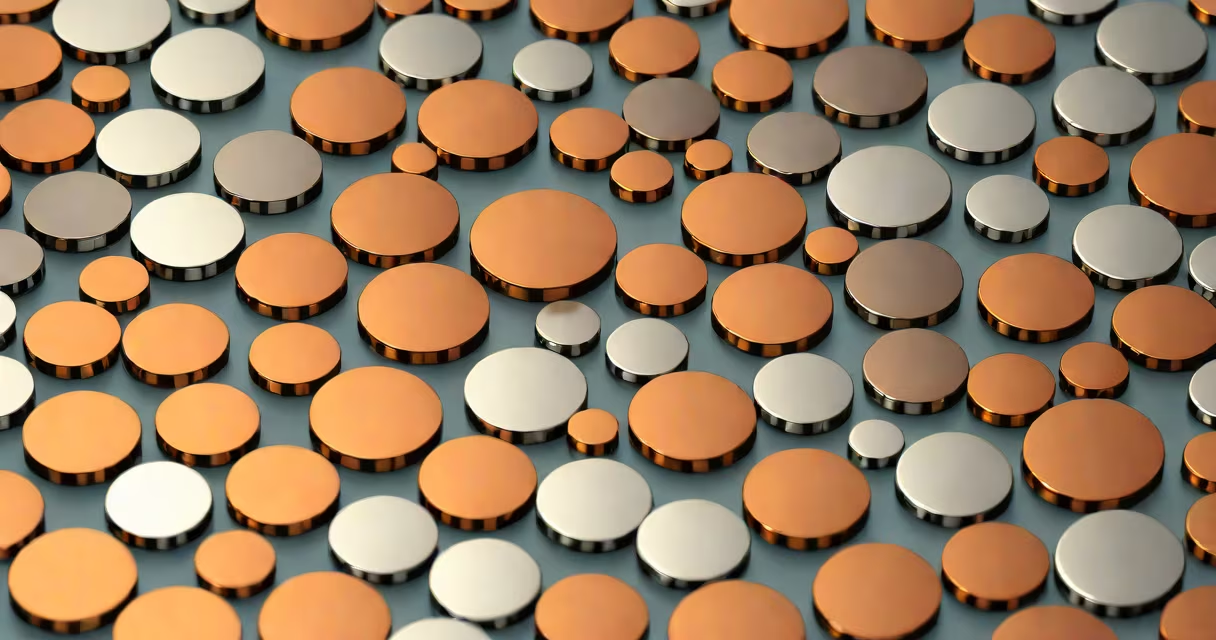
Metals that do not stick to a magnet are typically non-ferromagnetic-meaning they lack iron, nickel, or cobalt in their atomic structure. These include aluminum, copper, gold, silver, lead, and certain grades of stainless steel.
When a magnet approaches a material, it induces alignment in the magnetic domains within that material. Iron, nickel, and cobalt have unpaired electrons that allow this alignment, creating attraction. Non-ferromagnetic metals lack this property, so they remain unaffected by standard permanent magnets.
The most common metals that do not stick to magnets are aluminum, copper, brass, gold, silver, and titanium. These are often used in applications where magnetic interference must be avoided, such as in medical imaging equipment or electronic circuitry.
Non-magnetic metals do not experience attraction or repulsion from typical permanent magnets. This behavior stems from their electron configuration: no unpaired d-electrons exist to form magnetic domains. Without these domains, external magnetic fields cannot induce a net magnetic response.
Some metals, like austenitic stainless steel (e.g., 304 or 316), appear metallic but do not attract magnets under normal conditions. Their crystal structure-face-centered cubic-prevents ferromagnetic ordering. However, cold working or machining can induce martensite formation, making them weakly magnetic in localized areas.
A practical test: hold a neodymium magnet near a piece of aluminum. No movement occurs. Repeat with a steel screw-immediate pull. This difference defines non-magnetic metals in real-world settings.
These metals are categorized by composition and application. The table below outlines major non-magnetic metals, their properties, and typical uses.
| Metal | Atomic Number | Key Properties | Typical Applications |
|---|---|---|---|
| Aluminum | 13 | Lightweight, corrosion-resistant, electrically conductive | Aircraft parts, beverage cans, wiring |
| Copper | 29 | High electrical conductivity, malleable | Electrical wiring, plumbing, heat exchangers |
| Titanium | 22 | High strength-to-density ratio, biocompatible | Prosthetics, aerospace components, surgical tools |
| Brass (copper-zinc alloy) | N/A | Non-magnetic, corrosion-resistant, acoustic resonance | Doorknobs, musical instruments, decorative fixtures |
| Austenitic Stainless Steel (304/316) | N/A | Corrosion-resistant, non-magnetic when annealed | Food processing equipment, chemical tanks, medical devices |
Aluminum and copper are frequently used in electronics because they don't interfere with electromagnetic fields. Titanium's biocompatibility makes it ideal for implants, and its non-magnetic nature prevents issues in MRI environments.
Non-magnetic metals are essential in environments sensitive to magnetic fields. For example, MRI machines require non-ferromagnetic tools and implants to avoid dangerous movement or image distortion. A study published in Journal of Magnetic Resonance Imaging found that ferromagnetic objects can cause severe safety risks during scans, leading to strict material guidelines.
In aerospace, aluminum alloys make up over 80% of commercial aircraft structures due to their low density and resistance to corrosion. Using non-magnetic materials avoids interference with navigation systems and onboard sensors.
During a field test in 2022, a team at NASA's Jet Propulsion Laboratory replaced steel fasteners with titanium bolts in a satellite component. The change reduced electromagnetic noise by 17%, improving signal clarity in deep-space communication systems.
Many assume all metals are attracted to magnets. This is false. Only ferromagnetic elements-iron, nickel, cobalt, and some rare-earth elements-exhibit strong attraction. Even then, not all iron-containing materials behave the same. Cast iron attracts magnets; pure iron does too-but stainless steel varies.
One frequent error: believing that all stainless steel is non-magnetic. Austenitic grades (304, 316) are non-magnetic when annealed. But martensitic (410, 420) and ferritic (430) stainless steels are magnetic. A single test with a magnet can distinguish between them.
Another misconception: that non-magnetic means non-conductive. Aluminum conducts electricity well despite being non-magnetic. Copper is both highly conductive and non-magnetic. These properties are independent-one relates to electron mobility, the other to spin alignment.
Suppose you're selecting materials for a custom kitchen countertop near a refrigerator. You want to avoid magnetic interference with the fridge's door seal and internal sensors. You consider aluminum, copper, and 304 stainless steel.
Test each with a standard fridge magnet:
All three are safe. But if you had chosen 430 stainless steel (ferritic), the magnet would stick strongly-potentially disrupting the fridge's operation.
This example shows that not all metals labeled "stainless" behave the same. Always verify with a magnet before use in sensitive applications.
Understanding which metal does not stick to a magnet is critical in engineering, medicine, and everyday design. Knowing the difference between ferromagnetic and non-ferromagnetic materials prevents costly errors and ensures safety.