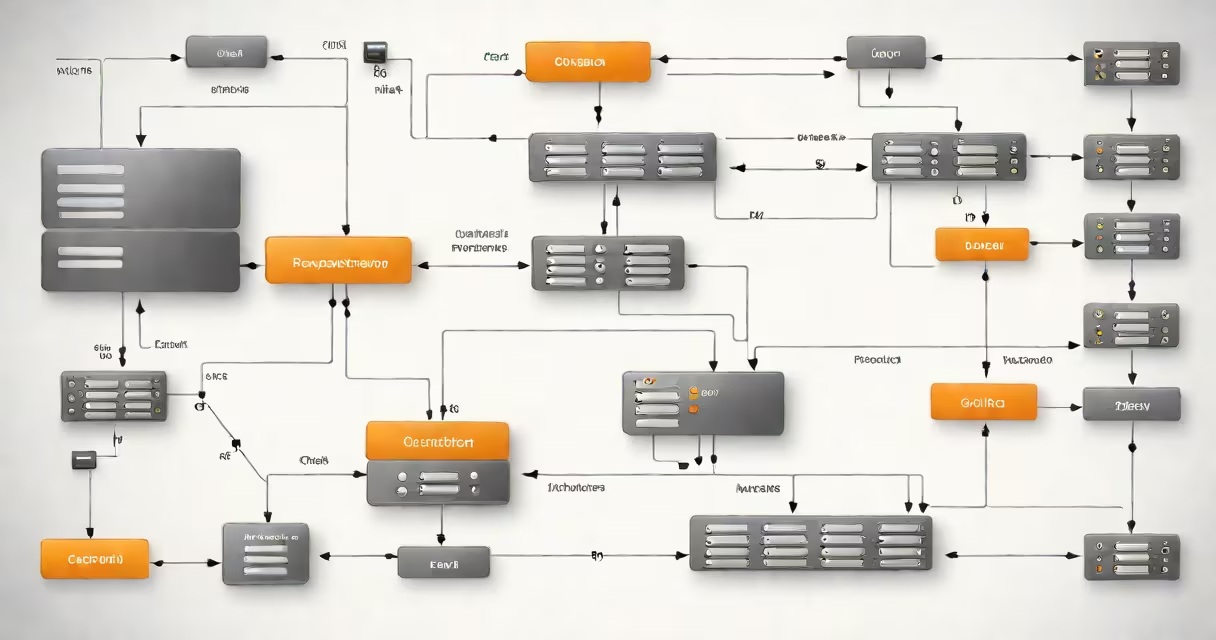
A repository is a central storage location for all files related to a project, including code, documentation, and version history. It tracks every change made to those files, enabling collaboration, rollback, and audit trails. Repositories are foundational in software development and version control systems like Git.
Repositories function as digital vaults. They store every file in a project, from source code to configuration settings, and maintain a complete timeline of edits. This allows developers to see who changed what, when, and why. A single repository can host multiple versions of a project through branching, enabling parallel development without interference.
Git, the most widely used version control system, powers repositories across platforms like GitHub, GitLab, and Bitbucket. These services provide web interfaces, access controls, and CI/CD integrations. A repository can exist locally on a developer's machine or remotely on a server accessible to team members.
When a developer creates a new repository, the system initializes a hidden folder called .git. This folder contains metadata about the project's state, including commit logs, references to branches, and file checksums. Every time a change is saved, Git records it as a commit-a snapshot of the entire project at that moment.
Commits are linked in a chain. Each commit points to its parent, forming a directed acyclic graph (DAG). This structure enables features like merging, reverting, and branching. For example, if a bug is introduced in commit C3, a developer can roll back to C2 using git reset --hard HEAD~1, restoring the project to a working state.
Branches allow multiple lines of development. Creating a branch named feature/login adds a new pointer to the latest commit. Changes made on this branch don't affect the main branch until merged. Merging combines changes from one branch into another, resolving conflicts manually or automatically.
Repositories fall into two categories: local and remote. A local repository exists on a developer's machine. It supports offline work and rapid iteration. A remote repository resides on a server, such as GitHub.com or a company's internal GitLab instance. Remote repos enable team collaboration and backup.
| Type | Location | Use Case | Access |
|---|---|---|---|
| Local | Developer's computer | Testing, debugging, private development | Single user |
| Remote | Server (e.g., GitHub) | Team collaboration, deployment, backups | Multiple users |
Public repositories are visible to anyone online. They often host open-source projects like Linux kernel or React. Private repositories restrict access to authorized users. Companies use private repos to protect proprietary code, such as internal APIs or financial systems.
Many assume a repository is just a folder with files. That's incorrect. A repository includes version history, metadata, and tools for managing changes. Deleting a file in a repo doesn't remove it permanently-it remains accessible via older commits.
Another mistake is thinking that pushing to a remote repository instantly deploys code. Pushing only updates the remote copy. Deployment requires additional steps, such as running scripts, building binaries, or triggering automated pipelines. A push to GitHub doesn't deploy an app to production unless integrated with CI/CD tools.
Some confuse repositories with databases. While both store data, repositories track changes over time. Databases manage structured queries and transactions. A repository logs who changed a file and when. A database logs who accessed a record and what value was updated.
Suppose a team builds a weather dashboard using React. They create a repository named weather-app on GitHub. The initial commit includes index.html, App.js, and package.json. The team sets up a main branch and a feature/weather-chart branch.
Two developers work simultaneously. Developer A adds a chart component to feature/weather-chart. They commit with the message "Add temperature visualization." Developer B fixes a bug in the API call on the main branch. Both push their changes to the remote repository.
Later, Developer A merges their branch into main. Git detects a conflict in App.js due to overlapping edits. The team resolves it manually, then commits the merge. The final version includes both the chart and the bug fix. The full history is preserved, allowing anyone to review past decisions.
This workflow ensures transparency and accountability. If a flaw appears later, the team can trace it back to commit 8f2d1c3 and understand the context of the change.
Without repositories, collaborative software development would be chaotic. Multiple people editing the same file would overwrite each other's work. There would be no way to revert to a stable version after a failed update.
According to GitHub's 2023 State of the Octoverse report, over 100 million repositories exist on GitHub alone. The platform hosts 600 billion commits annually. These numbers reflect how deeply repositories underpin modern software engineering.
For individual contributors, repositories serve as portfolios. A public repository with consistent commits, clear READMEs, and well-documented issues demonstrates coding skill and reliability. Employers often review candidate repositories during hiring.
When you're learning to code, start small. Create a repository for a personal project-like a to-do list app-and commit daily. Use descriptive messages: "Fix login validation" instead of "Update code." This habit builds discipline and clarity.
For teams, setting up a repository early prevents technical debt. Define branching strategies, code review processes, and merge policies from the start. Tools like GitHub Actions automate testing and linting, ensuring consistency across contributions.
Understanding how a repository works is not optional for developers. It's the foundation of modern software delivery. in a team, a well-managed repository keeps your project organized, secure, and scalable.