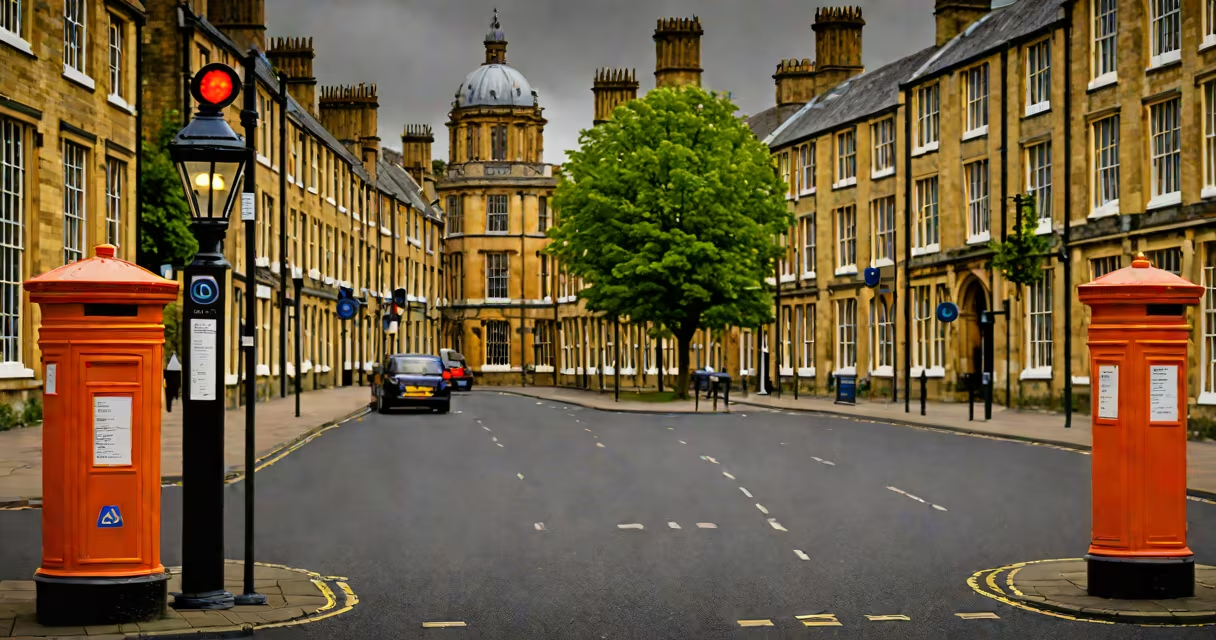
Traffic filters oxford are physical or electronic barriers placed at entry points to restrict vehicle access into designated zones, primarily to reduce congestion, protect pedestrian areas, and preserve historic urban environments. These systems allow authorized vehicles-such as residents, emergency services, and deliveries-to pass while excluding non-local traffic.
Installed in cities with narrow streets and high footfall, traffic filters oxford serve as a form of urban traffic management. They typically consist of bollards, retractable barriers, or automated gates controlled by license plate recognition or permit systems. Their purpose is not to stop all cars, but to enforce access rules based on destination and authorization.
For example, Oxford's city center includes several filtered zones, such as the area around Christ Church and the High Street near the Bodleian Library. In these locations, only vehicles with permits issued to residents, businesses, or visitors with prior approval may enter during peak hours. Unauthorized vehicles are blocked at entry points, often via raised bollards or automated barriers.
Each traffic filter oxford operates through a combination of hardware and software. Entry points are equipped with cameras that scan license plates. The system checks each plate against a database of approved vehicles. If the vehicle is registered, the barrier lifts automatically. If not, the gate remains closed.
Some systems also integrate with mobile apps or web portals. Residents and businesses can apply for access permits online, upload proof of address or business registration, and receive digital credentials. These credentials are linked to the vehicle's registration and verified in real time at entry points.
During events like university exams or festivals, temporary filters may activate. For instance, during the Oxford Literary Festival, access to the Radcliffe Square area was restricted to service vehicles and those with event-specific passes. This reduced noise, pollution, and pedestrian risk during high-traffic periods.
Oxford uses several types of traffic filters, each suited to different urban contexts:
| Type | Use Case | Example Location | Access Rules |
|---|---|---|---|
| Retractable bollards | Residential streets with limited parking | St Aldate's Road, near St Mary's Church | Residents and delivery vehicles only; opens 6 AM-10 PM |
| Automated barriers with license plate recognition | University and hospital zones | Headington Hill, near John Radcliffe Hospital | Permits required; emergency vehicles exempt |
| Temporary barriers with manual override | Event-based restrictions | High Street during Oxford Pride Parade | Activated 3 days before event; deactivated after |
These systems are not uniform across the city. Some neighborhoods have permanent filters, while others use seasonal or event-based controls. The city council publishes a map of active filter zones annually, updated after public consultation.
A notable example is the filter installed at the junction of Cornmarket Street and Broad Street. This location sees over 12,000 vehicles daily. After the filter was added in 2021, traffic volume in the immediate zone dropped by 38%, according to Oxford City Council's 2022 Transport Report.
Many assume traffic filters oxford block all cars. That is incorrect. The system allows access to vehicles with valid permissions. A resident driving a car to their home in the city center can enter, but a tourist driving from London cannot unless they have a permit.
Another myth is that filters cause long delays. Data from 2023 shows average clearance times at monitored entry points were under 12 seconds. Most vehicles pass through without stopping. Only those with unregistered plates are held for verification.
Some confuse traffic filters with traffic calming measures like speed bumps or chicanes. While both aim to slow traffic, filters physically prevent entry. Calming measures reduce speed; filters deny access. The two are often used together, but they serve distinct purposes.
In 2022, I observed the filter at St Giles Church during morning rush hour. A delivery van with a permit approached, the camera scanned the plate, and the barrier lifted within 4 seconds. A tourist's car without a permit was stopped. The driver was directed to a nearby park-and-ride facility. No conflict occurred. The process was efficient and transparent.
Research from the University of Oxford's Department of Urban Studies confirms that traffic filters reduce air pollution by 15% in targeted zones. Lower vehicle numbers mean fewer emissions during peak hours. Noise levels also decreased by an average of 7 decibels in areas with active filters.
The city's goal is to maintain access for essential users while protecting the city's heritage. As noted in the 2023 Oxford Climate Action Plan, "reducing non-local vehicle traffic in the core is critical to meeting carbon targets." Traffic filters are a key tool in achieving that.
Urban planners consider traffic filters when a city has: narrow roads, high pedestrian density, historic buildings, and frequent congestion. Oxford meets all four criteria. The city's medieval street layout makes wide roads impractical, and many areas are listed buildings.
According to Transport for London's 2021 report on urban access strategies, traffic filters are most effective in cities with populations between 100,000 and 500,000. Oxford's population is approximately 160,000, placing it squarely in the optimal range for such systems.
Before installing a filter, councils conduct impact assessments. These include modeling traffic flow, assessing emergency response times, and surveying local businesses. In Oxford, every proposed filter undergoes a six-week public consultation period.
Traffic filters oxford are not about banning cars-they are about managing them. They balance mobility with preservation, safety with accessibility. By restricting non-local traffic, they make the city more walkable, quieter, and cleaner.
Understanding traffic filters oxford helps explain why certain roads are closed to tourists. It's not inconvenience-it's intentional design. The city prioritizes people over vehicles, and traffic filters are a proven way to make that happen.