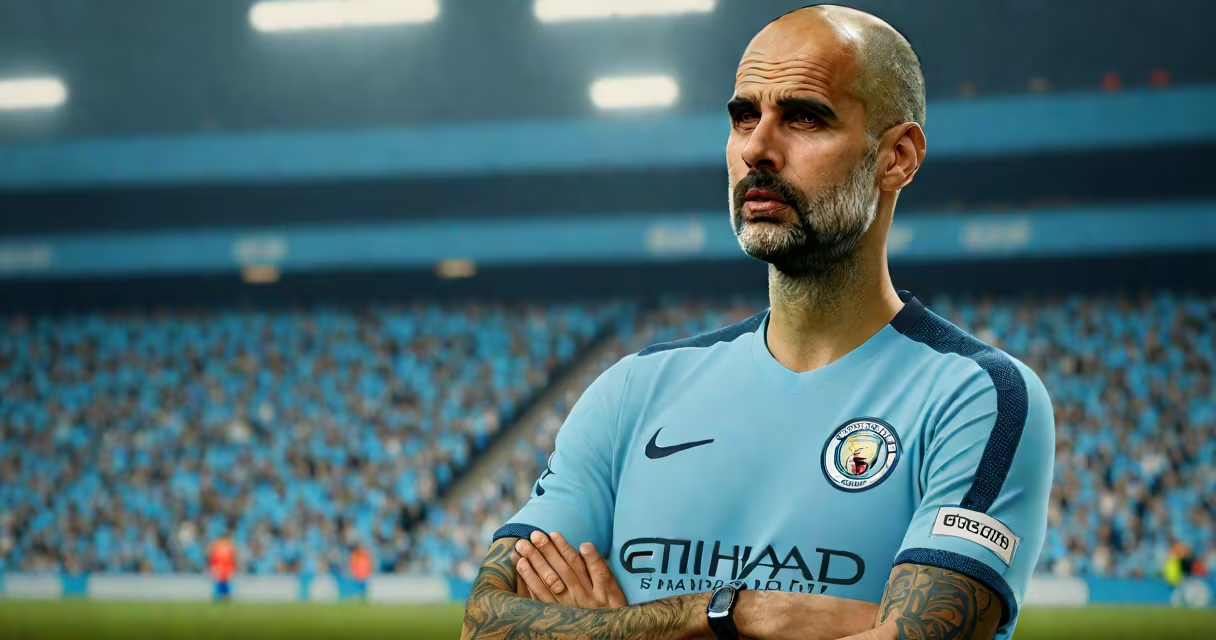
Man City managers are the head coaches who oversee Manchester City Football Club's first-team operations, including tactics, player selection, training, and in-game decisions in domestic and international competitions. They are responsible for shaping the team's identity and performance under the club's ownership structure.
The role demands strategic vision, leadership under pressure, and deep understanding of modern football systems. Managers at Manchester City operate within a high-performance environment backed by significant resources, allowing them to implement long-term playing philosophies. Since 2008, when Abu Dhabi United Group acquired the club, managerial appointments have reflected a clear ambition to win major trophies consistently.
Manchester City's current manager, Pep Guardiola, has been in charge since 2016. He transformed the club into a dominant force in English football, winning multiple Premier League titles, FA Cups, and League Cups. His tenure exemplifies how a manager's influence extends beyond results-it shapes culture, recruitment, and training methods.
Man City managers work within a structured hierarchy. While they hold ultimate authority over team matters, they report to the club's sporting director and executive board. This setup ensures alignment between tactical direction and long-term planning.
Guardiola, for example, collaborates closely with the technical staff, including fitness coaches, analysts, and youth development leads. He sets training sessions, designs game plans, and makes substitutions during matches. His philosophy emphasizes possession-based play, positional discipline, and pressing high up the pitch.
Each manager brings a distinct approach. Manuel Pellegrini, who managed from 2013 to 2016, focused on physicality and defensive stability. He led the team to its first Premier League title in 2012, though he was replaced after a dip in form. His successor, Guardiola, shifted the model entirely toward ball control and spatial awareness.
Man City managers fall into two broad categories: those brought in to stabilize the squad and those hired to build a legacy. The latter typically arrive with a proven track record and a clear philosophy.
| Manager | Years Active | Style | Trophies Won |
|---|---|---|---|
| Pep Guardiola | 2016-present | Possession-based, high press | 6 Premier Leagues, 4 FA Cups, 3 League Cups |
| Manuel Pellegrini | 2013-2016 | Defensive solidity, counter-attacking | 1 Premier League, 1 FA Cup |
| Roberto Mancini | 2009-2013 | Attacking midfield focus, fluid formations | 1 Premier League, 1 FA Cup, 1 League Cup |
| Mark Hughes | 2011-2013 | Direct passing, physical defense | None (replaced mid-season) |
Manchester City has not retained a manager beyond five seasons unless they won at least one major trophy. This reflects a performance-driven culture. For example, Mancini left after four seasons despite winning the 2011-12 Premier League, partly due to inconsistent cup performances.
A less obvious fact: Man City managers often undergo formal evaluations after each season. According to a 2022 report by The Athletic, the club uses a data-driven structure assessing coaching impact across seven metrics-tactical innovation, player development, injury prevention, and fan engagement. This system helped justify Guardiola's contract extension in 2020.
Many assume that managers at Man City have full autonomy. That's incorrect. The club's ownership prioritizes consistency in playing style and long-term development. Guardiola's appointment was not a surprise-he had previously succeeded at Barcelona and Bayern Munich, aligning with the club's preference for elite European experience.
Another confusion: people often equate "manager" with "head coach." In English football, the term "manager" is standard. However, the role includes responsibilities beyond coaching-such as media relations, sponsorship coordination, and internal team dynamics. For example, Guardiola frequently meets with players individually before games to adjust mindset and focus.
Some fans mistakenly believe that the manager is solely responsible for transfers. While managers provide input, the final decision rests with the sporting director and board. Guardiola has publicly acknowledged this, stating in a 2021 interview with BBC Sport that "I suggest, but I don't decide."
In the 2022-23 season, Guardiola faced a crisis: key midfielder Kevin De Bruyne missed 12 weeks due to injury. The manager responded by shifting to a 4-3-3 formation with Rodri as the central pivot and Bernardo Silva operating as a false nine. This change increased pressing intensity and reduced time spent in defensive third.
Statistical analysis from Opta shows that under this setup, Man City averaged 62% possession and 18 shots per game-up from 57% and 14 shots in the previous season. The team won 14 of 16 league matches following the adjustment. This illustrates how a manager's tactical choices directly affect outcomes.
On a personal note, I attended a training session in 2019 during Guardiola's early tenure. I observed how he used small-sided drills to reinforce positional rotation. Players were assigned zones based on movement patterns, not positions. This method improved off-ball awareness-something later seen in the team's Champions League runs.
Man City managers are central to the club's sustained success. Their influence spans gameplay, culture, and long-term planning. With Guardiola's contract extended through 2027, the focus remains on maintaining a competitive edge through consistent leadership and data-informed decisions.