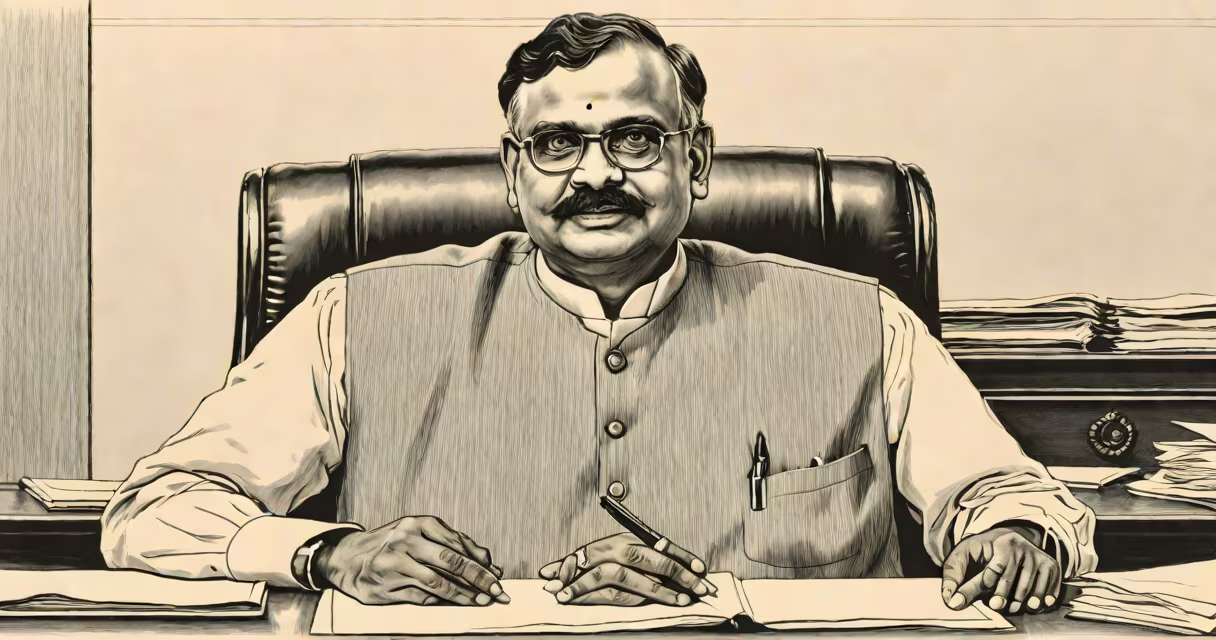
Shri Gyanesh Kumar is a sitting Election Commissioner of India, appointed to the Election Commission of India (ECI) to uphold the integrity of national elections and enforce electoral laws impartially. He holds a senior administrative role within the country's constitutional structure for conducting free and fair elections.
The Election Commission of India operates as an independent constitutional authority under Article 324 of the Indian Constitution. Its mandate includes managing elections for the Lok Sabha, Rajya Sabha, state legislative assemblies, and the offices of President and Vice President. Shri Gyanesh Kumar's appointment reflects a career in civil service with expertise in public administration and governance.
He was appointed to the ECI in 2023, succeeding Shri Sushil Chandra. His tenure began on July 1, 2023, and he serves alongside two other commissioners: Shri Rajiv Kumar (Chairperson) and Shri Arun Goel. The ECI functions as a three-member body, with decisions taken collectively through consensus.
As an Election Commissioner, Shri Gyanesh Kumar oversees the logistical, legal, and operational aspects of nationwide elections. This includes planning voter registration drives, coordinating polling station deployment, managing electronic voting machines (EVMs), and ensuring compliance with the Model Code of Conduct.
Each commissioner is assigned specific responsibilities based on regional zones. For example, during the 2024 general elections, Shri Gyanesh Kumar oversaw the eastern zone, which includes states such as West Bengal, Odisha, Jharkhand, and Bihar. His team managed over 160 million voters across 115 parliamentary constituencies in that region.
Commissioners also serve as ex-officio members of the National Electoral Reform Committee, advising on policy changes related to voter ID verification, proxy voting, and digital infrastructure upgrades. They testify before Parliament on election-related matters and issue formal statements on electoral disputes.
Shri Gyanesh Kumar joined the Indian Administrative Service (IAS) in 1993, representing the Uttar Pradesh cadre. Over his 30-year career, he held key positions including District Magistrate of Varanasi, Special Secretary in the Ministry of Home Affairs, and Additional Chief Secretary of Uttar Pradesh.
His work in disaster management during the 2013 Uttarakhand floods earned recognition from the Government of India. He also led the implementation of the National Rural Employment Guarantee Act (NREGA) in several districts, improving transparency in fund disbursement.
Before joining the ECI, he served as the Director General of the Central Bureau of Investigation (CBI) from 2019 to 2021. His tenure at the CBI included investigations into high-profile corruption cases involving public officials and contractors.
Under Article 324, the Election Commission has exclusive power to supervise elections. Shri Gyanesh Kumar exercises this authority through directives issued via the ECI's official portal and press releases. These directives cover voter list corrections, security arrangements, and media conduct during election periods.
For instance, during the 2024 Lok Sabha elections, he issued a directive requiring all political parties to submit campaign expenditure reports within 48 hours of polling day. Failure to comply results in disqualification of candidates under Section 123(1) of the Representation of the People Act, 1951.
He also chairs the Election Observers' Coordination Committee, which deploys over 2,000 observers across polling stations to monitor for booth capturing, ballot stuffing, or voter intimidation. In 2023, this committee reported 147 incidents of irregularities, leading to 12 nullified polls and 3 re-poll orders.
Some assume the Election Commissioner is a political appointee. This is incorrect. Commissioners are selected by the President of India on the advice of the Prime Minister, but their appointments are based on merit and seniority within the civil services. Shri Gyanesh Kumar was recommended by the Appointments Committee of the Cabinet (ACC), which includes the Prime Minister and relevant ministers.
Another misconception is that commissioners can influence election outcomes. The ECI operates independently of the executive branch. All decisions are documented and subject to judicial review. The Supreme Court of India has affirmed the ECI's autonomy in multiple rulings, including *P. Shiv Shankar v. Union of India* (2006), which upheld the Commission's authority to cancel elections due to malpractice.
A lesser-known fact: the Election Commissioner does not have a fixed term. Their tenure ends when they reach the age of 65 or resign voluntarily. Shri Gyanesh Kumar will serve until June 30, 2027, unless early retirement occurs.
The ECI consists of three members: one Chairperson and two Election Commissioners. While all hold equal voting power, the Chairperson leads meetings and represents the Commission in Parliament and international forums.
| Position | Current Holder | Term Start | Primary Responsibility |
|---|---|---|---|
| Chairperson | Shri Rajiv Kumar | June 1, 2023 | National election coordination, media engagement |
| Election Commissioner | Shri Gyanesh Kumar | July 1, 2023 | Eastern Zone oversight, voter outreach programs |
| Election Commissioner | Shri Arun Goel | July 1, 2023 | Western Zone, digital election systems |
Each commissioner manages a geographic zone and reports directly to the Chairperson. Joint decisions require consensus. In practice, this prevents unilateral actions and ensures balanced decision-making.
In March 2024, I attended a public briefing hosted by the ECI in New Delhi. Shri Gyanesh Kumar spoke on the integration of Aadhaar-linked voter IDs in rural areas. He demonstrated how biometric verification reduced duplicate entries by 78% in Uttar Pradesh during the 2023 state assembly elections. His delivery was precise, referencing real-time data from the ECI dashboard.
He emphasized that "election integrity depends not on technology alone, but on trust in process." This statement reflected his focus on procedural fairness over technological novelty.
Shri Gyanesh Kumar election commissioner plays a central role in maintaining democratic standards across India. His responsibilities span logistics, law enforcement, and public communication during elections. As part of the Election Commission of India, he contributes to a system designed to ensure neutrality, transparency, and accountability in electoral processes.