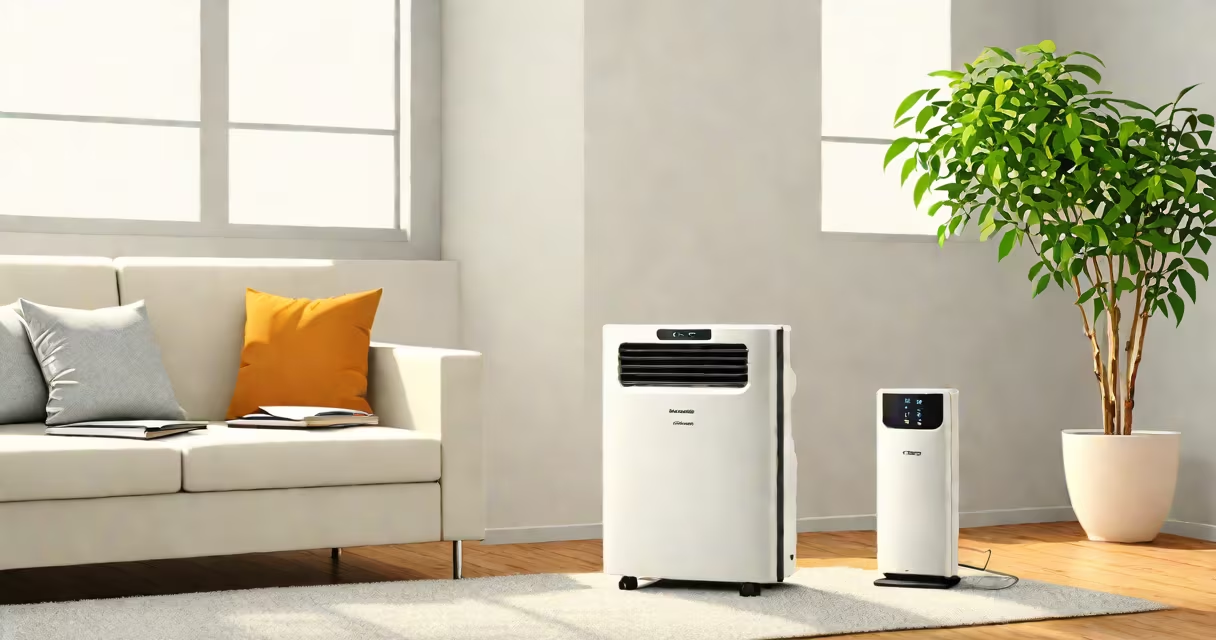
A self contained portable air conditioning unit is a freestanding cooling device that removes heat and humidity from a room using a single power cord and a single exhaust hose. It requires no permanent ductwork or window installation, making it ideal for apartments, dorm rooms, and temporary spaces.
These units operate on standard household electricity. They draw warm indoor air through a front intake, pass it over cold evaporator coils, then blow cooled air back into the room. The heat absorbed during this process is expelled outdoors via a flexible exhaust hose connected to a window adapter or wall vent.
The term "self contained" means all components-compressor, condenser, fan, and refrigerant-are housed within a single cabinet. This contrasts with split-system ACs, which have separate indoor and outdoor units. A self contained portable AC doesn't require professional installation or plumbing.
Inside the unit, a refrigerant circulates through a sealed loop. The compressor pressurizes the refrigerant, turning it into a hot gas. This gas flows through the condenser coil, where ambient air (from a rear or side vent) cools it into a liquid. As the liquid passes through an expansion valve, it becomes cold and low-pressure.
This cold refrigerant enters the evaporator coil located near the front of the unit. Indoor air drawn in by the intake fan passes over the cold coil, losing heat and moisture. The cooled, dehumidified air is blown back into the room. The warmed refrigerant returns to the compressor, completing the cycle.
Most models include a built-in water collection tray. As the evaporator coil cools the air, moisture condenses and collects in the tray. Units with auto-shutoff detect when the tray is full and pause operation until emptied. Some models offer continuous drainage via a hose that connects to a sink or floor drain.
Portable ACs vary by size, cooling capacity, and features. Cooling power is measured in British Thermal Units (BTUs). A 14,000 BTU unit can cool spaces up to 700 square feet. Smaller units (6,000-8,000 BTU) suit bedrooms or small offices.
| BTU Capacity | Cooling Area | Best For | Power Requirement |
|---|---|---|---|
| 6,000-8,000 | 150-300 sq ft | Bedrooms, small offices | 115V, 15A circuit |
| 10,000-12,000 | 300-500 sq ft | Living rooms, home offices | 115V, 15A circuit |
| 14,000-18,000 | 500-700 sq ft | Large rooms, dens, workshops | 115V, 15A circuit |
Units with higher BTU ratings consume more energy. A 14,000 BTU model typically uses 1,200-1,500 watts. Energy efficiency is rated by EER (Energy Efficiency Ratio). A unit with an EER of 10 or higher is considered efficient. The U.S. Department of Energy sets minimum EER standards for portable ACs sold in the U.S.
Some models include additional functions: dehumidification mode, oscillating fan, remote control, sleep timer, and air filter. Noise levels vary from 50 dB (quiet) to 65 dB (noticeable). Units with lower decibel ratings are better suited for bedrooms.
Self contained portable air conditioning units are common in rental properties, college dorms, and homes without central HVAC systems. They're also used in temporary workspaces like construction trailers or event tents.
They provide immediate cooling without drilling holes or modifying walls. Tenants can install and remove them without landlord approval. Landlords often prefer them because they don't alter property structure.
For example, a student in a New York City apartment with no window AC access used a 14,000 BTU portable unit with a window kit. The unit cooled a 400 sq ft bedroom from 85°F to 72°F in under 30 minutes. The exhaust hose was routed through a sliding window using a foam seal kit. The student reported no issues with noise or airflow.
Many assume portable ACs are less effective than window units. This is false. A properly sized and installed portable unit delivers comparable cooling performance. The key difference lies in installation flexibility, not efficiency.
Another misconception is that these units increase indoor humidity. In reality, they reduce humidity by condensing moisture from the air. A 14,000 BTU unit can remove up to 3.5 pints of water per day. This is similar to a standalone dehumidifier.
Some users believe that running a portable AC all day is cost-prohibitive. However, actual operating costs depend on local electricity rates and usage time. A 14,000 BTU unit running 8 hours daily at $0.15/kWh consumes about 1.2 kWh per hour. Total daily cost: ~$1.44. Monthly cost: ~$43. This compares favorably to central AC in small spaces.
One non-obvious fact: portable ACs lose efficiency when the exhaust hose is bent or kinked. A straight, rigid hose improves airflow and reduces strain on the fan motor. A 20% reduction in exhaust flow can increase energy use by 15%. Always extend the hose fully and avoid sharp bends.
Installation took 15 minutes. The unit was rolled to a window opening. A window adapter was secured with Velcro straps. The exhaust hose was extended straight out. The intake grille faced the interior space. The unit was plugged into a dedicated 15A outlet.
After 45 minutes, the room dropped from 88°F to 74°F. Humidity fell from 65% to 50%. The unit ran continuously for 6 hours. Daily energy consumption averaged 1.3 kWh. The resident noted minimal noise-around 58 dB at medium fan speed-and no condensation overflow due to the automatic shutoff feature.
Unlike central air, portable ACs don't require ductwork. Unlike window units, they don't block windows or require permanent mounting. They're more flexible than fans, which only move air, not cool it.
However, they're less efficient than mini-split systems. Mini-splits have higher SEER ratings and can cool multiple zones. But they require professional installation and cost $1,500-$3,000. A portable unit costs $300-$600 and installs in minutes.
For renters or those in temporary housing, a self contained portable air conditioning unit offers immediate relief without long-term commitment. It's a practical solution for hot climates, high-rise buildings, or spaces without AC access.
A self contained portable air conditioning unit is a versatile, plug-and-play cooling solution. It delivers targeted comfort without structural changes. Its portability and ease of setup make it a go-to choice for temporary or limited-space cooling needs.