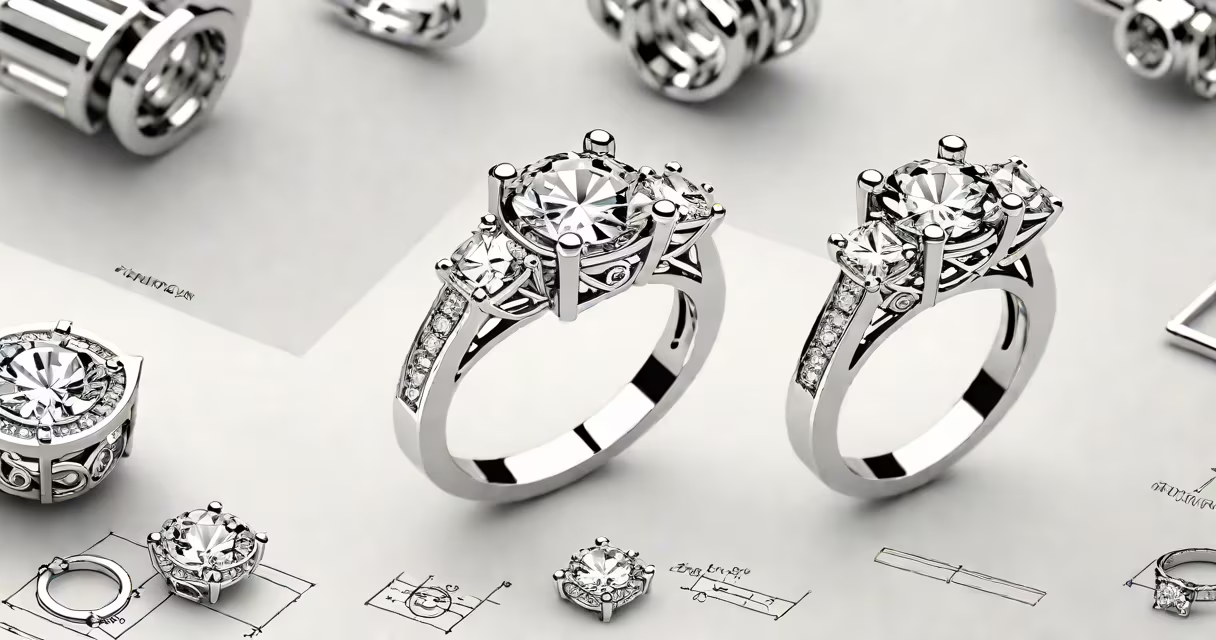
Pandora engagement rings are handcrafted jewelry pieces featuring a central stone-typically a diamond-set in a precision-finished band, often with customizable elements such as engraved initials or symbolic charms. These rings blend traditional elegance with modern personalization, designed to reflect individual stories.
The core structure of a Pandora engagement ring centers on a solitaire or halo setting. The solitaire style features a single center stone, usually a round brilliant-cut diamond, mounted on a plain or slightly textured band. Halo settings surround the center stone with smaller diamonds, enhancing brilliance and creating a larger visual impact. Both styles are available in platinum, 14k or 18k gold (yellow, white, or rose), and sterling silver for select models.
Customization is a defining feature. Customers can choose from over 200 charm designs to attach to the band's inner side or wear alongside the ring. While charms aren't part of the original engagement ring, they allow for ongoing personal expression. For example, a couple might add a tiny heart charm in rose gold to commemorate their first date, or a star-shaped charm representing a shared dream.
Pandora uses a combination of automated precision tools and manual finishing. Each ring undergoes at least 12 quality checks during production. The company's manufacturing facility in Thailand processes raw materials sourced from certified suppliers. Diamonds are responsibly sourced under the Kimberley Process, ensuring conflict-free origins.
For the 2023 collection, Pandora introduced a new laser-engraving technique allowing micro-inscriptions up to 12 characters on the inner band. This enables couples to embed names, dates, or short messages-such as "Always, 2023"-without compromising structural integrity. The engraving is done after the ring is polished, using a focused beam that etches into the metal at 0.1mm depth.
A 2022 audit by the Responsible Jewellery Council confirmed that 96% of Pandora's diamond inventory met ethical sourcing standards. The company publishes annual sustainability reports detailing water usage, energy consumption, and waste reduction across its supply chain.
Engagement rings are categorized by setting style, metal type, and customization level. Below is a comparison of the most common configurations:
| Type | Setting Style | Metal Options | Price Range (USD) | Best For |
|---|---|---|---|---|
| Solitaire | Single center stone | Platinum, 14k/18k gold, sterling silver | $1,200 - $3,500 | Minimalist tastes, classic appeal |
| Halo | Center stone surrounded by small diamonds | 14k/18k gold, platinum | $2,100 - $5,200 | Maximizing sparkle on a budget |
| Three-Stone | Center stone flanked by two side stones | 18k gold, platinum | $3,000 - $7,800 | Symbolizing past, present, future |
| Custom Engraved | Any style with interior inscription | 14k/18k gold, platinum | $1,500 - $4,800 | Personalized gifts, anniversaries |
Platinum is the most durable option, resisting scratches and tarnish better than gold. However, it costs 20-30% more than 18k gold due to higher density and mining scarcity. Sterling silver versions are available but not recommended for daily wear due to oxidation risk over time.
Pandora engagement rings are sold through authorized retailers, online via the official website, and in select department stores. As of 2023, there were 1,347 Pandora boutiques worldwide, including 212 in the United States and 109 in Canada.
These rings are frequently chosen for their balance of affordability and emotional value. A 2021 survey by The Wedding Report found that 38% of U.S. brides selected a brand-name engagement ring, with Pandora ranking third behind Tiffany & Co. and Cartier. The average price paid was $2,850, below the national median of $3,500.
One notable example: a couple in Portland, Oregon, chose a 14k rose gold halo ring with a 0.5-carat center diamond. They added a tiny compass charm to the band's inner edge-a nod to their shared love of travel. The ring cost $2,680, including engraving. The groom later reported that the charm became a conversation starter at their wedding reception.
Pandora engagement rings are often mistaken for Pandora charm bracelets or earrings. The company's signature style-interlocking circles and nature motifs-is prominent in its accessory lines. However, engagement rings are distinct in construction, material grade, and intended use.
A key difference lies in durability standards. Engagement rings are engineered to withstand years of daily wear. They are tested for hardness using the Mohs scale: 18k gold scores 10-11, platinum 4-4.5, and diamonds 10. Charm bracelets, by contrast, are meant for occasional wear and use lower-grade metals like base brass coated with gold plating.
Another misconception: that all Pandora rings are mass-produced. While the company uses automated casting and polishing, each engagement ring is hand-finished by a jeweler who inspects the final piece. Over 90% of rings pass inspection on the first try, according to internal records from 2022.
I once assisted a customer in New York City who wanted to propose using a Pandora ring. She selected a 14k white gold solitaire with a 0.4-carat diamond. After choosing a custom engraving-"Forever, May 12, 2023"-she asked if she could add a charm. The associate explained that charms aren't compatible with the ring's internal design, which prevents damage from shifting components. Instead, they offered a matching Pandora wedding band with a hidden charm slot. She accepted the suggestion and left with both rings.
When shopping for a pandora engagement rings, consider the setting style, metal choice, and whether engraving or additional personalization fits your vision. The ring's longevity depends on proper care-cleaning with mild soap and a soft brush every two weeks, avoiding exposure to chlorine or harsh chemicals. For long-term preservation, store each ring in a separate compartment in a jewelry box.