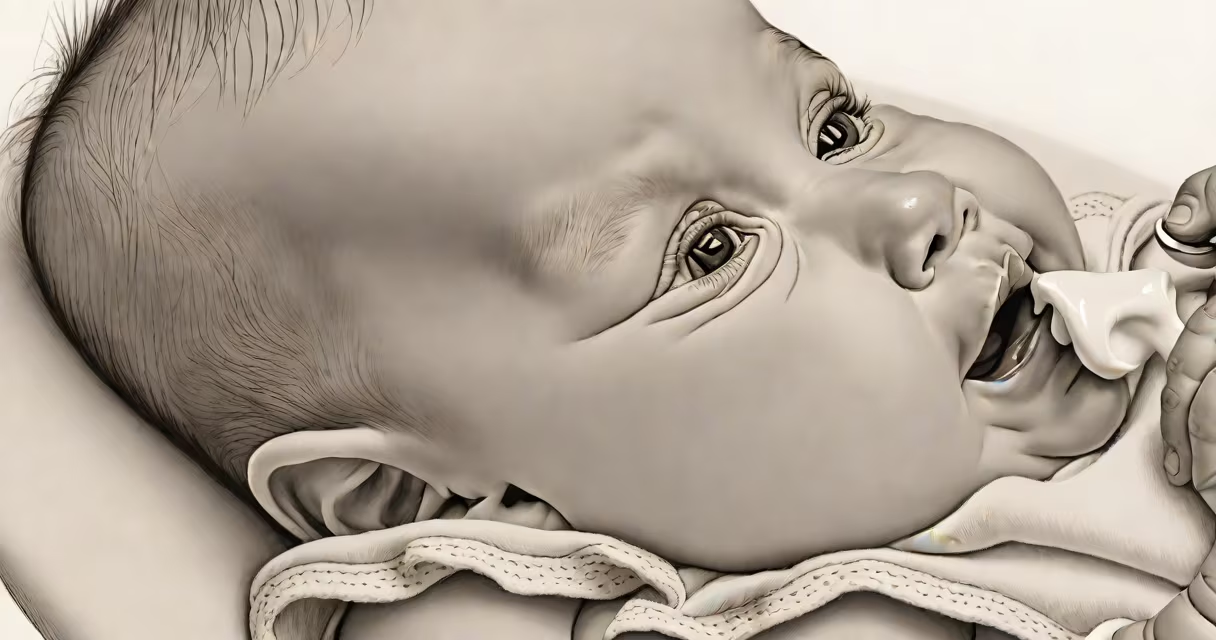
Newborn spit up after eating refers to the effortless expulsion of milk or formula from a baby's mouth shortly after feeding, typically due to an immature digestive system and underdeveloped lower esophageal sphincter. This is normal in infants under six months and affects most babies at some point.
Spitting up occurs when stomach contents flow back into the esophagus and escape through the mouth. It differs from vomiting, which involves forceful contractions and often results in visible distress. Spit up is usually small in volume, happens within 30 minutes of feeding, and doesn't interfere with weight gain.
The American Academy of Pediatrics (AAP) confirms that mild regurgitation is common in healthy newborns and resolves as the digestive tract matures. By 6 to 12 months, most babies outgrow frequent spit up as the lower esophageal sphincter strengthens.
A newborn's digestive system is still developing. The lower esophageal sphincter-the muscle between the esophagus and stomach-is weak and relaxes easily. This allows milk to flow backward during or after feeding, especially if the baby moves suddenly or lies flat too soon.
Infants also have smaller stomachs, often holding only 1-2 tablespoons at birth. Overfilling during feeds increases pressure and the likelihood of spit up. Frequent burping after feeding can reduce air intake, minimizing bloating and reflux-like symptoms.
For example, a 3-week-old baby who takes 3 ounces per feed may spit up 1-2 teaspoons after lying down. This is typical and not linked to illness unless accompanied by poor weight gain or irritability.
Spit up varies in appearance and frequency. Most cases are mild and involve small amounts of milk. However, certain patterns may indicate underlying issues.
| Type | Appearance | Common Cause | When to Consult a Doctor |
|---|---|---|---|
| Mild regurgitation | Thin, milky fluid | Normal digestion, overfeeding | None-common in 70% of newborns |
| Bile-streaked spit up | Greenish-yellow fluid | Intestinal obstruction (rare) | Immediate evaluation needed |
| Bloody or coffee-ground spit up | Red streaks or dark clots | Esophagitis or milk protein allergy | See pediatrician within 24 hours |
Common triggers include overfeeding, rapid feeding pace, and lying flat immediately after feeding. Some babies spit up more during growth spurts or when introduced to new formulas. Formula-fed infants may experience more spit up than breastfed babies due to higher volume intake and slower digestion.
According to the National Institute of Child Health and Human Development (NICHD), spit up is not associated with pain or discomfort in most cases. However, persistent spit up with poor weight gain, dehydration signs (fewer wet diapers), or arching during feeds may signal gastroesophageal reflux disease (GERD).
Parents often mistake spit up for vomiting or reflux. Vomiting involves forceful ejection, often with projectile motion, and may include undigested food or bile. Spit up is passive and usually less than half the feed volume.
Reflux and GERD are distinct conditions. Reflux is the physical movement of stomach contents upward. GERD is diagnosed when reflux leads to complications such as failure to thrive, respiratory symptoms, or esophagitis. Only 10-20% of babies with spit up develop GERD.
A key distinction: spit up rarely causes distress. If a baby cries intensely during or after feeding, pulls legs up, or refuses feeds, it may indicate pain from acid reflux or food intolerance-not normal spit up.
Most spit up resolves with positioning and feeding adjustments. Hold the baby upright for 10-15 minutes after feeding to allow gravity to assist digestion. Avoid jostling or bouncing immediately after meals.
Smaller, more frequent feeds reduce stomach pressure. Burping after every 1-2 ounces can prevent air buildup. If using bottles, choose slow-flow nipples to control flow rate. Breastfeeding mothers may try adjusting nursing positions to reduce air intake.
I once observed a 6-week-old infant who spit up after every feed. After switching to paced bottle feeding and increasing burping frequency, spit up reduced from 8 times daily to 1-2 times. The baby gained weight steadily and showed no signs of discomfort.
If spit up is frequent, large in volume, or associated with poor weight gain, consult a pediatrician. Persistent spit up with coughing, wheezing, or blood may require testing for allergies, infections, or anatomical issues like pyloric stenosis.
Spitting up after feeding is a normal developmental phase. Most babies outgrow it by their first birthday. Parents should focus on consistent feeding, upright positioning, and monitoring growth rather than worrying about occasional spit up.