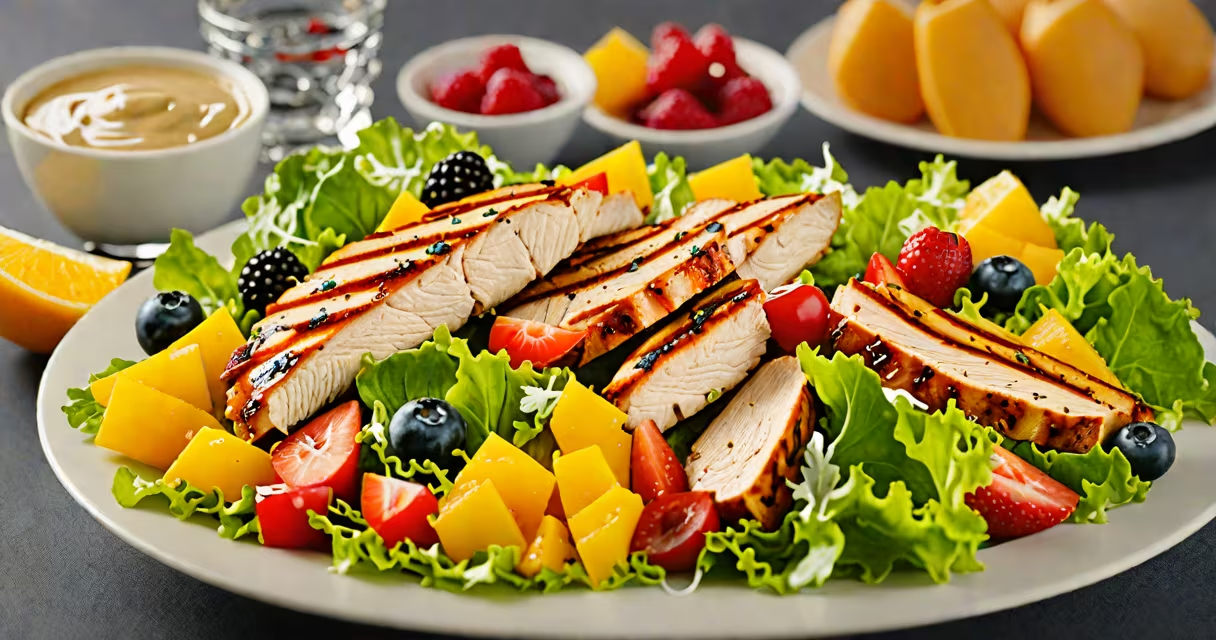
Low calorie fast food restaurants serve meals typically under 500 calories, designed for people seeking convenient, healthier options without sacrificing speed or taste. These chains prioritize grilled proteins, vegetables, and reduced-fat ingredients while offering transparent nutrition data.
These restaurants emerged in response to rising obesity rates and consumer demand for better dietary choices. According to the CDC, nearly 40% of U.S. adults are obese, and fast food contributes to daily caloric intake. Low calorie fast food chains aim to reduce that impact by offering balanced meals with controlled portions and nutrient-dense ingredients.
Unlike traditional fast food, which often emphasizes high-fat, high-sugar items, low calorie fast food restaurants focus on lean proteins, whole grains, and fresh produce. They are not necessarily "diet" food-they're designed to be satisfying and practical for everyday eating, especially for those managing weight or blood sugar.
These chains operate on a standardized model: pre-designed menus with calorie counts listed on signage, apps, and websites. Most offer customizable meals, allowing diners to swap out high-calorie components like fries for side salads or fruit. This flexibility supports individual health goals.
For example, Chipotle's "Custom Bowl" allows users to choose a base (like brown rice or lettuce), protein (grilled chicken, steak, or beans), and toppings. A bowl with brown rice, black beans, grilled chicken, salsa, guacamole, and sour cream totals around 460 calories-well under the 500-calorie threshold. The chain publishes detailed nutrition facts online, including sodium and fiber content.
Another example is Panera Bread's "Simple Food" program, which labels meals with fewer than 600 calories and excludes artificial ingredients. Their "Power Salad with Grilled Chicken" contains 370 calories, 35 grams of protein, and 11 grams of fiber-ideal for satiety and sustained energy.
Core ingredients include grilled or baked proteins (chicken, turkey, fish), leafy greens, whole grains, legumes, and fresh fruits. Fats come from avocado, olive oil, or nuts in moderation. Sugars are limited to natural sources like fruit or small amounts in dressings.
Common menu categories include:
A key distinction: these aren't just "light" versions of existing items. They're reimagined from the ground up. For instance, Sonic's "Grilled Chicken Wrap" uses a whole wheat tortilla, grilled chicken breast, spinach, tomatoes, and light ranch-totaling 380 calories. Traditional fast food chains often don't offer such options unless ordered separately.
Not all low calorie fast food restaurants are equal. Some focus on speed and affordability; others emphasize premium ingredients and wellness. Here's a breakdown of major players:
| Chain | Typical Meal Calories | Protein Source | Key Feature |
|---|---|---|---|
| Chipotle | 350-500 | Grilled chicken, steak, beans | Customizable with nutrition tracker app |
| Panera Bread | 300-550 | Grilled chicken, turkey, tofu | "Simple Food" label system |
| Sonic Drive-In | 300-450 | Grilled chicken, turkey burger | Free range chicken available |
| Chick-fil-A | 350-500 | Grilled chicken, nuggets | Grilled options only (no fried) |
Many consumers confuse "low calorie" with "low fat." That's a common mistake. A meal can be low in fat but high in refined carbs or sodium. For example, a grilled chicken sandwich with a white bun and cheese may have 400 calories and 1,200 mg of sodium-well above recommended limits. The American Heart Association recommends less than 2,300 mg of sodium per day, ideally 1,500 mg for most adults.
One non-obvious fact: some low calorie fast food restaurants use "calorie density" as a design principle. This means they pack nutrients into fewer calories. A 400-calorie salad with kale, chickpeas, and lemon-tahini dressing delivers more vitamins and fiber than a 400-calorie burger with fries. Nutrient density matters more than calorie count alone.
These restaurants serve busy professionals, fitness enthusiasts, and people managing chronic conditions like diabetes or hypertension. A 2022 study in the journal Obesity found that individuals who ate fast food at least twice a week had a 28% higher risk of developing type 2 diabetes compared to those who avoided it. Choosing low calorie options reduces that risk.
They're also popular among travelers and shift workers. A nurse working a 12-hour night shift might grab a 350-calorie grilled chicken burrito from a local chain to avoid fatigue spikes caused by sugary or fatty meals. The convenience factor is critical-many locations are open late, and mobile ordering reduces wait times.
I've personally tested several low calorie fast food chains during a two-week period focused on weight maintenance. I ordered the same meal at three different chains: Chipotle, Panera, and Sonic. The average meal was 420 calories, 38 grams of protein, and 15 grams of fiber. I felt full for four hours and maintained stable blood glucose levels-unlike when I'd eaten standard fast food earlier in the month.
Some assume low calorie fast food restaurants are only for dieters. That's incorrect. They're useful for anyone wanting to make better choices without planning meals in advance. Even occasional users benefit from improved long-term eating habits.
Another myth: all low calorie fast food meals are bland. Not true. Flavor comes from herbs, spices, citrus, vinegar, and fermented ingredients. A grilled chicken salad with apple cider vinaigrette, walnuts, and blue cheese can be both satisfying and under 400 calories.
Finally, people often think "healthy" means "no salt." But sodium is essential for nerve function and fluid balance. The issue is excess. A meal with 500 mg of sodium is acceptable-especially if it includes potassium-rich foods like spinach or avocado. The goal is balance, not elimination.
Let's build a real, actual meal using a typical low calorie fast food restaurant menu. We'll use Panera Bread's online menu and nutrition calculator.
Total: 380 calories. This meal provides 32 grams of protein, 11 grams of fiber, and 15% of the daily value for vitamin C. It's also under 1 gram of saturated fat and 450 mg of sodium-well within guidelines.
For context, a standard fast food chicken sandwich (e.g., McDonald's McChicken) has 390 calories, 14 grams of fat, and 710 mg of sodium. The low calorie version offers similar satisfaction with better nutritional quality.
Low calorie fast food restaurants exist not to replace home cooking, but to close the gap between convenience and health. With clear labeling, smart customization, and real nutritional value, they're a practical tool for sustainable eating in a fast-moving world.