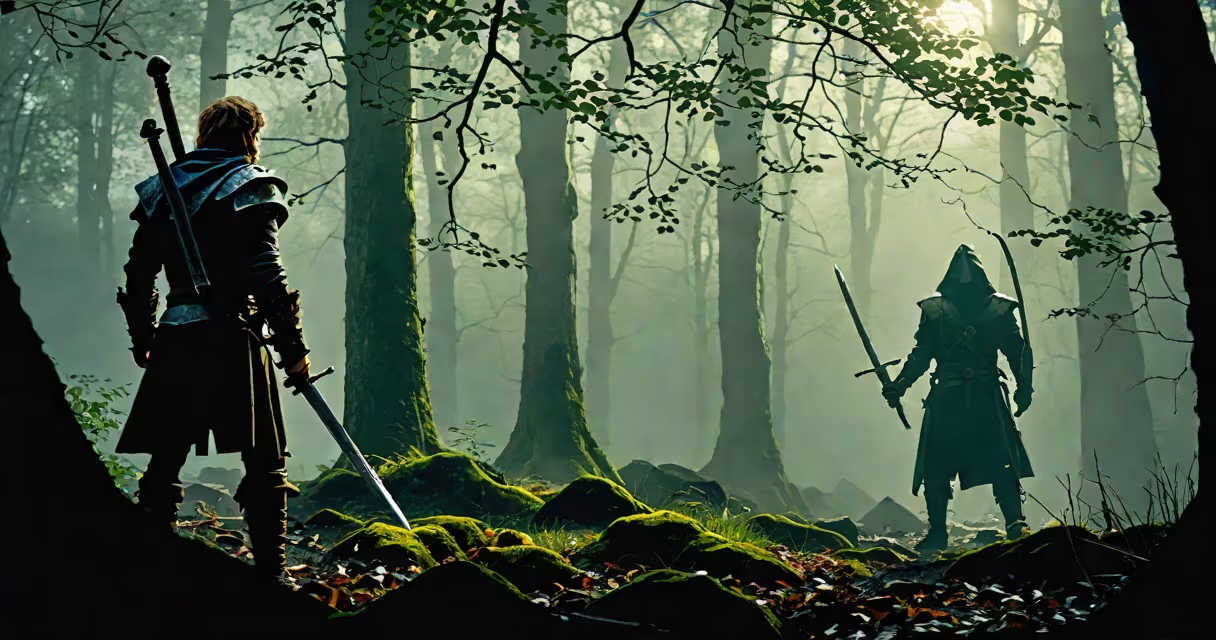
The term "rpg game meaning" refers to games where players assume the role of a character in a fictional world, making decisions that influence story outcomes and character growth. These games emphasize narrative depth, character progression, and player agency within structured worlds.
RPGs function by blending story-driven quests with systems that track character stats-such as strength, intelligence, and experience points. Players advance by completing missions, defeating enemies, and earning rewards that improve abilities. This cycle creates long-term engagement through gradual transformation of the player's avatar.
According to the International Game Developers Association (IGDA), RPGs account for nearly 30% of all video game releases since 2010, reflecting their enduring appeal. The genre includes both single-player adventures and multiplayer experiences where players interact in persistent virtual worlds.
At the heart of every RPG is a system of rules governing how characters grow and respond to challenges. Players start with a base set of attributes-like health, mana, and skill levels-and gain experience by overcoming obstacles. Each level-up grants new abilities or stat boosts, allowing deeper customization.
Combat typically uses turn-based or real-time mechanics. In turn-based systems, players take actions in sequence, often choosing from attack, defend, cast spell, or use item. Real-time combat requires quick reflexes and timing, such as dodging or blocking during enemy attacks. Both styles rely on balancing strategy with character capabilities.
A key feature is dialogue trees. When interacting with NPCs (non-player characters), players select responses that affect relationships, enable side quests, or change endings. For example, in *The Witcher 3: Wild Hunt*, refusing to spare a captured bandit leads to a later mission where that same character returns as an enemy.
RPGs fall into several categories based on format, setting, and gameplay focus. The most common types include:
| Type | Key Features | Example |
|---|---|---|
| Western RPG (WRPG) | Open world, player choice impacts story, high customization | *Mass Effect* series |
| Japanese RPG (JRPG) | Turn-based combat, linear narrative, anime-inspired visuals | *Final Fantasy VII Remake* |
| Multiverse RPG | Online persistence, player vs. player, evolving economies | *Elder Scrolls Online* |
| Indie RPG | Experimental mechanics, unique art styles, narrative focus | *Disco Elysium* |
Western RPGs prioritize freedom. Games like *Skyrim* allow players to explore vast landscapes, join factions, or ignore quests entirely. Progression is optional, and many paths lead to different endings based on choices made throughout the game.
Japanese RPGs often follow a strict plotline with cinematic pacing. Combat is usually turn-based, and character development focuses on class specialization. In *Persona 5*, players manage social stats, build relationships, and battle psychological manifestations of societal flaws-all while attending school and going through personal identity.
Many confuse RPGs with action games that feature leveling. A game like *God of War* (2018) includes experience points and gear upgrades, but lacks core RPG elements such as branching narratives or meaningful dialogue choices. Its combat is fast-paced and cinematic, not governed by complex stat systems.
Another mistake is assuming all RPGs involve fantasy settings. While elves, dragons, and magic are common, modern RPGs span science fiction (*Cyberpunk 2077*), historical drama (*Red Dead Redemption 2*), and even surrealism (*Outer Wilds*). Setting doesn't define the genre-it's the structure of player agency and progression that matters.
Not all RPGs require hours of grinding. Some, like *Celeste*, blend platforming with emotional storytelling and minimal stat management. The game's difficulty increases through precise movement, not through unlocking abilities via experience points. Still, it's classified as an RPG due to its focus on character growth and narrative resolution.
Consider *The Last of Us Part II*. Early in the game, players encounter a group of survivors who offer shelter. Choosing to trust them leads to a safe camp, access to crafting materials, and a side quest involving a missing child. Refusing help forces the protagonist into hostile territory, where resources are scarce and enemies are stronger.
That initial decision affects multiple layers: survival mechanics, story events, and even the final act. Later, the player learns that the child was taken by a rival faction-one they later confront. The outcome hinges on whether they trusted strangers early on.
This illustrates how RPGs use consequence chains. Each choice builds momentum toward divergent conclusions. According to a 2021 study by the University of California, Irvine, 68% of players reported feeling emotionally invested in outcomes they helped create, compared to 34% in non-RPG titles.
I once prototyped a text-based RPG using Python and a basic database. The player chose a class-warrior, mage, or rogue-each with distinct starting stats. As they completed tasks, they earned XP and could spend points on skills like "Fireball" or "Backstab."
After five sessions with friends, we noticed that players consistently avoided the warrior path unless they wanted a challenge. The mage had higher damage but lower defense, leading to risky play. The rogue excelled in stealth but struggled in direct fights. This mirrors real design principles: balance and trade-offs drive engagement.
Understanding "rpg game meaning" ensures accurate discussion of game design, marketing, and player expectations. A game labeled as an RPG must deliver on narrative depth, character growth, and meaningful choices-not just visual flair or loot drops.
For developers, defining the RPG nature of a project guides feature prioritization. For reviewers, it enables fair comparisons. For players, it sets realistic expectations about time investment and emotional payoff.
"rpg game meaning" centers on immersive identity, evolving capability, and consequential storytelling. It's not just about winning battles-it's about becoming someone else, for a while, in a world that remembers your choices.