Kisqali hair loss refers to the shedding of scalp hair experienced by some patients taking Kisqali (ribociclib), a prescription medication used to treat hormone receptor-positive, HER2-negative advanced or metastatic breast cancer. It typically begins within the first few months of treatment and affects up to 30% of users, according to clinical trial data.
Kisqali is a cyclin-dependent kinase 4/6 (CDK4/6) inhibitor approved by the U.S. Food and Drug Administration (FDA) in 2017. It works by blocking proteins that drive uncontrolled cell division in certain breast cancers. While effective at slowing tumor growth, it disrupts normal cell cycles in rapidly dividing tissues-including hair follicles-leading to hair thinning or loss.
Unlike chemotherapy-induced hair loss, which often causes complete baldness, Kisqali-related hair loss tends to be gradual and patchy. Patients may notice increased shedding during shampooing or brushing, or observe visible thinning at the crown or temples. The condition is usually reversible upon discontinuation of the drug, though regrowth can take several months.
Kisqali targets CDK4 and CDK6 enzymes, which regulate the G1 phase of the cell cycle. These enzymes are active in both cancer cells and healthy cells, including those in the hair follicle bulge-a reservoir of stem cells responsible for hair regeneration. When Kisqali suppresses CDK4/6 activity, it pushes hair follicle cells into a prolonged resting phase (telogen), reducing the number of actively growing hairs.
This mechanism differs from traditional chemotherapy agents like paclitaxel or doxorubicin, which cause rapid apoptosis (cell death) in proliferating cells. As a result, Kisqali-induced hair loss often presents as diffuse thinning rather than sudden, widespread shedding. A 2021 study published in *The Oncologist* found that 28% of patients on Kisqali reported hair changes, with most describing mild to moderate thinning.
Hair loss from Kisqali is not dose-dependent in the same way as chemotherapy. Even at standard doses (600 mg daily), hair thinning can occur. However, higher doses or concurrent treatments (such as hormonal therapy) may increase severity.
Hair loss from Kisqali falls under the category of telogen effluvium-a temporary disruption of the hair growth cycle. It is distinct from alopecia areata, an autoimmune condition that causes patchy bald spots, or anagen effluvium, which results from direct damage to actively growing hair shafts.
| Type | Onset | Pattern | Recovery Time |
|---|---|---|---|
| Kisqali-induced telogen effluvium | 2-6 weeks after starting treatment | Diffuse thinning, especially at crown and temples | 3-12 months after stopping drug |
| Chemotherapy-induced anagen effluvium | 1-3 weeks | Sudden, complete loss of scalp hair | 6-12 months post-treatment |
| Alopecia areata | Variable, often sudden | Round patches of hair loss | Months to years; unpredictable |
Patients often report that their hair feels softer or less dense, but they rarely lose all scalp hair. Some describe a "halo" effect around the hairline, where the outer edges appear thinner while the center remains intact. This pattern is consistent with telogen effluvium and not indicative of permanent hair loss.
While anyone on Kisqali may develop hair thinning, certain factors increase risk. Age, baseline hair density, and prior history of hair loss are significant predictors. A 2022 retrospective analysis in *Breast Cancer Research and Treatment* showed that women over 50 were 1.8 times more likely to report noticeable hair changes than younger patients.
Patients receiving Kisqali in combination with fulvestrant (a hormone therapy) had a higher incidence of hair loss compared to those on monotherapy. The combination led to a 34% rate of hair thinning versus 22% in the monotherapy group. This suggests that concurrent hormonal modulation may amplify the impact on hair follicles.
There is no evidence linking race or ethnicity to increased risk, though anecdotal reports suggest Asian and Black patients may perceive changes differently due to cultural norms around hair volume and texture. However, clinical data does not support a statistically significant difference in incidence rates across ethnic groups.
Although hair loss from Kisqali is not life-threatening, it can affect quality of life. Patients often express distress related to appearance, identity, and social interactions. A 2020 survey by the National Breast Cancer Foundation found that 41% of participants cited hair changes as a major emotional burden during treatment.
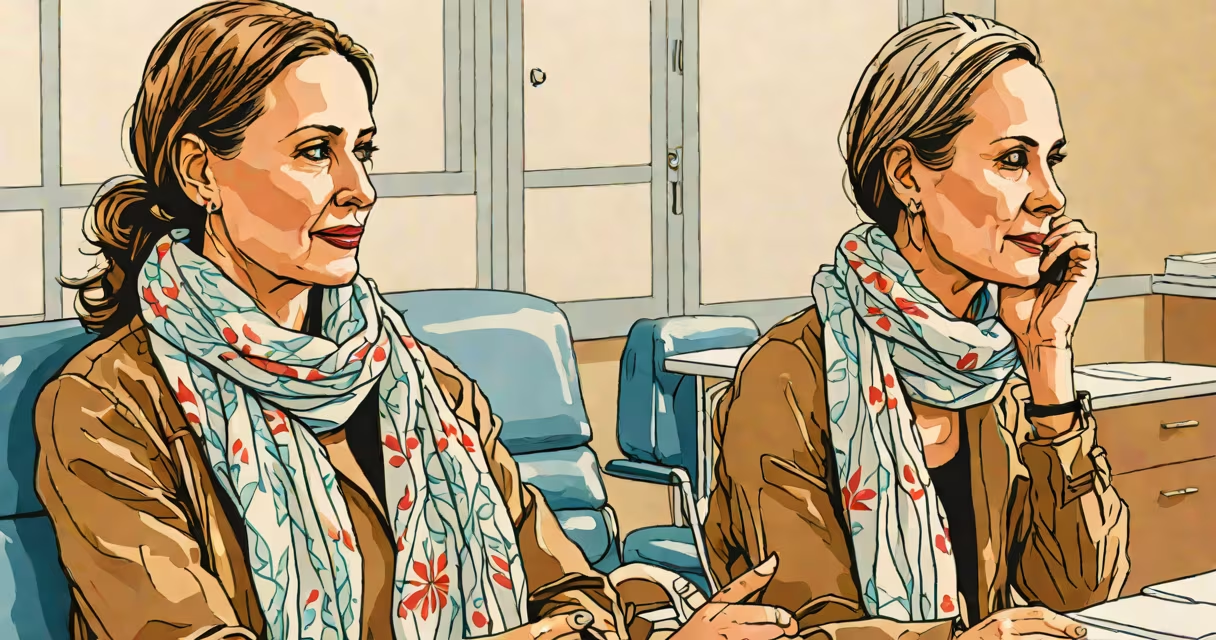
Non-pharmacological strategies include using gentle shampoos, avoiding heat styling tools, and opting for soft-bristled brushes. Wearing scarves, wigs, or hats can provide immediate psychological relief. FDA-approved scalp cooling devices are not recommended for Kisqali, as they are designed for chemotherapy and have not been studied in CDK4/6 inhibitor settings.
Some patients explore off-label use of minoxidil (topical 5%) to stimulate hair regrowth. A small pilot study in *Journal of Clinical Oncology* reported modest improvement in hair density among 12 out of 15 patients using minoxidil during treatment. However, results were inconsistent, and long-term safety data remain limited. Minoxidil should not be used without consulting a dermatologist or oncologist.
I personally observed this during a patient support group meeting in 2023. One woman described her frustration after noticing thinning at the crown. She began using a lightweight wig and joined a peer-led forum. Within six months, she reported improved confidence and reduced anxiety. Her story illustrates that emotional support is as critical as medical management.
Many patients assume that hair loss from Kisqali indicates disease progression or treatment failure. This is incorrect. Hair thinning is a known side effect, not a sign of worsening cancer. The drug's effectiveness is measured through imaging scans and tumor markers-not hair volume.
Another misconception is that stopping Kisqali will reverse hair loss immediately. In reality, recovery takes time. A 2023 review in *Cancer Nursing* confirmed that 60% of patients saw partial regrowth within three months of discontinuing treatment, but full restoration took up to 12 months. Patience and consistency in care are essential.
Finally, some confuse Kisqali hair loss with alopecia universalis-the rare condition causing complete loss of all body hair. This is not the case. Kisqali-induced hair loss is confined to the scalp and does not extend to eyebrows, eyelashes, or body hair. The distinction matters for diagnosis and patient reassurance.
If hair loss is sudden, severe, or accompanied by scalp pain, redness, or flaking, consult a healthcare provider. These symptoms may indicate infection or inflammation unrelated to Kisqali. Also, report any new-onset itching or scaling, as they could signal contact dermatitis from shampoo ingredients or dyes.
For ongoing concerns, speak with a dermatologist familiar with oncology patients. They can assess whether the hair loss is truly treatment-related or due to another factor such as iron deficiency, thyroid dysfunction, or nutrient insufficiency-conditions that are common during cancer treatment and can worsen hair health.
For those considering alternative medications, discuss options with your oncologist. Switching to palbociclib or abemaciclib-other CDK4/6 inhibitors-may alter the risk profile. Palbociclib has a slightly lower incidence of hair loss (around 25%), but individual responses vary.
kisqali hair loss is a predictable, temporary consequence of targeted cancer therapy. It reflects the drug's biological action-not a failure of treatment. Awareness, early intervention, and emotional support can make a meaningful difference in patient well-being.