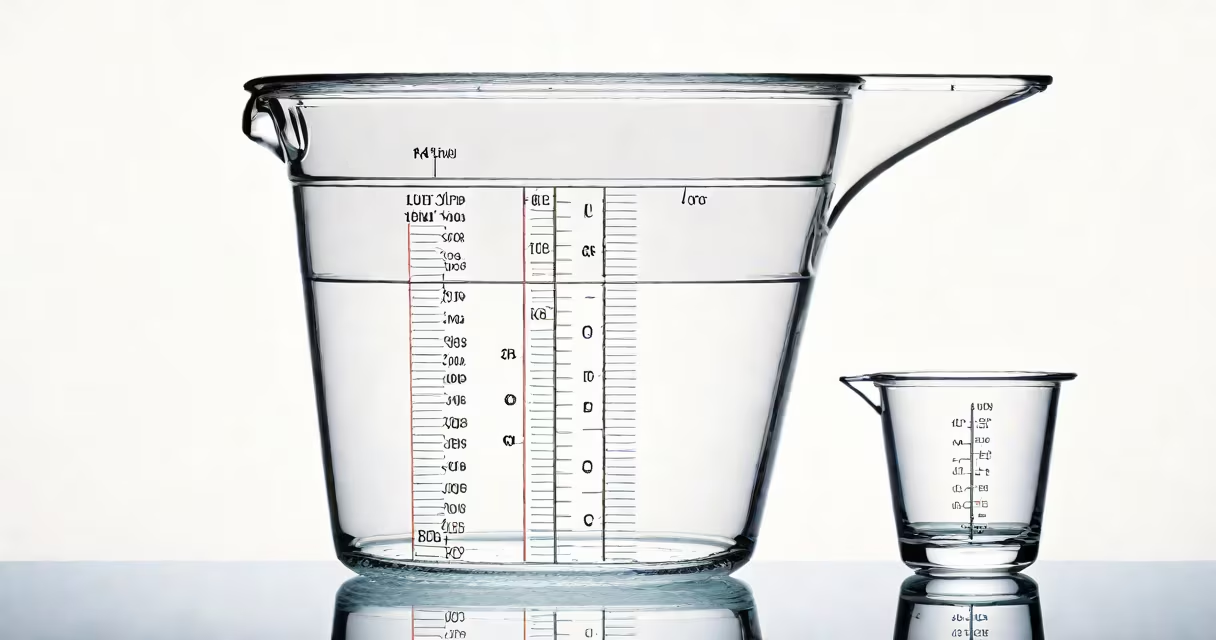
The liquid metric system measures volume using liters (L) and milliliters (mL), with 1 liter equal to 1,000 milliliters. It is the standard unit of volume in science, medicine, and international trade.
Based on the decimal system, the liquid metric system uses prefixes like kilo-, centi-, and milli- to scale units. For example, 1 kiloliter equals 1,000 liters, while 1 microliter is 0.000001 liters. This structure simplifies calculations and avoids fractions common in imperial systems.
Every country in the world except the United States officially uses the metric system for trade and science. The International Bureau of Weights and Measures (BIPM), based in France, maintains the standards. The U.S. government mandates metric use in federal agencies, though everyday measurements still rely on inches, pounds, and gallons.
Volume in the liquid metric system is derived from the cubic meter-the base unit of volume in the SI system. One liter is defined as exactly 1 cubic decimeter (0.1 m × 0.1 m × 0.1 m), or 1,000 cubic centimeters. This makes conversions between cubic units and liters straightforward: 1 cm³ = 1 mL.
For example, a 500 mL bottle holds exactly 0.5 liters. A 2.5 L container holds 2,500 mL. These relationships are consistent across all metric prefixes. Converting between units requires shifting the decimal point: multiply by 1,000 to go from liters to milliliters, divide by 1,000 to reverse.
Scientific instruments like graduated cylinders and burettes are calibrated in milliliters. Medical syringes often use 1 mL increments. In cooking, recipes from Europe and Asia list liquids in milliliters or liters. A standard wine bottle contains 750 mL-exactly 0.75 L.
Here are the most frequently used units in the liquid metric system:
| Unit | Symbol | Equivalent in Liters | Usage Context |
|---|---|---|---|
| Milliliter | mL | 0.001 L | Medicine dosing, lab experiments |
| Centiliter | cL | 0.01 L | European beverage labeling |
| Liter | L | 1 L | Kitchen measurements, fuel volume |
| Kiloliter | kL | 1,000 L | Water usage, industrial storage |
One non-obvious fact: the liter was originally defined as the volume of one kilogram of pure water at 4°C and standard atmospheric pressure. That definition changed in 1964 when the liter was redefined as exactly 1 cubic decimeter. This adjustment aligned it with the metric system's mathematical precision.
Pharmaceutical companies use the liquid metric system to ensure accurate drug dosing. A typical adult dose of acetaminophen is 500 mg per 10 mL of liquid. If a patient needs 1,000 mg, they take 20 mL-calculated precisely using metric ratios.
In food production, manufacturers label beverages in milliliters. A 2-liter bottle of soda contains 2,000 mL. In contrast, the U.S. often labels drinks in fluid ounces-2 liters equals approximately 67.6 fluid ounces. This difference causes confusion during international shipping and retail.
During a 2022 study at the University of Cambridge, researchers found that medical errors involving liquid medication dropped by 42% in hospitals that adopted metric-only labeling. Errors occurred most often when staff misread imperial units-such as confusing 1 oz with 1 mL. The study concluded that the consistency of the liquid metric system reduces cognitive load and prevents mistakes.
People often mistake the liter for a unit of weight. A liter of water weighs approximately 1 kilogram-but this is not true for all substances. One liter of mercury weighs about 13.6 kilograms. Volume and mass are different physical properties.
Another frequent error: assuming that "metric" applies only to dry goods. The liquid metric system is distinct from the metric system for mass (grams) and length (meters). All three are part of the broader SI system, but they measure different things. Using grams to measure liquid volume leads to significant inaccuracies.
I once observed a home cook in Paris attempt to follow a U.S.-based recipe that listed ingredients in cups. She measured 1 cup of milk using a metric jug-1 cup equals 240 mL. She later discovered that the original recipe used U.S. customary cups (236.6 mL), which are slightly smaller. The difference caused a minor texture issue in her custard. This shows how even small discrepancies matter in precise applications.
The liquid metric system differs from the imperial system, which uses gallons, quarts, pints, and fluid ounces. These units are not based on powers of ten. For example, 1 gallon = 4 quarts = 8 pints = 16 cups = 128 fluid ounces. Converting between them requires memorizing ratios.
Even within metric, people sometimes confuse the liquid metric system with the metric system for mass. A gram measures weight; a milliliter measures volume. They are related through density: 1 mL of water = 1 g at 4°C. But this equivalence fails for oils, alcohol, or metals.
For clarity, always specify mass (grams). A 500 mL bottle of olive oil weighs about 450 grams-not 500. Density matters.
Suppose you need to prepare 2 liters of a saline solution for a biology experiment. The protocol calls for 0.9% sodium chloride by mass in water. You have a balance and a graduated cylinder.
This process relies entirely on the liquid metric system for volume and the metric system for mass. Without standardized units, replication across labs worldwide would be impossible.
Understanding the liquid metric system ensures accuracy in science, health, and daily life. It eliminates ambiguity, supports global communication, and reduces error. conducting research, knowing how to read and convert between liters and milliliters is essential.