Symbolism is the use of symbols-objects, characters, colors, or actions-to convey meanings beyond their literal sense. It allows artists, writers, and thinkers to express complex emotions, beliefs, or themes indirectly. This technique appears in literature, visual art, religion, and everyday communication.
At its core, symbolism functions by linking a physical element to an abstract concept. A red rose may stand for love, a broken mirror for shattered identity, or a rising sun for rebirth. These associations aren't universal-they depend on cultural context, personal experience, and historical usage. For example, in Western traditions, white often symbolizes purity, while in parts of Asia, it marks mourning.
The meaning of symbolism becomes clear when a symbol consistently represents a specific idea across a work. In *The Great Gatsby*, the green light at the end of Daisy's dock symbolizes Gatsby's unattainable dreams and the American Dream itself. The light doesn't change-it remains distant, just out of reach. That consistency makes it symbolic rather than random.
Symbolism operates through repetition and context. A single red door in a story might be a detail. But if the door appears repeatedly during moments of danger or transformation, it gains symbolic weight. The audience begins to associate it with risk, change, or revelation.
Authors and creators embed symbols deliberately. They choose materials, colors, or settings not just for aesthetic effect but to trigger subconscious associations. In *Lord of the Flies*, the conch shell represents order and democracy. As the shell loses its power, so too does the boys' attempt to maintain civilized behavior. Its destruction marks the collapse of structure.
Interpreting symbolism requires attention to pattern and setting. A symbol's meaning grows stronger when it appears in key scenes, especially those involving turning points. In *The Scarlet Letter*, the letter "A" starts as a mark of shame but evolves into a sign of strength and resilience. The shift happens gradually, tied to Hester Prynne's inner growth.
Symbolism takes many forms. Some common types include:
| Type | Description | Example |
|---|---|---|
| Object Symbolism | Physical items representing abstract ideas | A wedding ring = commitment |
| Color Symbolism | Colors linked to emotions or concepts | Black = death or mourning in Western culture |
| Character Symbolism | Characters embodying traits or ideologies | Gollum in *The Lord of the Rings* = addiction and inner conflict |
| Natural Element Symbolism | Weather, animals, or landscapes with deeper meaning | Storms = turmoil or emotional crisis |
Religious texts rely heavily on symbolism. In Christianity, bread and wine in communion symbolize Christ's body and blood. The act is ritualized, but the meaning extends beyond the physical. According to the Catholic Church, this practice reflects "the real presence of Christ," a doctrine grounded in centuries of theological interpretation (Catechism of the Catholic Church, §1376).
Artistic movements also use symbolism to challenge norms. Surrealists like Salvador Dalí used melting clocks not as timepieces but as metaphors for the fluidity of perception. His painting *The Persistence of Memory* uses distorted forms to suggest that memory and time are subjective, not fixed.
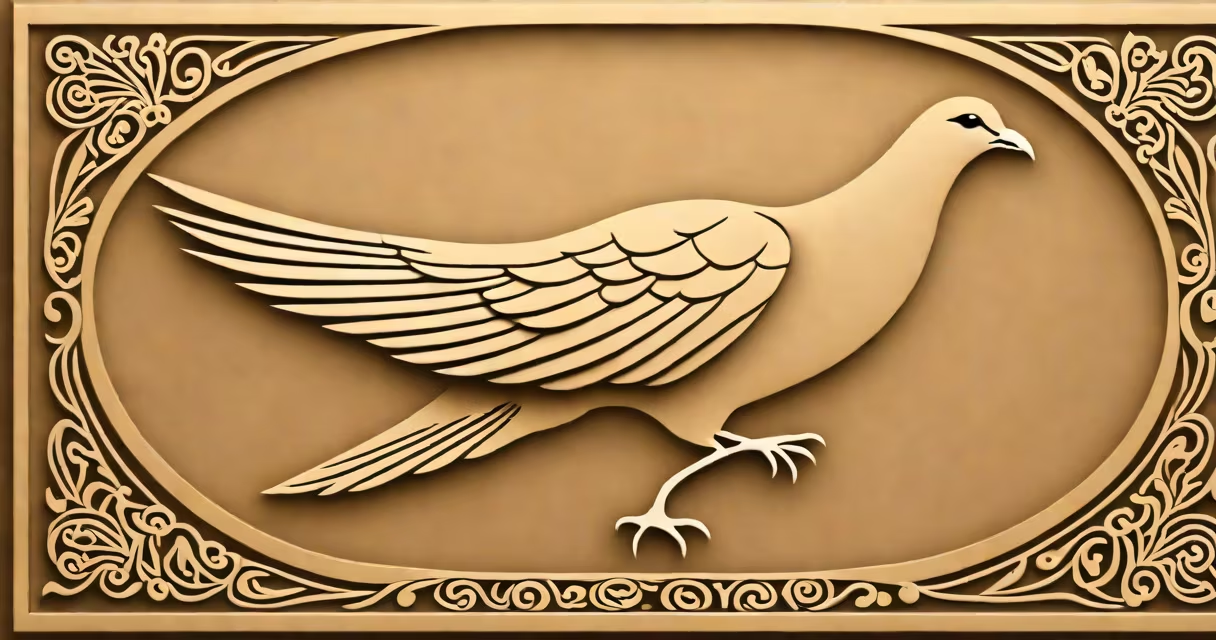
Many assume that symbolism is always intentional. In reality, symbols can emerge organically from cultural habits. The dove, widely seen as a symbol of peace, originated in early Christian art. It was later adopted globally through media and diplomacy. Its meaning evolved independently of any single creator.
Another misconception is that all symbols have one correct interpretation. The meaning of symbolism often depends on context. A raven in Edgar Allan Poe's *The Raven* symbolizes grief and obsession. But in Norse mythology, ravens are messengers of Odin, associated with wisdom and war. The same bird carries different meanings based on tradition.
There's also confusion between metaphor and symbolism. A metaphor compares two things directly ("Life is a process"), while symbolism embeds meaning within a thing that persists throughout a narrative. A metaphor may last one sentence. A symbol lasts longer and accumulates significance.
To see how the meaning of symbolism works, consider the ending of *The Catcher in the Rye*. Holden Caulfield imagines himself as a protector standing at the edge of a cliff, saving children from falling. The image is not literal-he's not actually a catcher. But the idea becomes a symbol of his desire to preserve innocence.
Holden sees children playing in a field of rye. He wants to catch them before they fall off the cliff. The rye field represents childhood. The cliff stands for adulthood and its dangers. The moment is brief, but it reveals his fear of growing up and losing purity. This image recurs in his thoughts, reinforcing its symbolic role.
When analyzing such passages, ask: What does this object or image represent? Does it appear multiple times? How does its meaning shift over time? What emotion or theme does it reinforce? These questions help uncover the intended layers of meaning.
I once taught a high school class using *The Hunger Games*. Students initially saw the mockingjay pin as a costume detail. After reading the novel's history-the bird is a hybrid created by the Capitol, then used by rebels-they realized the pin symbolized resistance and unintended legacy. The shift from weapon to icon mirrored the story's central theme: how power reshapes symbols.
Understanding the meaning of symbolism improves reading comprehension, critical thinking, and cross-cultural literacy. It allows readers to engage with stories not just as plots, but as layered expressions of human experience.
In religious texts, symbolic language conveys truths that literal words cannot. The Bible uses parables and visions to teach moral lessons. In *1 John 4:9*, God's love is shown through the sending of Jesus-"This is how God showed his love among us: He sent his one and only Son." The verse uses sacrifice as a symbol of divine care, a concept reinforced across Christian theology (New International Version, 1 John 4:9).
Symbolism is not decoration. It is a core tool for expressing what cannot be said directly. Whether in a poem, a painting, or a prayer, it carries meaning that resonates beyond the surface.