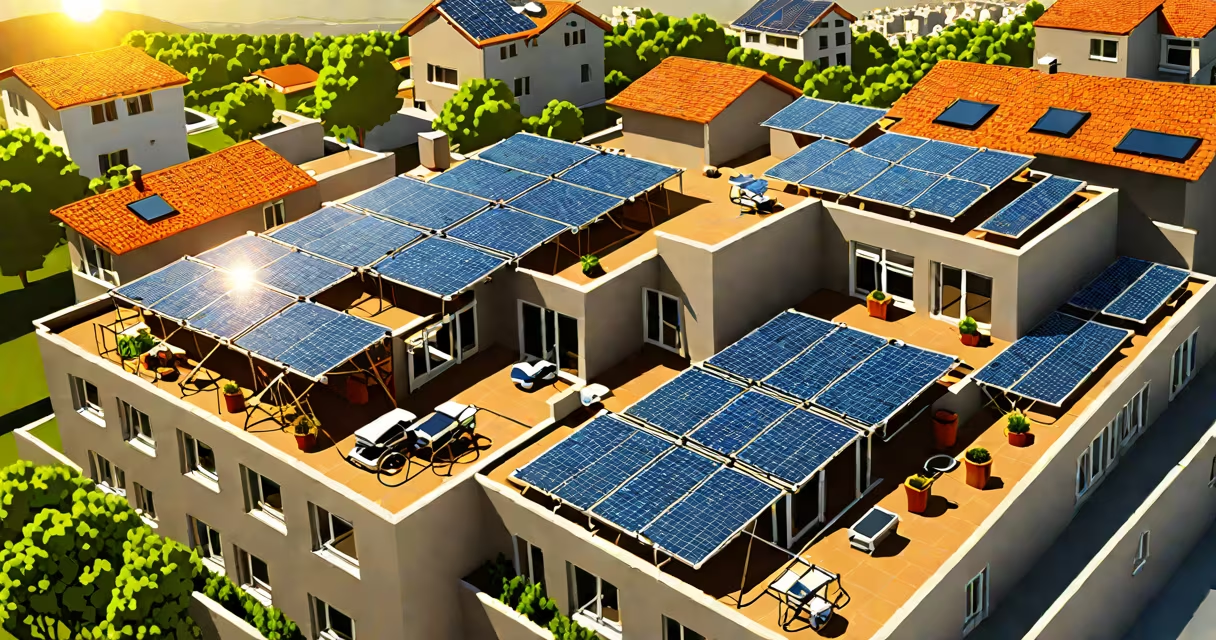
Solar energy is not inherently expensive-it's among the most cost-effective electricity sources available today. While initial installation requires investment, long-term savings, federal incentives, and declining panel prices make it affordable for most homeowners and businesses.
The perception that solar energy is expensive often stems from upfront equipment and labor costs. However, actual operating expenses are near zero. Once installed, solar systems generate electricity with no fuel, maintenance, or utility bills for decades. A typical residential system lasts 25-30 years with minimal upkeep.
According to the U.S. Energy Information Administration (EIA), the levelized cost of electricity (LCOE) from utility-scale solar photovoltaic (PV) systems fell to $0.046 per kilowatt-hour in 2023-lower than coal ($0.055) and gas ($0.063), and competitive with wind ($0.035). This data confirms solar is not only viable but economically superior in many regions.
Solar panels convert sunlight into direct current (DC) electricity using semiconductor materials, typically silicon. An inverter transforms DC into alternating current (AC), which powers homes and feeds excess energy back into the grid through net metering.
Modern systems include monitoring software that tracks daily production and consumption. For example, a 6-kilowatt (kW) system in California produces roughly 8,000 kWh annually-enough to cover 70% of a typical household's electricity use. The remaining 30% is drawn from the grid, reducing monthly bills.
Grid-tied systems require no batteries unless backup power is needed. Off-grid setups use battery banks and charge controllers, increasing complexity and cost-but they're rare in urban areas where grid access is reliable.
Most solar panels use crystalline silicon-either monocrystalline or polycrystalline. Monocrystalline panels have higher efficiency (18-22%) and longer lifespans but cost more. Polycrystalline panels are less efficient (15-17%) but cheaper to produce.
Thin-film solar cells use layers of materials like cadmium telluride or amorphous silicon. They're lightweight and flexible but less efficient (10-13%) and degrade faster. They're mostly used in commercial roofing or portable applications.
| Type | Efficiency Range | Typical Cost per Watt | Best Use Case |
|---|---|---|---|
| Monocrystalline | 18-22% | $0.90-$1.20 | Roofs with limited space |
| Polycrystalline | 15-17% | $0.75-$0.95 | Budget installations |
| Thin-film | 10-13% | $0.50-$0.70 | Large flat roofs, temporary setups |
Panel quality varies widely. Reputable manufacturers like SunPower, LG, and Canadian Solar offer 25-year performance warranties. Cheaper brands may degrade faster and fail early-leading to hidden long-term costs.
Residential solar adoption is highest in states with high electricity rates and abundant sunshine: California, Arizona, Florida, and New Jersey. In California, solar accounts for 23% of in-state generation, according to the California Energy Commission.
Commercial buildings use solar to reduce operational costs. Walmart, Amazon, and Target have installed solar arrays on distribution centers and stores. Walmart's 100+ solar-powered stores in the U.S. save $1 million annually in energy costs.
Utility-scale solar farms now supply entire communities. The 230-megawatt (MW) Desert Sunlight Solar Farm in California powers 160,000 homes. Its construction cost was $1.2 billion, but the average cost per kWh generated is $0.04-well below fossil fuel alternatives.
Many assume solar energy is too expensive because of high sticker prices. But the average residential solar system costs $15,000-$25,000 before incentives. After the federal Investment Tax Credit (ITC)-which allows a 30% credit on system costs-the effective cost drops to $10,500-$17,500.
Another myth: solar doesn't work on cloudy days. Panels still generate 10-25% of rated output under overcast skies. Germany, which gets less sun than the U.S., generates 12% of its electricity from solar-proving climate isn't a barrier.
A lesser-known fact: solar panels increase home value. A 2021 study by the Lawrence Berkeley National Laboratory found homes with solar sold for 4.1% more than comparable homes without solar-equivalent to $9,200 extra value on a $225,000 home.
Consider a homeowner in Austin installing a 6-kW system. The total cost is $21,000. After the 30% federal tax credit, the out-of-pocket cost is $14,700.
The system produces 8,400 kWh/year. At Texas's average rate of $0.13/kWh, that's $1,092 in annual savings. Over 20 years, total savings reach $21,840-exceeding the initial investment.
Net metering credits the homeowner for surplus energy sent to the grid. In summer, excess production offsets winter usage. No batteries are needed. The system pays for itself in 6.7 years, then generates free electricity for the remaining 18.3 years.
While solar has low operating costs, it's not always cheaper than existing infrastructure. In some rural areas, extending the grid to connect solar is more expensive than building a small diesel generator. But in most cases, solar wins on total cost of ownership.
Wind and hydro remain cheaper per kWh in specific locations. But solar is more modular and scalable-ideal for rooftops, parking lots, and remote sites. Unlike natural gas, solar doesn't require fuel delivery or storage.
For context, the International Renewable Energy Agency (IRENA) reports that global solar PV costs dropped 82% between 2010 and 2022. That trend continues-new manufacturing lines in China, India, and the U.S. are driving further reductions.
I once visited a solar installation in Nevada where a family replaced their $200/month electric bill with a $50 bill and a $30 credit from net metering. Their system paid for itself in 7 years. They said the biggest surprise wasn't the savings-it was how quiet the system was. No noise, no fumes, no maintenance.
Is solar energy expensive? Not in the long run. Upfront costs exist, but they're offset by incentives, rising electricity prices, and system longevity. With the right setup, solar delivers reliable, clean power at a lower lifetime cost than traditional sources.