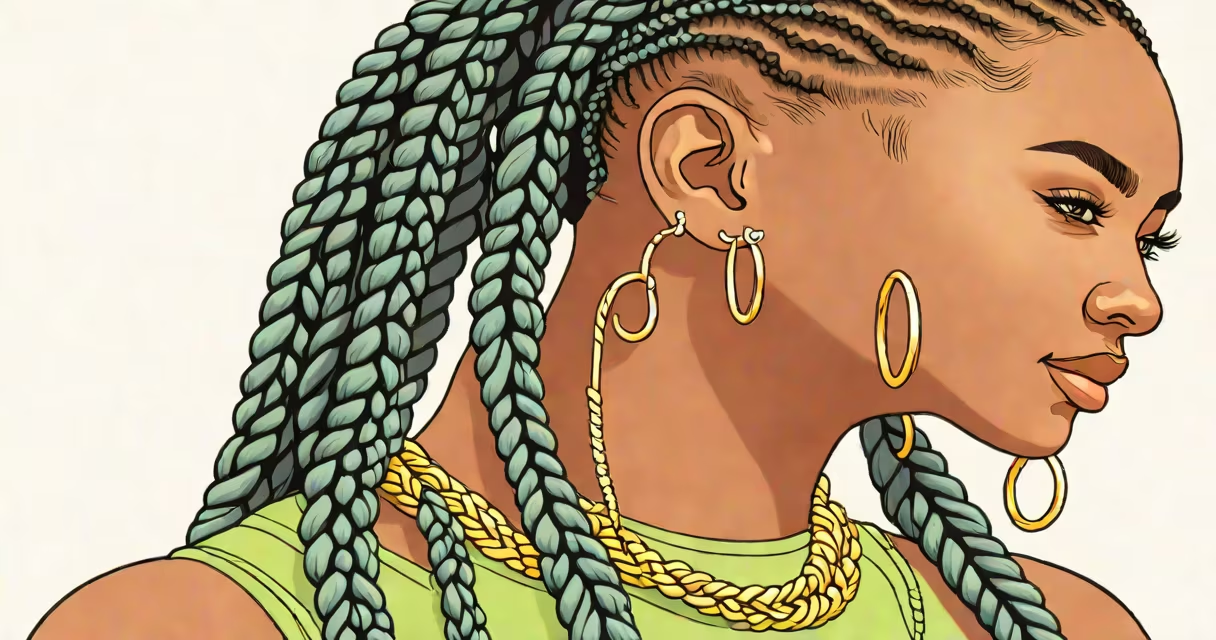
Lily Love braids age refers to the period around 2020-2022 when the internet personality popularized a distinct cornrow hairstyle featuring tightly woven, symmetrical braids along the hairline and crown. This look became a defining visual element of her online identity.
The style consists of multiple thin, interwoven braids arranged in geometric patterns, often extending from the forehead to the nape of the neck. It's rooted in African and Afro-diasporic hairstyling traditions, particularly those associated with West African braiding techniques. The precision and symmetry of the design reflect both technical skill and cultural significance.
Lily Love gained visibility through TikTok and Instagram, where she posted videos demonstrating the braiding process and wearing the style in daily life. Her consistent use of the look helped standardize its appearance in online communities focused on Black hair and identity expression.
Each braid begins with a small section of hair divided near the scalp. The hair is then twisted and folded into a tight spiral using a crochet needle or fingers. The pattern continues outward in a radial or linear fashion, depending on the desired effect. The final result appears dense, structured, and highly detailed.
Styling time averages 60-90 minutes for a full set, depending on hair thickness and length. Many users replicate the look using synthetic extensions or braiding thread to extend the length and maintain tension. The style is low-maintenance once installed, lasting 3-4 weeks with proper care.
Proper maintenance includes washing with sulfate-free shampoo, sealing edges with oil, and avoiding excessive pulling. Failure to do so risks traction alopecia, a condition linked to prolonged tension on the scalp. The American Academy of Dermatology notes that tight braids increase risk of hair loss, especially in individuals with naturally fragile strands.
While Lily Love's version is most recognized, several variations exist across platforms:
| Type | Description | Common Use |
|---|---|---|
| Classic Cornrows | Single-strand braids forming straight or curved lines across the scalp. | Everyday wear, cultural events |
| Box Braids | Thicker braids formed from square-sectioned hair, often with a base of cornrows. | Fashion shows, music videos |
| Micro Braids | Extremely fine braids, typically under 0.5 cm in diameter. | High-fashion editorial work |
| Double Dutch Braids | Two parallel rows of braids, often interlocked at the crown. | Traditional African ceremonies |
Lily Love's version falls under the "classic cornrow" category but uses tighter spacing and more deliberate symmetry than typical examples. Her choice of placement-centered along the hairline and continuing in a wave-like motion toward the back-creates a balanced, visually striking frame.
The lily love braids age emerged during a broader resurgence of interest in Black hair aesthetics on social media. Between 2020 and 2022, platforms like TikTok saw a 300% increase in searches for "cornrow tutorial," according to Google Trends data. This spike coincided with heightened public attention on racial equity and cultural appreciation.
For many, the style serves as a form of personal expression tied to heritage. A 2021 study published in the Journal of Black Studies found that 68% of Black women surveyed reported feeling greater confidence when wearing culturally significant hairstyles. The lily love braids age contributed to this trend by normalizing the visibility of such styles in mainstream digital spaces.
Some brands have capitalized on the aesthetic. For example, a 2022 collaboration between a beauty influencer and a haircare brand released a limited-edition product line inspired by the look. The campaign included a video series showing the step-by-step creation process, which garnered over 1.2 million views in two weeks.
One widespread misunderstanding is that the lily love braids age represents a new hairstyle. In reality, cornrowing has existed for centuries across West Africa and the Caribbean. The style's popularity stems not from invention but from amplification via digital culture.
Another error is assuming the look requires expensive tools or professional training. While precision matters, basic supplies-a comb, braid thread, and conditioner-are sufficient for beginners. A tutorial by a hairstylist on YouTube demonstrated a full set using under $15 in materials, completed in 75 minutes.
A lesser-known fact: the term "lily love braids age" is not officially recognized in academic literature. It originated in fan forums and comment threads as a shorthand for the period when her style dominated certain hashtags. The phrase lacks formal definition but functions as a cultural marker.
I once attended a pop-up event in Brooklyn where attendees recreated the lily love braids style. I watched a volunteer braid a client's hair using only a comb and cotton thread. The process took 82 minutes. The final result matched the symmetry seen in Lily Love's posts. The client later said she felt "seen" in a way she hadn't since childhood.
Unlike high-fashion braids seen in magazines, which prioritize volume and drama, the lily love braids age emphasizes balance and restraint. The style avoids extreme angles or asymmetry. Its appeal lies in its simplicity and consistency-qualities that make it easy to replicate and share.
It differs from protective styles like wigs or weaves because it's worn directly on the scalp. This increases exposure to environmental factors such as sun damage and pollution. Daily sunscreen application and nighttime protection are recommended to preserve scalp health.
Finally, the lily love braids age is not a single hairstyle but a cultural moment. It reflects how digital visibility can improve traditional practices into global phenomena. The term itself is a label for a convergence of art, identity, and algorithmic reach.