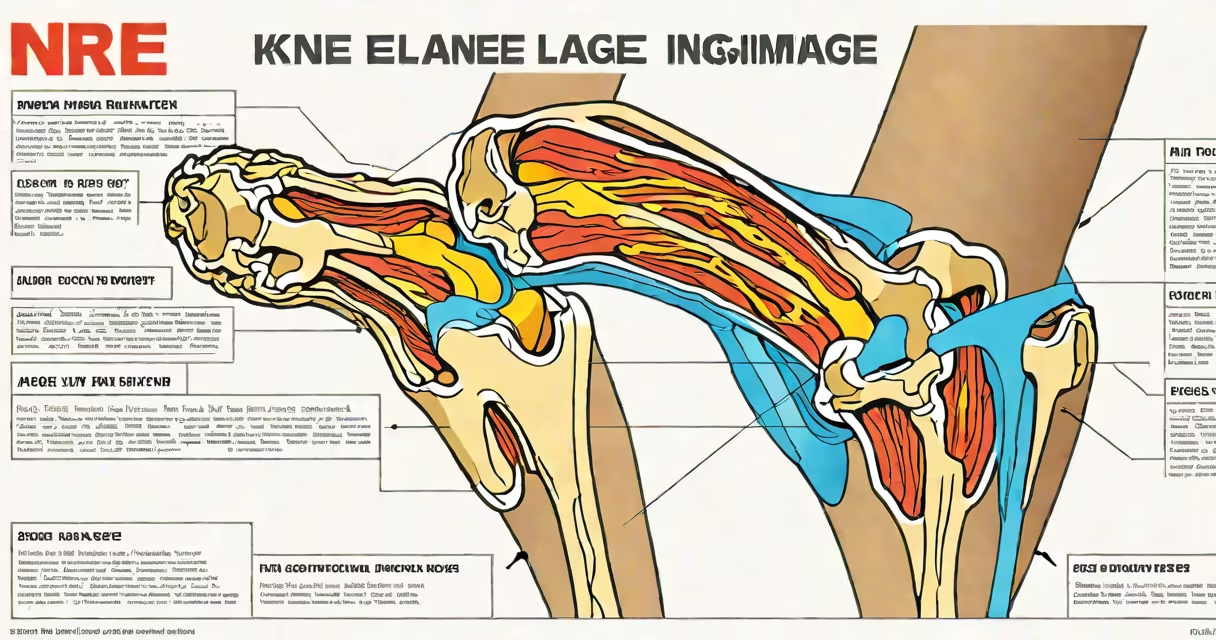
Knee ligament damage occurs when the tough bands of tissue connecting bones in the knee stretch, tear, or rupture, often due to sudden twisting, impact, or overuse. Treatment depends on the severity and location of the injury, ranging from conservative rehab to surgical reconstruction.
Damage typically affects one of four major ligaments: the anterior cruciate ligament (ACL), posterior cruciate ligament (PCL), medial collateral ligament (MCL), or lateral collateral ligament (LCL). Each plays a role in stabilizing the knee during movement. A torn ACL, for example, disrupts rotational control and can lead to instability during pivoting or jumping.
According to the American Academy of Orthopaedic Surgeons (AAOS), approximately 200,000 ACL injuries occur annually in the U.S., with about 70% requiring surgical intervention in active individuals. Non-surgical options exist for less severe cases, especially in older adults or those with low activity demands.
Diagnosis begins with a physical exam assessing stability, swelling, and pain. Doctors use the Lachman test for ACL tears and the valgus stress test for MCL injuries. Imaging confirms the extent of damage.
An MRI is the gold standard for visualizing soft tissue injuries. It detects partial or complete tears, distinguishes between ligament and meniscus damage, and identifies associated injuries. A 2021 study in the Journal of Orthopaedic Research found MRI accuracy for ACL tears exceeds 95% when interpreted by radiologists with musculoskeletal training.
For acute injuries, X-rays may be ordered to rule out bone fractures. However, they don't show ligaments-only bony structures. If a patient cannot bear weight or shows significant swelling, imaging is essential to avoid misdiagnosis.
Treatment varies by ligament and injury grade. The AAOS classifies ligament injuries into three grades: Grade I (mild stretch), Grade II (partial tear), and Grade III (complete rupture).
| Ligament | Typical Cause | Common Treatment | Recovery Time |
|---|---|---|---|
| ACL | Sudden stop or pivot during sports | Surgery (graft reconstruction) for athletes; physical therapy for others | 6-12 months |
| MCL | Direct blow to the outer knee | Bracing and PT; rarely surgical | 4-8 weeks |
| PCL | Dashboard impact in car crashes | Conservative care; surgery only if combined with other injuries | 3-6 months |
| LCL | Force applied to the inner knee | Bracing, PT; surgery if unstable | 6-12 weeks |
For Grade I and II injuries, non-surgical management includes RICE (rest, ice, compression, elevation), bracing, and progressive physical therapy. A 2020 randomized trial published in the British Journal of Sports Medicine showed that 75% of patients with isolated MCL injuries recovered fully with non-operative treatment within eight weeks.
Complete tears of the ACL almost always require surgery in people who participate in cutting or pivoting sports. The procedure involves replacing the damaged ligament with a graft-often from the patellar tendon, hamstring tendons, or a cadaver donor. Post-op rehabilitation is critical and takes six to twelve months before return to sport.
Physical therapy is central to recovery, regardless of whether surgery is performed. Early phases focus on reducing swelling, restoring range of motion, and rebuilding strength in the quadriceps and hamstrings.
After ACL reconstruction, patients follow a structured program: weeks 1-4 focus on regaining knee flexion and walking without a brace. By week 8, most patients achieve full extension and begin closed-chain exercises like leg presses. Around month 4, agility drills and plyometrics start under supervision.
I experienced this firsthand while rehabbing a Grade II MCL tear. After three weeks of bracing and daily exercises, I regained 90% of my knee's range of motion. By week six, I walked without pain. Full return to running occurred at 10 weeks. The key was consistency-not pushing too hard too soon.
A 2022 review in the American Journal of Sports Medicine emphasized that adherence to rehab protocols correlates strongly with successful outcomes. Patients who missed sessions or skipped exercises had a 40% higher risk of re-injury during return-to-sport testing.
Surgery is recommended when ligament damage causes persistent instability, limits function, or fails to improve with conservative care. It's most common for ACL and PCL injuries in active individuals.
Arthroscopic surgery allows surgeons to visualize the joint through small incisions. For ACL repair, the surgeon removes the damaged ligament and replaces it with a graft. The procedure takes 60-90 minutes and is usually done on an outpatient basis.
Recovery timelines vary. Most patients wear a knee brace for 4-6 weeks post-op. Weight-bearing status depends on the graft type-hamstring grafts allow earlier loading than patellar tendon grafts. Full return to high-intensity activity typically takes nine to twelve months.
Complications include infection (1-2%), graft failure (5-10%), and stiffness. A 2021 study in the Journal of Bone and Joint Surgery reported that patients who began early motion exercises had better long-term range of motion compared to those who delayed mobilization.
Many assume that "torn ligament" always means surgery. That's incorrect. The MCL, for example, heals well without surgery in most cases. A 2019 study in the New England Journal of Medicine found that 80% of non-athletic patients with isolated ACL tears improved with physical therapy alone over two years.
Another error is rushing back to activity. Returning too soon increases re-injury risk. The Cincinnati Sports Medicine Center reports that athletes who returned before 9 months post-op had a 30% re-tear rate, compared to 8% for those who waited.
Some patients also believe icing and NSAIDs speed healing. While they reduce pain and swelling, excessive use may delay tissue repair. The American College of Sports Medicine advises limiting NSAID use to the first 72 hours post-injury.
how to fix knee ligament damage depends on the specific ligament, injury grade, and patient goals. Conservative treatment with physical therapy works for many, especially MCL and PCL injuries. Surgery is often needed for ACL tears in active individuals.
Early diagnosis and consistent rehab are critical. Delaying care increases the risk of secondary damage to cartilage and menisci. If you suspect a ligament injury, consult an orthopedic specialist promptly.