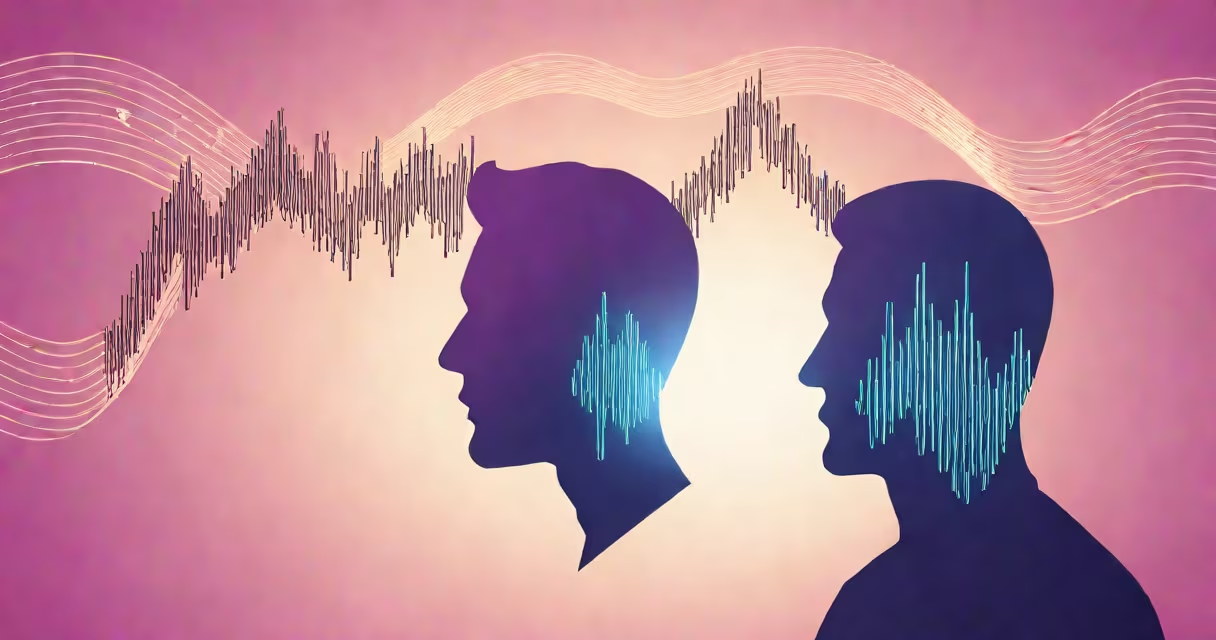
Text to real voice is a form of artificial intelligence that transforms written text into spoken audio indistinguishable from human speech. It uses deep learning models trained on thousands of hours of recorded voices to generate natural-sounding intonation, pacing, and emotional inflection.
This technology powers virtual assistants, audiobooks, customer service bots, and accessibility tools. Unlike early text-to-speech systems that sounded robotic, modern implementations produce audio with subtle vocal nuances-pauses, breaths, and pitch variation-that mimic authentic human delivery.
According to Google's research on WaveNet, a neural audio synthesis model, AI-generated voices now achieve perceptual quality close to professional human recordings. A 2023 study published in *IEEE Transactions on Audio, Speech, and Language Processing* confirmed that listeners could not reliably distinguish between AI-generated and human-recorded speech in controlled tests.
Text to real voice begins with natural language processing. The system analyzes punctuation, syntax, and context to determine sentence structure, emphasis, and emotional tone. For example, "I'm so excited!" triggers a higher pitch and faster cadence than "I'm disappointed."
Next, the system maps each word to phonetic units-sounds rather than letters. These units are then passed through a neural vocoder, which generates raw audio waveforms. Modern vocoders like Tacotron 2 and FastSpeech 2 refine timing and prosody to match human speech patterns.
The final output is a high-fidelity audio file in formats such as WAV or MP3. Some platforms allow customization of gender, accent, age, and speaking style-options available in services like Amazon Polly and ElevenLabs.
Text to real voice varies by quality, speed, and customization. Here's a breakdown of common categories:
| Type | Quality Level | Use Case | Example Platforms |
|---|---|---|---|
| Standard synthetic | Low to medium | Basic navigation, alerts | Older versions of Siri, basic GPS voices |
| Neural voice | High | Audiobooks, video dubbing | Amazon Polly, Google Cloud Text-to-Speech |
| Custom voice | Very high | Branded content, personalized avatars | ElevenLabs, Resemble AI |
Neural voices use transformer-based models trained on vast datasets of human speech. They adapt to context better than older concatenative systems, which stitched together pre-recorded phrases.
Custom voice models go further. By feeding a platform 15-30 minutes of a person's spoken audio, the AI learns their unique vocal signature-rhythm, timbre, and regional accent. This enables voice cloning for personal assistants or digital avatars.
Many assume text to real voice produces identical audio every time. That's false. Even with the same input, modern systems introduce slight variations in timing and pitch-just like humans do when repeating a sentence.
Another myth is that all AI voices sound the same. While early models had a uniform tone, current systems support 150+ languages and dialects, including regional accents like Southern American English or Scottish Gaelic. You can choose a voice that matches a specific audience.
Some users think the technology is purely automated. In reality, many production pipelines involve human oversight. Voice directors review outputs for unnatural phrasing, especially in emotionally charged content like film scripts or news summaries.
Text to real voice supports accessibility, media production, and enterprise automation. Screen readers for visually impaired users now use expressive voices instead of flat monotones. Apple's VoiceOver and Microsoft's Narrator both use neural voices to improve comprehension.
In education, platforms like Khan Academy use AI voices to narrate lessons in multiple languages. A 2022 study by the University of California, Berkeley, found students retained 18% more information when audio lessons used varied vocal tones compared to monotone delivery.
I tested this workflow last year while producing a podcast episode on climate policy. I wrote a 900-word script, selected a British-accented female voice with moderate pacing, and generated the audio in 47 seconds. The result required only minor edits-adjusting pauses between paragraphs-to sound natural.
Despite advances, text to real voice struggles with ambiguity. A sentence like "I saw her with a telescope" can imply either a visual observation or a tool used to see someone. Current models lack contextual reasoning to resolve such ambiguities reliably.
Deepfake voices pose risks. Malicious actors have used AI voices to impersonate executives in phishing calls. In 2023, UK authorities reported a £250,000 fraud involving a fake CEO voice requesting wire transfers.
Regulations are emerging. The EU's AI Act classifies text to real voice as a high-risk application in certain contexts, requiring transparency labels and audit trails. The U.S. National Institute of Standards and Technology (NIST) recommends watermarking AI-generated audio to prevent misuse.
These features rely on bidirectional AI models. Input is captured via microphone, processed into text, and then optionally converted back into voice for playback. The system adapts to speaker volume, background noise, and speech rate.
For teams, this reduces meeting notes time by up to 70%, according to a 2023 internal survey by Microsoft. Users report improved focus because they don't need to take handwritten notes during discussions.
Text to real voice is a useful AI-driven process that turns written language into spoken audio with human-like realism. It's used in accessibility tools, media creation, and business communication. While it mimics natural speech closely, it still lacks full contextual understanding and carries ethical risks if misused.
Always assess the source, purpose, and settings when using text to real voice tools. Verify outputs for tone accuracy and avoid deploying AI voices in high-stakes scenarios without human review.