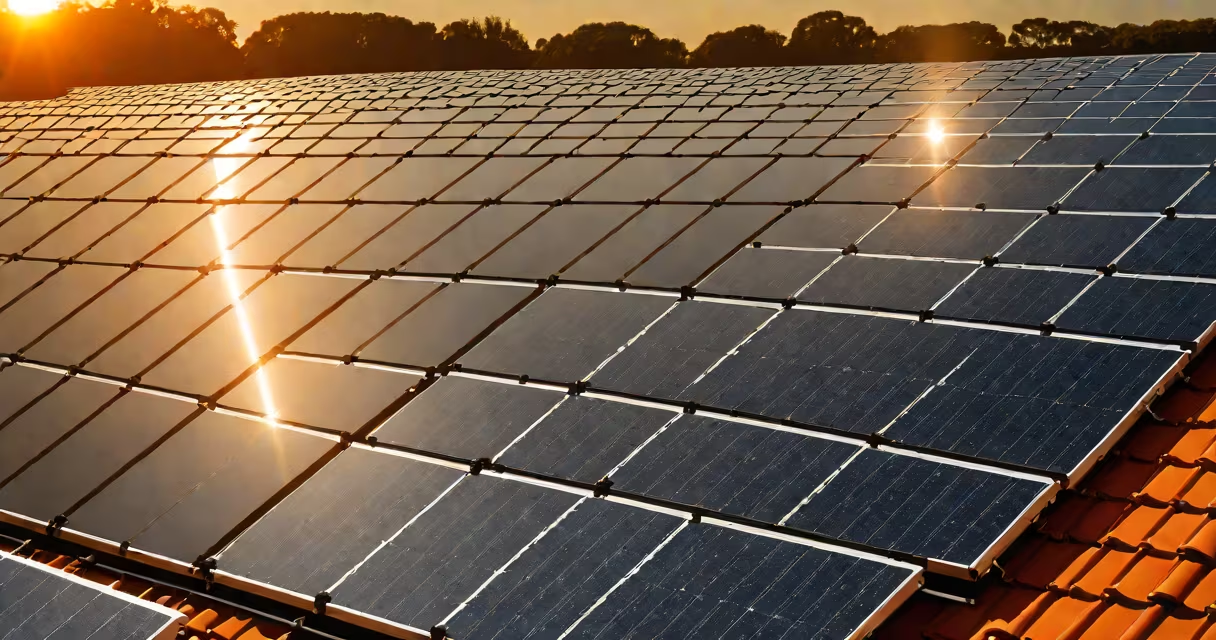
solar panel stocks are shares in publicly traded companies that design, manufacture, or install photovoltaic systems to convert sunlight into electricity. These equities offer exposure to the growing global shift toward renewable energy infrastructure.
Investors buy solar panel stocks to gain financial upside from rising demand for clean energy, government incentives, and falling production costs. Companies in this sector include manufacturers of silicon-based solar cells, producers of thin-film panels, and firms installing utility-scale solar farms.
The market for solar panel stocks expanded rapidly between 2020 and 2023, driven by climate policy commitments under the Inflation Reduction Act (IRA) in the U.S. and similar programs in Europe and Asia. According to the International Energy Agency (IEA), solar capacity grew by 22% globally in 2023, making it the fastest-growing energy source.
When you purchase a share of a solar panel company, you own a small portion of that business. Your returns come from capital appreciation-the rise in stock price-and dividends if the company pays them. A company's performance hinges on production volume, material costs, supply chain efficiency, and policy support.
For example, First Solar (FSLR) produces thin-film solar modules using cadmium telluride instead of traditional silicon. This process uses less energy and water during manufacturing. In 2023, First Solar reported $1.2 billion in revenue and a 16% increase in module shipments compared to 2022, contributing to a 34% rise in its stock price over the same period.
Market sentiment also affects prices. News about trade tariffs, supply shortages, or breakthroughs in efficiency can trigger sharp moves. In early 2022, solar panel stocks dropped 12% after the U.S. Department of Commerce proposed anti-dumping duties on imported panels from China, Vietnam, and Malaysia.
Solar panel stocks fall into distinct categories based on their role in the value chain. Not all are equal in risk or return profile.
| Type | Focus | Example Companies | Key Risk Factors |
|---|---|---|---|
| Manufacturers | Design and produce solar panels | First Solar (FSLR), JinkoSolar (JKS) | Raw material volatility, trade barriers, overcapacity |
| Installers & Developers | Deploy solar arrays at commercial and residential sites | Enphase Energy (ENPH), Sunrun (RUN) | Permitting delays, labor shortages, project financing |
| Component Suppliers | Provide inverters, mounting hardware, tracking systems | Power Integrations (PI), SolarEdge (SEDG) | Supply chain bottlenecks, regulatory changes |
Many investors favor integrated players like Enphase Energy, which designs both microinverters and monitoring software. Their vertical integration reduces dependency on external suppliers and improves profit margins. In Q3 2023, Enphase reported a 28% year-over-year increase in revenue, driven by higher adoption in North American residential markets.
A lesser-known fact: not all solar panel stocks are tied to physical hardware. Some companies focus on software platforms that manage distributed solar assets. For example, Stem Inc. (STEM) operates AI-driven energy storage systems paired with solar installations, optimizing grid load and reducing customer energy bills. Its stock rose 47% in 2023 despite no direct involvement in panel manufacturing.
People often assume that all solar panel stocks are interchangeable. That's incorrect. A company producing high-efficiency monocrystalline panels in Germany faces different challenges than one building utility-scale solar farms in Texas.
Another mistake is confusing solar panel stocks with green bonds or mutual funds focused on renewables. While those vehicles may hold solar equities, they're not the same. Green bonds pay interest and are backed by specific projects. Mutual funds diversify across sectors, including wind and hydroelectricity. Investing in individual solar panel stocks requires understanding balance sheets, debt levels, and long-term contracts.
I once reviewed a portfolio that included five solar panel stocks, all from Asian manufacturers. Over six months, three of them saw double-digit losses due to oversupply and falling module prices. The fourth was suspended from trading after a quality control scandal involving cracked wafers. Only the fifth, a U.S.-based installer with long-term power purchase agreements, held steady. This shows that geography, business model, and oversight matter more than the label "solar."
Investors use solar panel stocks to build positions in the low-carbon economy. Institutional buyers such as BlackRock and Vanguard have increased allocations to clean energy equities since 2021. As of 2023, BlackRock's iShares Global Clean Energy ETF (ICLN) held over $2.3 billion in solar-related equities, including stakes in First Solar and Canadian Solar (CSIQ).
Individuals use these stocks for long-term growth and income. Dividend-paying solar firms like Vestas Wind Systems (VWDRY) have historically paid out 2-3% annual yields. However, most pure-play solar companies reinvest profits into expansion rather than returning cash to shareholders.
Regulatory tailwinds boost demand. The U.S. IRA provides a 30% investment tax credit for commercial solar projects and accelerated depreciation schedules. In Europe, the EU Green Deal mandates that 50% of new buildings install solar roofs by 2030. These policies create stable demand, supporting long-term valuation models.
While solar panel stocks offer exposure to a major industry, they carry risks beyond typical market swings. Supply chain disruptions, geopolitical tensions, and technological obsolescence can erode value quickly. For example, perovskite solar cells-still in development-could eventually replace silicon panels, rendering current manufacturing lines obsolete.
Solar panel stocks are not a guaranteed bet. But for investors aligned with decarbonization goals and willing to monitor fundamentals, they represent a tangible stake in the future of energy.