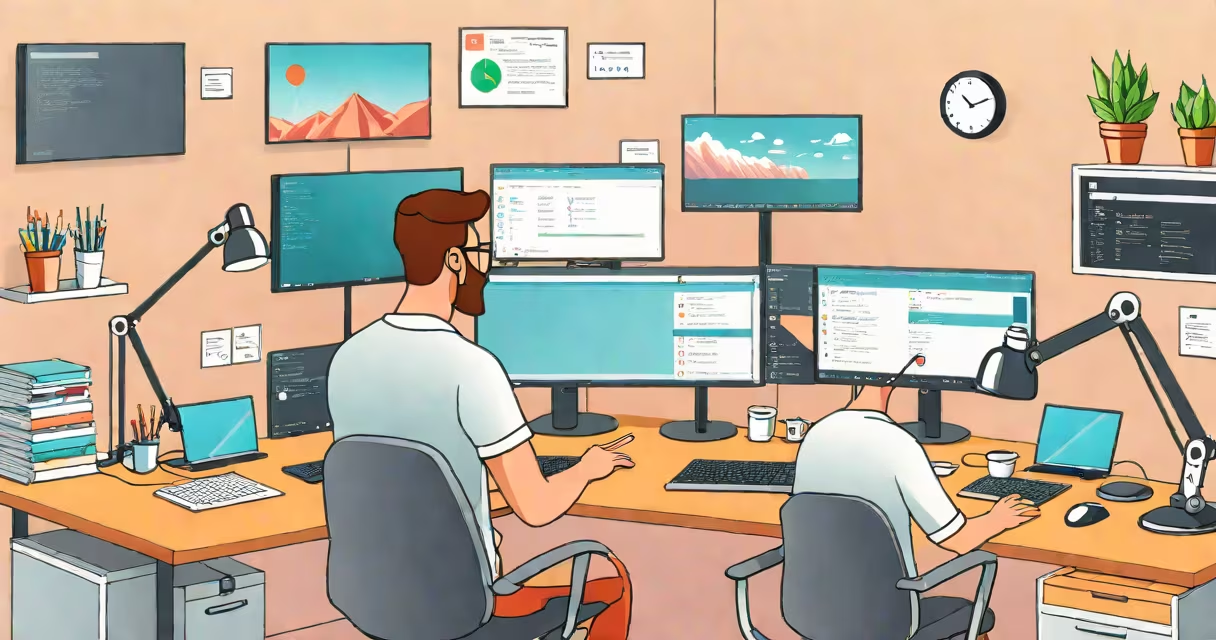
A fullstack developer builds complete web applications by mastering both frontend (client-side) and backend (server-side) technologies, including databases and APIs. This role requires proficiency in multiple programming languages, frameworks, and system design principles.
Fullstack developers work across the entire application stack-from user interface design to server logic and data storage. They write code that runs in browsers and on servers, integrate third-party services, and ensure applications perform reliably under load. Their work spans from wireframing a login screen to deploying a production database.
The average fullstack developer earns $110,000 annually in the U.S., according to the U.S. Bureau of Labor Statistics (2023). Salaries rise with experience and specialization in cloud platforms like AWS or Azure. Top-tier developers often contribute to open-source projects and maintain personal portfolios showcasing live apps.
Fullstack development involves creating applications that users interact with through a browser while relying on server processes and databases behind the scenes. A user clicks "Submit" on a form; the frontend sends the data via JavaScript to a backend server, which validates inputs, stores them in a database, and returns a success message-all within seconds.
Frontend components include HTML for structure, CSS for styling, and JavaScript for interactivity. Popular frameworks like React or Vue.js manage changing content efficiently. Backend systems use languages such as Node.js, Python (Django/Flask), Ruby (Rails), or PHP (Laravel) to handle requests, process data, and serve responses.
Databases store structured information. SQL databases like PostgreSQL or MySQL use structured queries for retrieval. NoSQL options like MongoDB scale well for unstructured data such as user activity logs or real-time chat messages.
Mastering fullstack development means learning a layered set of tools. The following table outlines the essential categories, recommended entry points, and typical time investment.
| Layer | Key Technologies | Beginner Tools | Time to Proficiency |
|---|---|---|---|
| Frontend | HTML, CSS, JavaScript, React | CodePen, freeCodeCamp | 3-6 months |
| Backend | Node.js, Express, Python/Django | Postman, VS Code | 6-12 months |
| Database | PostgreSQL, MongoDB | Prisma, MongoDB Compass | 3-6 months |
| DevOps & Deployment | Git, Docker, AWS EC2 | GitHub, Heroku | 3-9 months |
Many beginners underestimate the complexity of state management in frontend apps. For example, managing user session data across multiple React components requires understanding context providers or Redux. Without proper setup, features break during navigation or after refreshes.
One non-obvious requirement is version control discipline. Using Git correctly prevents merge conflicts and enables collaboration. A single commit message like "fixed bug" offers no traceability. Better messages describe *why* a change was made: "Fixed login timeout due to expired JWT token."
People often assume fullstack means knowing everything. That's false. Even experienced developers specialize. A fullstack developer may focus on MERN (MongoDB, Express, React, Node.js) stacks but still rely on DevOps engineers for Kubernetes clusters or CI/CD pipelines.
Another myth is that you must master all tools before building anything. In reality, starting small is effective. Build a to-do list app with a local JSON file, then replace it with a real database. Deploy it using GitHub Pages or Netlify. Then add authentication with Firebase or Auth0.
I once spent two weeks trying to debug a React component that failed silently in production. The issue wasn't in the code-it was missing error boundaries. Adding <ErrorBoundary> wrappers caught exceptions and showed fallback UIs, improving user experience dramatically. This taught me that debugging is as critical as writing code.
Consider a weather dashboard that shows current conditions and forecasts. Here's how a fullstack developer implements it:
fetch('/api/weather').GET /api/weather to call OpenWeatherMap API.This project integrates all layers. It demonstrates how frontend and backend communicate, how data flows through the system, and how real-world constraints like rate limits or network latency affect design choices.
After completing foundational projects, apply for junior roles or freelance gigs. Platforms like Upwork or Toptal list opportunities requiring fullstack skills. Many companies use technical interviews involving live coding challenges, such as building a RESTful API endpoint in 45 minutes.
As you grow, consider focusing on scalability, security, or performance optimization. Learn how to monitor application health using tools like Prometheus and Grafana. Study distributed systems patterns like microservices or event-driven architectures.
If you're interested in a different path, becoming an OTA offers a distinct route into tech, focusing on operational excellence and service delivery rather than software construction.
Becoming a fullstack developer isn't about memorizing syntax. It's about solving problems end-to-end, thinking critically about trade-offs, and continuously learning. The most successful developers aren't those who know the most-but those who adapt fastest.