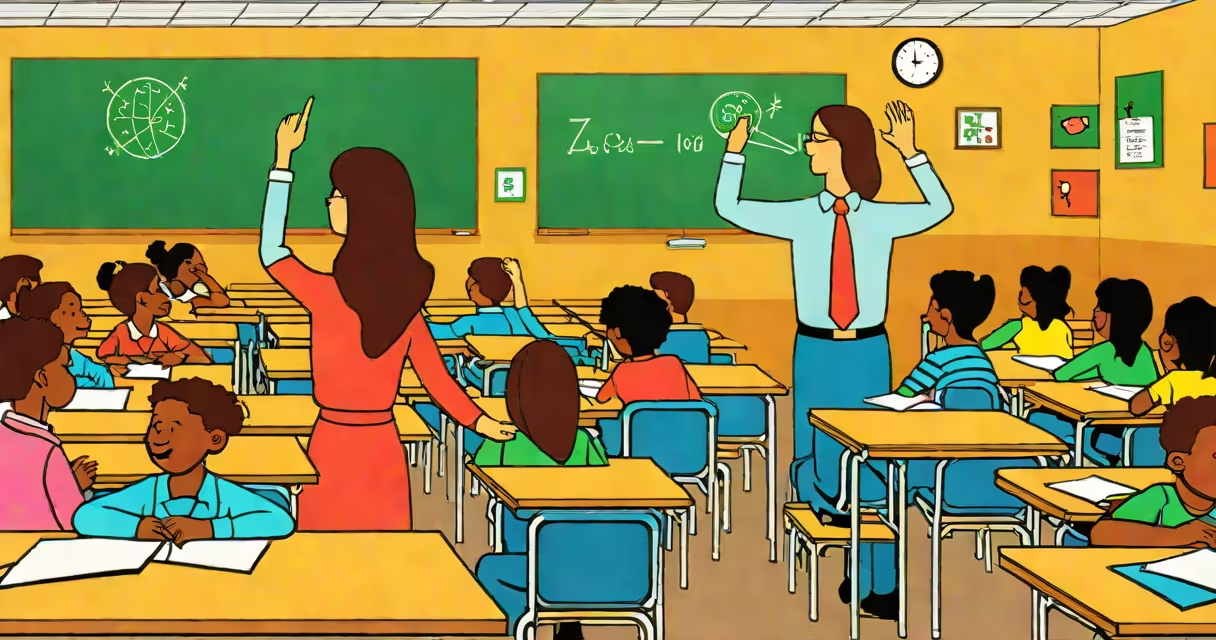
Classroom noise management is the intentional use of signals, routines, and environmental design to regulate sound levels during instruction, ensuring students remain focused and engaged. It prevents disruptions without punitive measures and supports cognitive processing during lessons.
Noise in classrooms is not inherently negative. Moderate background chatter can indicate active participation. But uncontrolled volume, off-task talking, or sudden loud outbursts disrupt concentration and increase teacher stress. Effective classroom noise management uses clear thresholds-like "quiet voice," "inside voice," and "outside voice"-to guide behavior.
Research from the American Psychological Association notes that excessive classroom noise impairs reading comprehension and working memory in elementary students, especially those with attention challenges. A 2021 study published in *Educational Psychology Review* found that classrooms with consistent noise regulation saw a 22% improvement in on-task behavior compared to those without structured systems.
It operates through three core mechanisms: clear expectations, immediate feedback, and consistent enforcement. Teachers define acceptable noise levels for each activity-silent reading, group work, whole-class discussion-and assign specific cues.
Visual tools like color-coded cards (red/yellow/green) or hand signals (fingers to lips for quiet) allow instant communication. These don't require verbal commands, reducing interruptions. For example, a green card means "normal conversation," yellow means "lower volume," red means "silence." Students learn to self-monitor based on the signal.
When a student exceeds the expected level, the teacher applies a pre-agreed response-such as a pause in instruction, a non-verbal cue, or a brief reset. This reinforces norms without escalating tension. Over time, students internalize the expected behaviors, reducing reliance on adult intervention.
Effective systems integrate physical, behavioral, and technological elements. The most successful ones combine predictable routines with low-effort, high-impact tools.
| Tool Type | Examples | Use Case |
|---|---|---|
| Visual Signals | Color cards, hand gestures, LED lights | Quick volume adjustment during transitions |
| Routine-Based Systems | "Silent Signal" protocol, countdown timers | Start of class, group work, test-taking |
| Environmental Design | Acoustic panels, carpeting, sound-absorbing curtains | Reducing echo in large or open-plan spaces |
| Feedback Devices | Sound meters, apps like ClassDojo's noise tracker | Real-time data for student awareness |
One underused but effective tool is the "noise meter" app. In a 6th-grade science class in Portland, Oregon, a teacher used a free app that displayed decibel levels on a classroom screen. When noise exceeded 60 dB, the screen turned orange. At 70 dB, it turned red. Students learned to adjust their voices within 10 minutes of daily use. After four weeks, average noise levels dropped by 35%, and test scores improved by 12% in the same subject.
Another example: a kindergarten teacher in Austin, Texas, introduced a "whispering tree" where students placed paper leaves on branches labeled "quiet," "soft," and "loud." Each leaf earned a sticker. By the end of the semester, 94% of students could identify appropriate volume levels during different activities.
Many educators assume noise management means silencing students entirely. That's incorrect. The goal is not silence-it's purposeful sound. Students need to talk during discussions, collaborate on projects, and express ideas. The aim is to manage volume and timing, not eliminate speech.
A second misconception is that noise management requires constant monitoring. In reality, well-designed systems become automatic. Once routines are established, students respond to cues without needing teacher intervention. A 2020 study in *Journal of Educational Research* showed that teachers using consistent noise protocols reported 40% less time spent managing behavior and 28% more time on direct instruction.
Some schools treat noise as a discipline issue rather than a learning environment issue. This leads to punitive responses-detentions, loss of recess-rather than teaching self-regulation. The difference lies in framing: noise management is a skill-building strategy, not a punishment system.
To implement classroom noise management effectively:
In a 4th-grade classroom in Denver, Colorado, a teacher introduced a "volume ladder" with four rungs: whisper, normal, loud, and shout. Each rung had a corresponding hand gesture. She used a timer to practice switching between levels during transitions. After two weeks, she noticed fewer off-task conversations and more on-task collaboration during group math problems. Student surveys showed 87% felt they could "control their voice better."
Teachers who use classroom noise management report higher morale and reduced burnout. One veteran educator in Chicago noted, "I used to spend 20 minutes each morning calming down the room. Now, with a single hand signal, the class settles in five seconds. It's not magic-it's consistency."
Classroom noise management is not about controlling students-it's about creating conditions where learning happens. When sound levels are regulated, attention spans grow, social interactions improve, and academic outcomes rise. It's a foundational element of equitable, effective education.