Human cognition encompasses the mental processes that enable perception, attention, memory, language, problem-solving, and decision-making. These functions allow individuals to interpret sensory input, store and retrieve information, plan actions, and adapt to changing environments.
Cognition begins with sensory input-sights, sounds, smells-and transforms them into meaningful experiences. The brain integrates signals from the eyes, ears, skin, and internal organs into coherent perceptions. For example, when someone sees a red traffic light, their visual cortex detects the color and shape, the hippocampus retrieves past associations with stopping, and the prefrontal cortex initiates a response to brake. This sequence happens in under half a second.
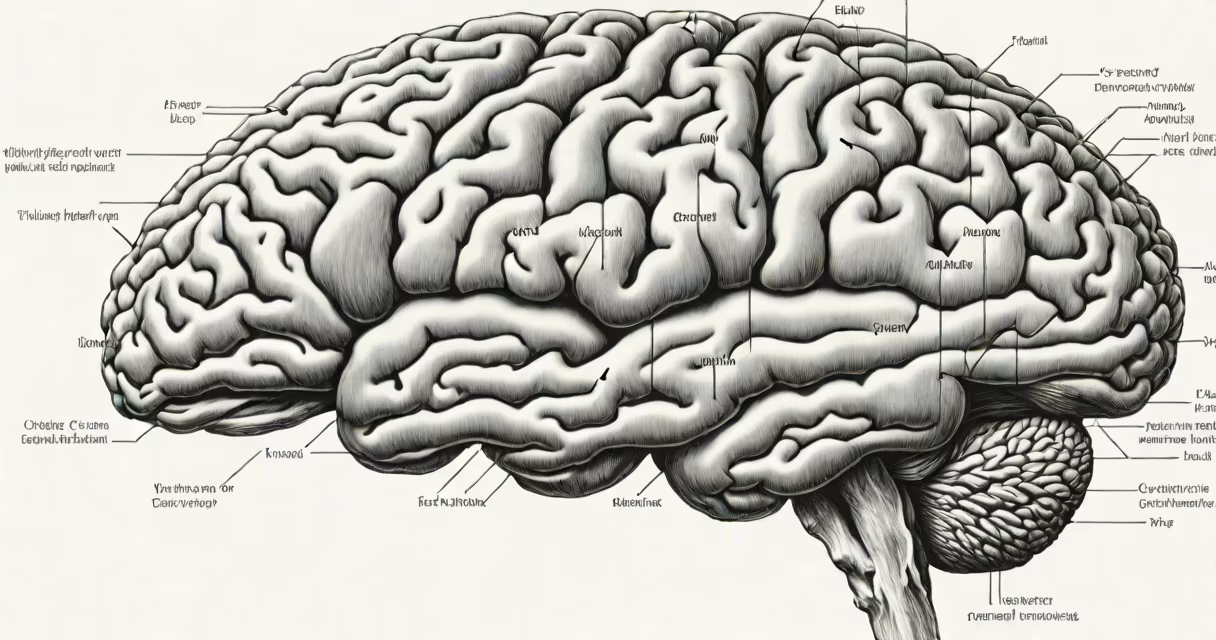
Neuroimaging studies show that specific brain regions handle distinct aspects of cognition. The occipital lobe processes visual stimuli, the temporal lobe manages auditory and semantic information, and the frontal lobes oversee executive control. Damage to any area disrupts performance. A patient with lesions in the dorsolateral prefrontal cortex struggles with working memory tasks, such as remembering a phone number long enough to dial it.
Cognition operates through interconnected neural networks. Information flows from sensory receptors to primary cortical areas, then to association zones where integration occurs. This flow supports both automatic and effortful processing. Recognizing a face is largely automatic; solving a complex math problem requires focused attention and mental manipulation.
Working memory-the ability to hold and manipulate information temporarily-is central to higher-order cognition. A 2019 study published in *Nature Neuroscience* found that people with greater gray matter volume in the left inferior parietal cortex performed better on tasks requiring mental arithmetic and spatial reasoning. This suggests structural differences influence cognitive capacity.
Attention acts as a gatekeeper. Without selective attention, the brain would be overwhelmed by stimuli. In a crowded room, a person can focus on a single conversation despite surrounding noise-a phenomenon known as the cocktail party effect. This filtering relies on the anterior cingulate cortex and prefrontal networks to suppress irrelevant inputs.
Human cognition includes several core domains, each supported by specialized brain systems:
| Cognitive Domain | Primary Brain Regions | Example Task |
|---|---|---|
| Perception | Occipital lobe, somatosensory cortex | Distinguishing a cat from a dog in a photo |
| Memory | Hippocampus, prefrontal cortex | Recalling a childhood birthday party |
| Language | Broca's area, Wernicke's area | Understanding a sentence like "The dog chased the ball" |
| Executive Function | Frontal lobes, basal ganglia | Planning a week's meals within a budget |
These domains do not operate in isolation. Solving a puzzle requires visual perception to identify shapes, working memory to hold pieces in mind, and executive control to test combinations. The integration of multiple systems enables complex behavior.
A common misconception is that cognition equals intelligence. While IQ tests measure certain cognitive abilities-like pattern recognition and verbal reasoning-they do not capture emotional regulation, creativity, or social understanding. A person with high IQ may struggle with empathy or impulse control, highlighting that cognition is multidimensional.
Clinical applications reveal how cognition shapes health outcomes. In Alzheimer's disease, degeneration of the hippocampus impairs episodic memory-the ability to recall personal events. Patients may forget recent conversations or fail to recognize familiar faces. Early diagnosis often relies on cognitive screening tools like the Montreal Cognitive Assessment (MoCA), which assesses orientation, memory, attention, and language.
Education also depends on cognitive principles. Students learn best when material aligns with working memory limits. Research shows that presenting information in chunks of three to five items improves retention. Teachers who break lessons into small segments with pauses for reflection support deeper encoding.
In artificial intelligence, models attempt to mimic human cognition. Large language models like GPT-4 simulate aspects of language understanding and generation. However, they lack intentionality, awareness, and embodied experience. They process patterns statistically, not through lived understanding. This gap underscores that human cognition involves more than computation-it includes subjective experience and context.
Many assume cognition is entirely conscious. In reality, much of it occurs below awareness. Automatic behaviors-tying shoelaces, driving a familiar route-involve procedural memory, a form of implicit cognition. People perform these tasks without deliberate thought, relying on neural circuits developed through repetition.
Another error is equating cognition with rationality. Humans make decisions based on emotion, habit, and social cues. The somatic marker hypothesis, proposed by neuroscientist Antonio Damasio, explains that emotional signals guide choices when logic fails. A patient with damage to the ventromedial prefrontal cortex may understand the risks of gambling but still lose money repeatedly because they cannot feel the aversion to loss.
One non-obvious fact: cognitive load affects accuracy. A 2021 study in *Cognitive Psychology* demonstrated that participants made 30% more errors on a visual search task when distracted by background music. Even low-level interference degrades performance, showing that attention is fragile and easily disrupted.
Consider a 62-year-old man who suffered a stroke affecting his left parietal lobe. Before the event, he managed his finances, cooked meals, and drove independently. Afterward, he struggled to read grocery prices, misjudged distances while walking, and forgot appointments. His doctors diagnosed visuospatial neglect-a condition where patients ignore one side of space due to brain injury.
Rehabilitation focused on cognitive exercises: matching shapes, naming objects in pictures, and tracking moving dots on a screen. Over six months, fMRI scans showed increased activity in the right parietal cortex, compensating for the damaged left side. He regained partial independence in daily tasks.
This case illustrates that cognition is changing. Brain plasticity allows recovery through targeted training. It also shows that cognitive deficits are not uniform-different injuries affect different domains.
Understanding human cognition helps improve education, healthcare, and technology design. When developers build apps, they apply cognitive principles-minimizing distractions, using clear icons, and limiting steps-to reduce user error. Similarly, therapists use cognitive-behavioral techniques to retrain maladaptive thought patterns.