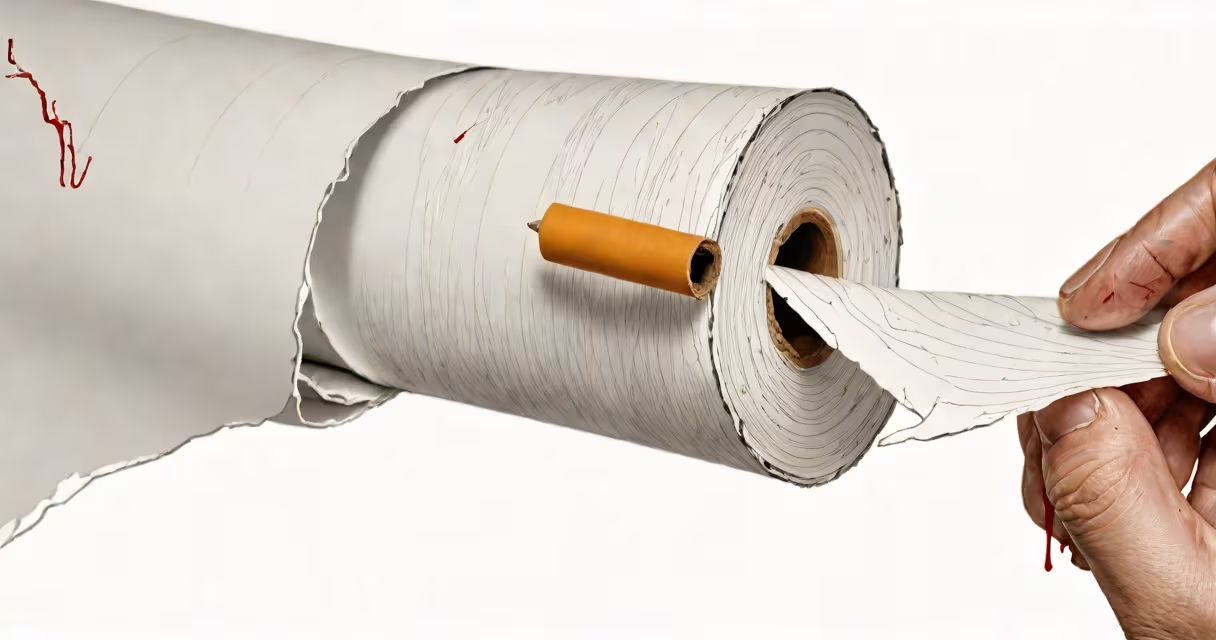
Yes, a hard stool can cause rectal bleeding, typically due to tearing in the anal lining known as an anal fissure. This occurs when passing large, dry feces strains the delicate tissues around the anus.
Anal fissures are among the most common reasons for bright red blood on toilet paper or in the toilet bowl after a bowel movement. The condition is often painful and may persist if constipation continues. While usually minor, persistent bleeding requires medical evaluation to rule out more serious conditions.
The American Society of Colon and Rectal Surgeons notes that anal fissures affect about 1 in 10 people at some point in life, with constipation being the primary trigger. Hard stools increase pressure and friction during defecation, leading to micro-tears in the anal canal.
When stool becomes hard and compacted, it requires greater force to pass through the anal sphincter. The anal canal is lined with sensitive mucosa that can tear under excessive pressure. These tears appear as small cracks near the anus and bleed slightly during bowel movements.
Bleeding from a fissure is typically bright red and appears on toilet paper, in the toilet bowl, or on the surface of the stool. The blood is not mixed into the stool itself, which distinguishes it from internal gastrointestinal bleeding. Pain often accompanies the bleeding, especially during and shortly after defecation.
A 2021 study published in *Clinical Gastroenterology and Hepatology* found that 68% of patients presenting with acute rectal bleeding had a history of constipation. Among those, 73% were diagnosed with anal fissures as the source of hemorrhage.
Rectal bleeding from hard stools falls into two categories: external and internal. External bleeding results from visible tears in the anal skin. Internal bleeding involves deeper tissue damage or conditions like hemorrhoids, which can worsen with straining.
| Bleeding Type | Appearance | Common Cause | Associated Symptoms |
|---|---|---|---|
| Anal fissure | Bright red streaks on toilet paper or in toilet water | Hard stool, straining, chronic constipation | Pain during bowel movement, sharp burning sensation |
| Hemorrhoids | Small clots or bright red blood on stool surface | Straining, prolonged sitting on toilet, pregnancy | Itching, swelling, occasional prolapse |
| Colorectal polyps or cancer | Darker blood mixed with stool, mucus, changes in bowel habits | Age, family history, long-standing inflammation | Unintended weight loss, fatigue, abdominal pain |
Crucially, blood from a hard stool is almost always bright red and localized. Darker or maroon-colored blood suggests bleeding higher in the digestive tract, such as from the colon or small intestine. This distinction matters because it determines whether further testing like a colonoscopy is needed.
Bleeding from a hard stool is usually temporary and resolves with improved bowel habits. However, if bleeding persists beyond a few days, occurs frequently, or is accompanied by other symptoms, it warrants medical attention.
Red flags include:
I once treated a 42-year-old patient who reported intermittent rectal bleeding for six weeks. He attributed it to "just hard stools" and avoided seeing a doctor. After a colonoscopy, he was diagnosed with a benign polyp that had been bleeding intermittently. Early detection prevented progression to cancer.
Preventing bleeding from hard stools begins with managing constipation. The National Institute of Diabetes and Digestive and Kidney Diseases recommends consuming 25-30 grams of dietary fiber daily, drinking 8 cups of fluids per day, and engaging in regular physical activity.
For mild cases, over-the-counter treatments like stool softeners (docusate sodium) or fiber supplements (psyllium husk) can reduce strain. Warm sitz baths for 15 minutes twice daily may relieve pain and promote healing of fissures.
If a fissure doesn't heal within four to six weeks, a doctor may prescribe topical nitroglycerin or calcium channel blockers to relax the anal sphincter muscle. Surgery is rarely needed but may be recommended for chronic fissures.
Many assume that any blood in stool signals cancer. That's incorrect. Most cases of rectal bleeding stem from benign causes like hemorrhoids or fissures. A 2020 review in *Gut* found that only 3% of patients with rectal bleeding were later diagnosed with colorectal cancer.
Another misconception is that bleeding stops on its own. While minor fissures often heal in 1-2 weeks, untreated ones can become chronic. Chronic fissures may develop a sentinel pile (a small skin tag) or hypertrophied papilla, making healing harder.
Also, people often ignore painless bleeding. But even if there's no discomfort, blood in stool should not be dismissed. The absence of pain does not rule out serious pathology.
Finally, some believe that diet alone can fix everything. While high-fiber diets help, they don't reverse structural issues like fissures or polyps. Medical evaluation remains necessary when bleeding persists.
Always consider what can cause intestinal bleeding if symptoms continue. Conditions like inflammatory bowel disease, diverticulosis, or vascular malformations require different management strategies.
Hard stools can cause bleeding, primarily through anal fissures. The condition is treatable and preventable with lifestyle changes. If bleeding lasts longer than a week, occurs repeatedly, or is accompanied by systemic symptoms, consult a healthcare provider promptly.