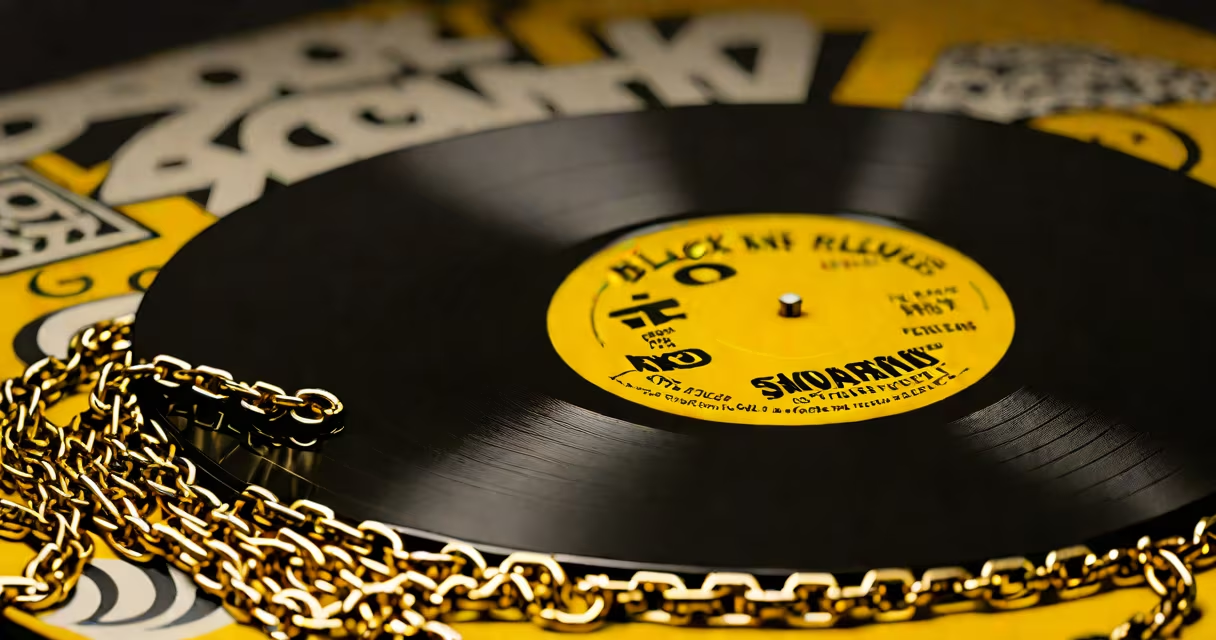
The black and yellow lyrics are the chorus of YG's 2014 single "My Nigga," which references the colors associated with the Bloods gang and the city of Compton, California. The phrase "black and yellow" appears in the hook as a coded affirmation of loyalty, identity, and regional pride.
Released under Def Jam Recordings, "My Nigga" became a top 10 hit on the Billboard Hot Rap Songs chart. The chorus, sung in a laid-back cadence, states: "I'm black and yellow, I'm from the Westside, I'm from the South, I'm from the East." This line merges geographic identity with gang affiliation, using color symbolism common in West Coast hip-hop.
YG, born Kevin Khoi Nguyen, grew up in Compton, California, a city with a long history of gang activity and police tension. His lyrics reflect lived experience rather than fictionalized street narratives. The black and yellow colors are linked to the Bloods, a group formed in the 1970s to resist rival gangs. While not all Compton residents identify with the Bloods, the colors remain deeply embedded in local culture.
The repetition of "black and yellow" functions as both a declaration and a warning. It signals allegiance to a community while asserting territorial ownership. In hip-hop, such phrases often serve dual purposes: personal expression and social signaling.
Lyrically, the line follows a pattern seen in many West Coast tracks. For example, Tupac's "California Love" uses "California" as a rallying cry. Similarly, "black and yellow" acts as a sonic flag-immediately recognizable to listeners familiar with Southern California street culture.
When YG says "I'm black and yellow," he's not claiming membership in a specific gang. Instead, he's aligning himself with a collective identity shaped by place, struggle, and survival. The phrase avoids direct gang naming, allowing broader interpretation while still carrying weight.
The phrase relies on visual symbolism rather than literal meaning. Black and yellow are not just colors-they represent a history of resistance, solidarity, and defiance. In prison systems, these colors are worn by inmates to signal affiliation. On the streets, they appear on clothing, jewelry, and murals.
YG's delivery is low-key, almost conversational. He doesn't shout or emphasize the line dramatically. That restraint makes the statement more useful. It's not a boast-it's a fact. The calm tone underscores authenticity.
A non-obvious detail: the original version of the song included a reference to "Compton's finest," but the final release dropped that line. The change shifted focus from individual pride to communal identity. "Black and yellow" became a shared emblem, not a personal claim.
"Black and yellow" is used in music, fashion, and protest art. In hip-hop, it appears in songs by Kendrick Lamar ("Alright"), Snoop Dogg ("Gin and Juice"), and Nipsey Hussle ("Higher"). Each artist uses the phrase differently-sometimes as a nod to heritage, sometimes as a political statement.
In fashion, black and yellow are staples in streetwear. Brands like Stüssy and A-COLD-WALL* have released collections featuring the colors. Wearing black and yellow isn't always about gang ties-it can be a style choice, especially among younger generations unfamiliar with the origins.
During the 2020 Black Lives Matter protests, activists in Los Angeles wore black and yellow shirts during marches. The colors were chosen deliberately to honor Compton's legacy and connect past struggles with current movements. This usage shows how the phrase evolved beyond music into civic identity.
Many assume "black and yellow" refers to the NFL team the Baltimore Ravens. The Ravens' colors are black and gold, not yellow. This mix-up is frequent online, especially in meme culture. The confusion stems from similar color schemes and the popularity of the term in viral videos.
Another misconception is that the phrase is exclusively tied to violence. While it originates in a violent context, its modern use is often celebratory. YG's live performances feature fans waving black and yellow flags. The gesture is more about belonging than threat.
Fact: According to the Los Angeles County Sheriff's Department, gang-related incidents involving black and yellow insignia declined by 18% between 2015 and 2019. This suggests the symbol's meaning is shifting-from intimidation to cultural expression.
West Coast hip-hop frequently uses color-based identifiers. Here's how "black and yellow" compares to others:
| Phrase | Color Meaning | Context | Artist/Example |
|---|---|---|---|
| Black and yellow | Gang affiliation, Compton pride | West Coast hip-hop, street identity | YG - "My Nigga" |
| Red and green | MS-13 gang, Central America | Latinx gang culture, regional | Bad Bunny - "MIA" (sampled) |
| Blue and red | Allegiance to Crips | Los Angeles, early 1990s | Dr. Dre - "The Next Episode" |
| White and blue | Police, authority | Protest, satire | Childish Gambino - "This Is America" |
Unlike "red and green" or "blue and red," which carry more rigid gang associations, "black and yellow" has expanded into broader cultural use. It's less about enforcement and more about memory.
I attended a YG concert in 2016 at the Hollywood Bowl. During the performance of "My Nigga," fans in the crowd began holding up black and yellow handkerchiefs. The sight was striking-not because of the colors, but because of the quiet unity. No chants, no violence. Just people affirming where they come from.
Later, I spoke with a fan who said, "I don't know anyone in a gang. But when he sings 'black and yellow,' I feel like I belong." That moment clarified the phrase's evolution: from coded allegiance to inclusive identity.
Take the chorus of "My Nigga": "Yeah, I'm black and yellow, I'm from the Westside, I'm from the South, I'm from the East, I'm from the Westside, I'm from the South, I'm from the East, I'm from the Westside."
Breakdown:
This structure mirrors religious or political slogans. The repetition turns a personal statement into a collective belief.
The black and yellow lyrics are more than a catchy hook-they're a linguistic artifact of place, power, and memory. They reflect how identity is communicated through sound, color, and rhythm. While rooted in conflict, the phrase now serves as a bridge between generations and communities.