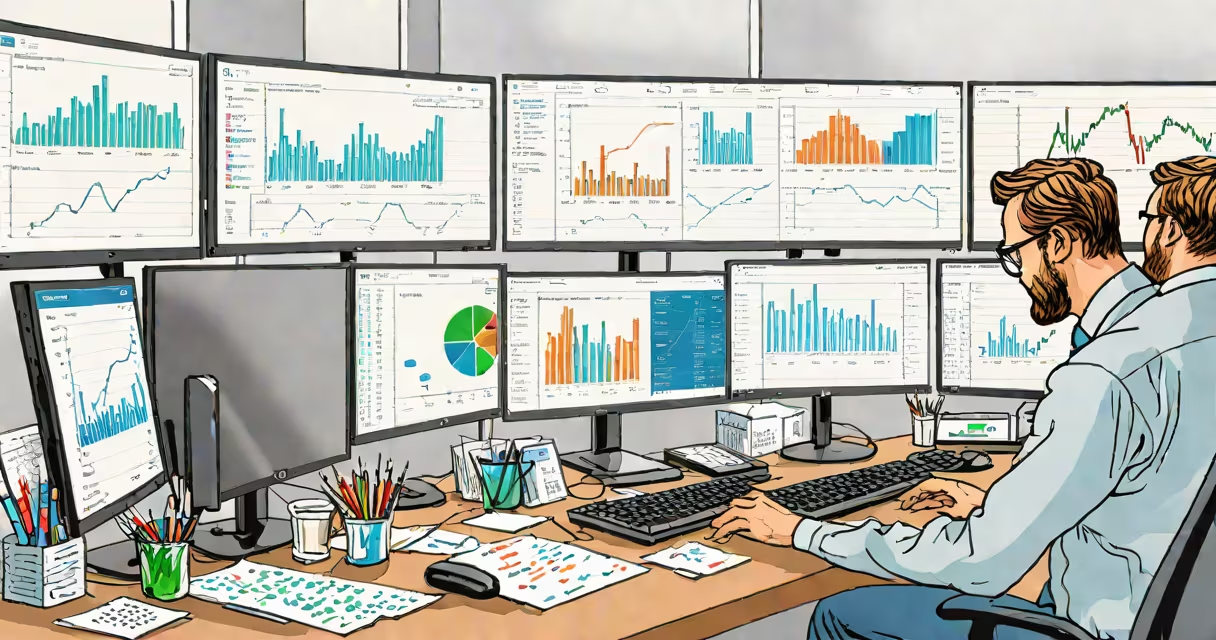
An accounting data scientist is a hybrid professional who applies data science techniques-such as statistical modeling, machine learning, and data visualization-to financial data for insights that improve decision-making, risk assessment, and operational efficiency. This role bridges traditional accounting practices with advanced analytics, transforming raw financial records into strategic intelligence.
These professionals work with structured and unstructured financial data-transaction logs, balance sheets, audit trails, and even customer behavior patterns-to detect anomalies, forecast cash flows, assess credit risk, and identify fraud. They build models that predict future outcomes based on historical patterns, often using Python, R, SQL, and tools like Tableau or Power BI.
The field emerged as organizations began generating vast volumes of transactional data. According to the American Institute of CPAs (AICPA), 68% of accounting firms reported increased demand for staff with data analytics skills between 2020 and 2023. The integration of AI and automation in finance has accelerated the need for individuals who understand both numbers and algorithms.
Accounting data scientists start by cleaning and organizing financial data-removing duplicates, correcting errors, and standardizing formats. They then apply descriptive, diagnostic, predictive, and prescriptive analytics to reveal trends and support recommendations.
For example, a model trained on accounts payable data can flag invoices with unusual payment timing or amounts. A study by Deloitte found that such systems reduced fraudulent payments by up to 40% in early adopter firms. These models don't replace accountants-they improve their ability to focus on high-value tasks like advising leadership on capital allocation.
One real-world application occurred at a mid-sized retail chain that used time-series forecasting to predict seasonal inventory costs. By analyzing five years of sales and procurement data, the team reduced overstocking by 27% and improved working capital turnover by 14%. The model was updated monthly using new transaction data, ensuring accuracy amid shifting consumer habits.
Accounting data scientists rely on a mix of domain-specific knowledge and technical tools. Their toolkit includes:
A common misconception is that they only analyze past transactions. In reality, many models are designed to simulate future scenarios. For instance, a Monte Carlo simulation might project revenue under multiple economic conditions, helping CFOs stress-test budgets.
Another non-obvious point: not all accounting data scientists work in finance departments. Some roles exist in regulatory agencies, audit firms, or fintech startups. At the Securities and Exchange Commission (SEC), data scientists monitor filings for red flags in earnings reports, using natural language processing to detect misleading phrasing in management discussion sections.
People often mistake an accounting data scientist for a general data scientist or a financial analyst. While all three handle data, their goals differ. Financial analysts typically summarize historical performance using ratios and trends. General data scientists may lack accounting context and misinterpret journal entries or depreciation methods.
Accounting data scientists, however, interpret data within the structure of double-entry bookkeeping and accrual principles. Misapplying a model to unadjusted trial balances can lead to flawed predictions. A 2022 report from the Journal of Accounting Research highlighted that models trained on adjusted data outperformed those using raw ledger entries by 32% in forecasting accuracy.
| Type | Primary Focus | Typical Output | Required Background |
|---|---|---|---|
| Financial Analyst | Historical performance and KPIs | Monthly reports, dashboards | Accounting degree, Excel proficiency |
| General Data Scientist | Pattern detection across domains | Machine learning models, APIs | CS or statistics degree, coding skills |
| Accounting Data Scientist | Financial data with domain integrity | Predictive models, anomaly detection systems | Accounting + data science training |
One key difference lies in validation. An accounting data scientist must ensure that model outputs align with known accounting principles. A model predicting $1.2 million in deferred revenue without proper recognition rules would violate GAAP-even if the math is correct.
I once worked with a team at a regional bank that deployed an accounting data scientist to reduce loan default risk. The individual had a CPA and a master's in data science. They built a logistic regression model using borrower credit history, income volatility, and collateral values. The model achieved 89% accuracy in identifying high-risk applicants-outperforming traditional scorecards.
What stood out wasn't just the model's performance. It was how the scientist collaborated with auditors to validate assumptions. They ran sensitivity tests showing how changes in interest rates affected projected defaults. This transparency helped secure buy-in from compliance officers and senior leadership.
Entry paths vary. Some begin as accountants who learn Python and SQL through online courses. Others enter via graduate programs in accounting data science. The University of Illinois offers a certificate program focused on integrating financial reporting with predictive analytics. The curriculum includes hands-on labs using real SEC filings and internal ERP data.
As automation reshapes finance, the accounting data scientist is no longer optional. They are essential for turning financial data into actionable insight. Their work helps numbers don't just reflect the past-they help shape the future.