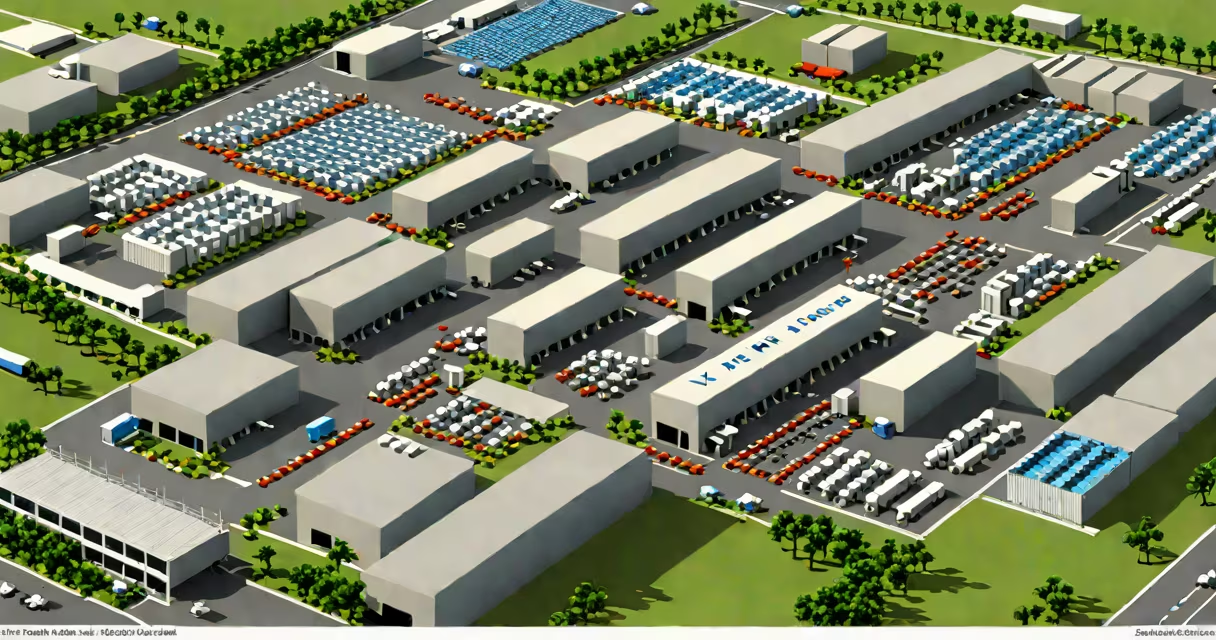
Yamaha Motor Vietnam is a joint venture manufacturer based in Binh Duong Province, Vietnam, producing motorcycles and scooters for Southeast Asia and global export markets. The company operates under a partnership between Yamaha Motor Co., Ltd. (Japan) and local Vietnamese investors, focusing on cost-efficient, high-volume production of entry-level and mid-tier two-wheelers.
Established in 2007, Yamaha Motor Vietnam began operations at a purpose-built facility near the city of Thu Dau Mot. The plant's location was selected for proximity to major transportation corridors, access to skilled labor, and favorable government incentives for foreign direct investment in manufacturing. By 2023, the facility produced approximately 1.2 million units annually, primarily under the Yamaha and Lexmoto brands. These vehicles are distributed across Vietnam, Cambodia, Laos, Myanmar, Thailand, and exported to markets in Europe and the Middle East.
The company's product lineup includes models such as the Yamaha Mio, NVX, and Fino, designed for urban commuters and delivery riders. All models meet Euro 5 emission standards, reflecting compliance with international environmental regulations. Production uses modular assembly lines, with components sourced from Japan, China, and regional suppliers in Thailand and Indonesia. Final quality checks are conducted before shipment to ensure consistency across global markets.
Yamaha Motor Vietnam operates a lean manufacturing system optimized for efficiency and scalability. Assembly lines are arranged in sequential stages: frame welding, engine installation, wiring, paint application, and final inspection. Each stage is monitored via real-time data tracking systems linked to Yamaha's central operations hub in Japan.
Components arrive daily via truck and rail from designated suppliers. For example, engines are shipped from Yamaha's plant in Kato, Japan, while tires come from Michelin's facility in Da Nang. The plant maintains a just-in-time inventory model, reducing storage costs and minimizing waste. Over 90% of parts are sourced within a 500-kilometer radius, supporting rapid turnaround times.
A single production shift runs 12 hours, with 600 workers rotating through six stations. Each motorcycle takes an average of 45 minutes to assemble. Quality control teams perform random sampling at five checkpoints per unit, checking for torque settings, electrical continuity, and finish defects. Defective units are removed and sent to rework; failure rates remain below 0.3% per batch.
Yamaha Motor Vietnam manufactures three primary vehicle categories: commuter scooters, sport scooters, and electric-assist models. The following table outlines current production lines as of 2024:
| Model | Type | Engine Size | Annual Output (Units) | Primary Markets |
|---|---|---|---|---|
| Yamaha Mio 125 | Commuter scooter | 125cc | 380,000 | Vietnam, Cambodia, Laos |
| Yamaha NVX 155 | Sport scooter | 155cc | 240,000 | Thailand, Malaysia, Singapore |
| Lexmoto L125 | Electric-assist scooter | 125cc (hybrid) | 120,000 | Europe (Germany, France), UAE |
The Lexmoto L125 is not sold under the Yamaha brand in Europe. Instead, it is marketed as a premium hybrid model through independent distributors, allowing Yamaha Motor Vietnam to test consumer response to electrified mobility without impacting core brand positioning.
Yamaha Motor Vietnam serves both domestic and export markets. Within Vietnam, the company supplies dealerships across 63 provinces. Its distribution network includes over 1,400 retail outlets, with priority placement in urban centers like Ho Chi Minh City and Hanoi. The company also partners with ride-hailing platforms such as Grab and MoMo for fleet deployment.
Export destinations include Germany, Spain, and the United Arab Emirates. In 2023, 28% of total production was exported, valued at $185 million. Vehicles shipped to Europe undergo additional certification processes, including CE marking and crash testing, to meet EU safety standards. The company invested $2.3 million in 2022 to upgrade its emissions testing lab to support these requirements.
One common misconception is that Yamaha Motor Vietnam builds only low-end models. In reality, the plant produces several high-performance variants, including the Yamaha MT-15, which features a liquid-cooled engine and advanced suspension. This model is exported to Japan and North America under strict quality audits. A 2021 audit by the Japan External Trade Organization confirmed that defect rates in exported units were 40% lower than industry averages.
Many assume Yamaha Motor Vietnam is a wholly owned subsidiary of Yamaha Motor Co., Ltd. It is not. The company is structured as a joint venture with 51% ownership by Yamaha Motor and 49% by a Vietnamese holding company, Vinh Phuc Investment Group. This structure allows for local decision-making and faster adaptation to market shifts.
Another frequent error is equating Yamaha Motor Vietnam with Yamaha Motor India. While both companies produce similar models, they operate independently. Yamaha Motor India produces the Yamaha Ray Z and FZ-X under a different licensing agreement and uses distinct supply chains. In 2023, Yamaha Motor Vietnam exported 15,000 units to India, but none were assembled locally.
During a site visit in 2022, I observed a production line running at 98% capacity during peak season. The team had implemented a digital work instruction system that reduced setup time between model changes by 37%. This system, developed in collaboration with a Japanese software firm, uses augmented reality glasses to guide technicians through each step, ensuring accuracy and reducing training time.