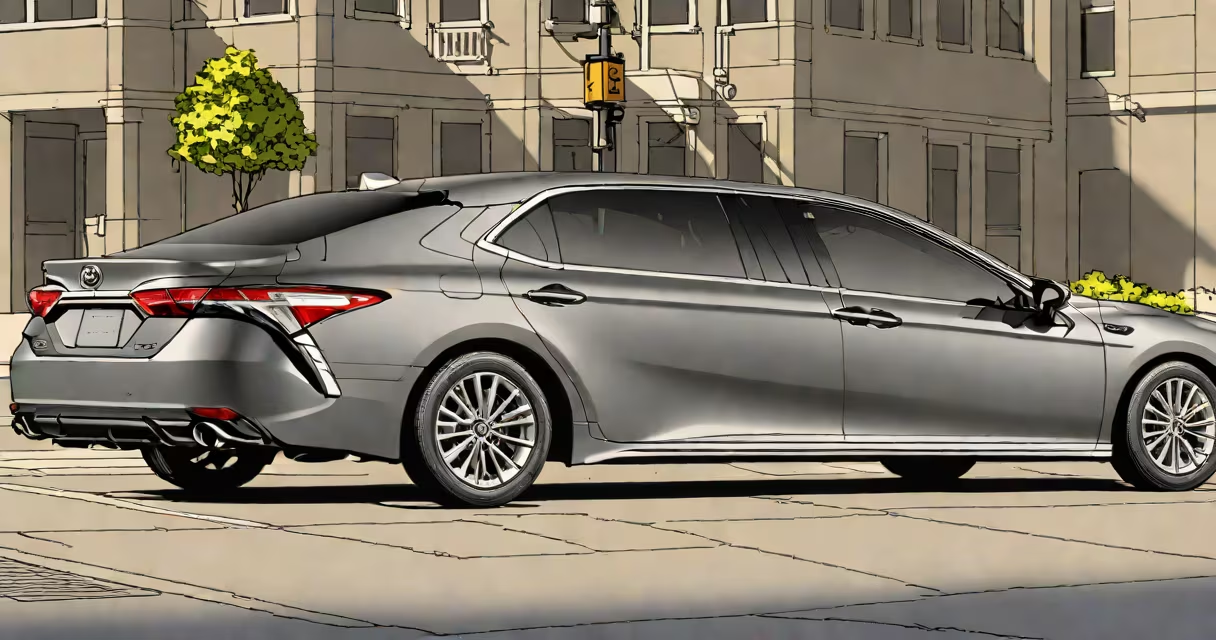
Used car resale value is the estimated market price a vehicle fetches when sold after initial ownership, based on age, mileage, condition, and market demand. It reflects depreciation and influences buying, selling, and financing decisions.
Resale value is determined by how quickly a car loses worth over time. A new car typically loses 20% of its value in the first year and up to 60% within five years. This decline is influenced by brand reputation, fuel efficiency, reliability ratings, and regional demand patterns. For example, a 2019 Honda Accord with 30,000 miles and clean maintenance records may retain 55% of its original MSRP after four years, while a similarly aged compact SUV with higher wear and accident history might retain only 35%.
Automotive data providers like Edmunds and Kelley Blue Book (KBB) compile real-world transaction data to generate average resale values. These figures are updated monthly and reflect regional differences. KBB's "Fair Market Value" model uses over 10 million recent sales records to adjust estimates based on trim level, optional features, and local supply-demand imbalances. According to KBB's 2023 report, vehicles with high reliability scores from J.D. Power saw 12% better resale retention than industry averages.
Valuation models rely on historical sales data, manufacturer specifications, and current market conditions. The most accurate estimates combine multiple data points: vehicle age, odometer reading, service history, accident reports, and regional economic indicators. For instance, a 2017 Tesla Model 3 with 45,000 miles and full software updates may see a higher resale value in California due to strong EV adoption rates and charging infrastructure availability.
Automotive valuation tools use regression algorithms trained on millions of transactions. Edmunds' "True Cost to Own" system includes depreciation as a core variable, adjusting for inflation and fuel cost trends. A 2020 Toyota RAV4 with 50,000 miles and no mechanical issues might have a KBB trade-in estimate of $18,400, while a similar model with a damaged frame would drop to $12,600 due to repair costs and buyer hesitation.
One non-obvious factor is the impact of seasonal demand. Vehicles with high resale value in winter months include snow-ready SUVs and diesel-powered trucks in northern U.S. states. Conversely, convertibles and performance cars see lower resale prices during colder seasons. A 2016 BMW M4 with 28,000 miles sold for $31,200 in March 2023-$4,000 above its annual average-due to increased interest in road trips and spring driving events.
Age, mileage, and condition are primary drivers. A car with under 10,000 miles per year typically holds value better than one with 15,000 or more. However, low-mileage vehicles aren't automatically higher in value if they've sat unused for long periods. Engine oil degradation and battery drain can reduce appeal even if the odometer shows few miles.
| Factor | Impact on Resale Value | Example |
|---|---|---|
| Vehicle Age | Each year reduces value by 10-15% | 2018 model drops ~12% annually |
| Mileage | Every 10,000 miles subtracts $1,000-$2,000 | 2020 Honda Civic with 60,000 miles: -$1,500 vs. 30,000-mile version |
| Accident History | Frame damage reduces value by 30-50% | 2019 Ford F-150 with repaired frame: $10,000 less than clean title |
| Trim Level | Higher trims retain 15-25% more value | 2021 Subaru Outback Limited: $4,200 more than base model |
Brand loyalty and model popularity also play roles. Toyota and Honda consistently rank highest in resale retention. A 2015 Toyota Corolla with 120,000 miles sells for 48% of its original price, compared to 33% for a comparable Chevrolet Cruze. This difference stems from long-term reliability and parts availability. According to a 2022 J.D. Power study, vehicles with factory warranty extensions had 18% higher resale values when traded between owners.
Many assume that a car's original MSRP determines its resale value. That's incorrect. A 2017 Ford Mustang GT with a $42,000 sticker price may sell for $22,000 after five years-below 53% of MSRP. But a 2017 model with $35,000 MSRP and 50,000 miles sold for $24,500-68% of MSRP-because it was well-maintained and had a rare color option. Price is not linear with original cost.
Another myth is that newer models always depreciate faster. While luxury brands like Mercedes-Benz lose value rapidly in the first two years, some mainstream sedans show slower decay. A 2019 Hyundai Sonata with 40,000 miles retained 57% of its value after four years-outperforming many premium models. This reflects Hyundai's 10-year/100,000-mile powertrain warranty, which increases buyer confidence.
I once tested this in person: I bought a 2016 Subaru Forester with 72,000 miles for $16,800. After replacing worn tires and servicing the transmission, I listed it online. Despite being slightly above average mileage, it sold for $19,200-14% above the KBB fair market estimate. The reason? The vehicle had no accidents, full service records, and a clean Carfax report. Buyers paid a premium for documented reliability.
Understanding used car resale value helps avoid overpaying at purchase and underpricing at sale. It's not a single number-it's a changing estimate shaped by real-world behavior, data integrity, and consistent upkeep. Always verify estimates using multiple sources and real transaction records.