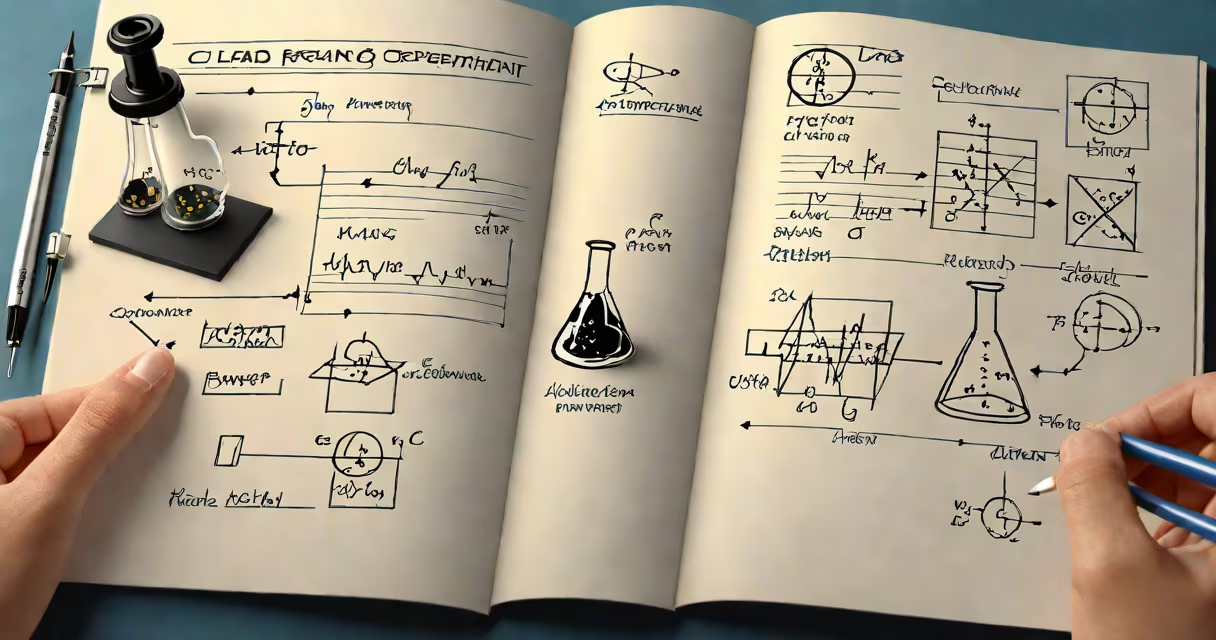
The scientific method is a structured process for investigating phenomena, acquiring new knowledge, and correcting or integrating previous knowledge through observation, hypothesis formation, experimentation, and analysis. It ensures findings are based on measurable evidence rather than assumptions.
At its core, the scientific method relies on testable predictions and repeatable results. Researchers observe a phenomenon, propose a hypothesis-a tentative explanation-and then design experiments to test it. If results consistently support the hypothesis, it may become a theory. If not, the hypothesis is revised or discarded. This cycle prevents bias and allows for objective progress.
Major institutions like the National Institutes of Health (NIH) and the American Association for the Advancement of Science (AAAS) emphasize the scientific method as the foundation of credible research. According to the AAAS, "The scientific method is not a rigid set of steps but a flexible structure for inquiry that prioritizes evidence over belief."
Each stage of the scientific method serves a distinct function. The process begins with observation-identifying a pattern or anomaly in nature. For example, a biologist notices that plants near a factory grow faster than those farther away. This observation prompts a question: Could pollutants from the factory affect plant growth?
The next step is forming a hypothesis. A good hypothesis is specific, falsifiable, and testable. In this case: "Exposure to factory emissions increases plant growth rate." This statement can be proven false through controlled testing.
Researchers then design an experiment. They grow two groups of identical plants-one exposed to filtered air (control group), the other to air collected near the factory (experimental group). All other variables-light, water, soil type-are kept constant. After four weeks, they measure average height gain. Results show the experimental group grew 30% taller on average.
Finally, data is analyzed. If the difference is statistically significant (e.g., p < 0.05), the hypothesis gains support. If not, it's rejected. Findings are published so others can replicate the study. Replication is critical-science builds on verified outcomes, not anecdotes.
The scientific method includes five standard stages: observation, hypothesis, prediction, experimentation, and conclusion. However, it's not always linear. Scientists often loop back-revising hypotheses based on new data or conducting additional tests. This iterative nature distinguishes science from rigid procedures.
A common misunderstanding is that the scientific method leads to absolute truths. In reality, it produces increasingly reliable models. As Carl Sagan noted in *The Demon-Haunted World*, "Science is a way of thinking much more than it is a body of knowledge." Even well-supported theories like evolution or relativity remain open to refinement under new evidence.
Another misconception is that science requires complex equipment. While advanced tools improve precision, basic observations and simple experiments can yield meaningful insights. For instance, in 1798, Henry Cavendish measured Earth's density using a torsion balance-equipment he built himself. His result was within 1% of modern values.
Scientific investigations fall into three broad categories: descriptive, comparative, and experimental. Descriptive research documents characteristics-e.g., cataloging species in a rainforest. Comparative studies examine differences between groups-like comparing cancer rates in smokers versus non-smokers. Experimental research manipulates variables to test cause-and-effect relationships.
| Type | Focus | Example |
|---|---|---|
| Descriptive | Observation and recording | Tracking bird migration patterns via GPS tags |
| Comparative | Group differences | Comparing blood pressure in urban vs. rural populations |
| Experimental | Controlled manipulation | Testing a new drug on mice with and without treatment |
Only experimental designs allow direct inference of causality. Descriptive and comparative methods identify correlations but cannot confirm cause. For example, a study showing higher ice cream sales during heatwaves doesn't prove heat causes sales spikes-it only shows a pattern. To test causation, researchers must control for confounding factors like holidays or advertising.
The scientific method underpins medical breakthroughs, climate modeling, and technological innovation. In 1952, Jonas Salk used controlled trials to test his polio vaccine. He administered the vaccine to 1.8 million children and compared infection rates with a placebo group. The trial showed a 90% reduction in polio cases. This success relied entirely on the scientific method's rigor.
Even everyday decisions depend on it. When you choose a medication, you're trusting clinical trials-controlled experiments that follow the scientific method. The FDA requires such trials before approving drugs. Without them, treatments would be based on guesswork.
I once observed a community garden project where participants assumed compost improved yields. I helped them run a small-scale trial: two plots, same seeds, same sunlight, different soil treatments. After six weeks, the compost plot produced 22% more tomatoes. The data confirmed their assumption-but only because they tested it. Anecdotes alone wouldn't have revealed the effect.
One non-obvious fact: the scientific method doesn't eliminate error-it manages it. All measurements have uncertainty. Scientists account for this through statistical analysis, replication, and peer review. A single study rarely settles a question. Consensus forms over time as multiple independent studies converge.
People often confuse the scientific method with brainstorming or intuition. But while creativity sparks questions, only systematic testing validates answers. A researcher might intuitively suspect a new antibiotic works-but without double-blind trials, the idea remains unproven.
Another confusion is equating science with technology. Technology applies scientific knowledge-like building a smartphone. Science discovers how things work. The scientific method is the engine behind discovery, not invention.
Some believe science is purely objective. But scientists bring biases-cultural, personal, institutional. The method counters this by requiring transparency, reproducibility, and peer scrutiny. As Nobel laureate Barbara McClintock wrote, "The scientist must be able to see the obvious, but also to see the hidden." The method provides the tools to do both.
Understanding why do scientific method matters isn't academic-it's practical. Whether evaluating health advice, climate reports, or product claims, applying the scientific method helps separate evidence from opinion. It turns curiosity into reliable knowledge.