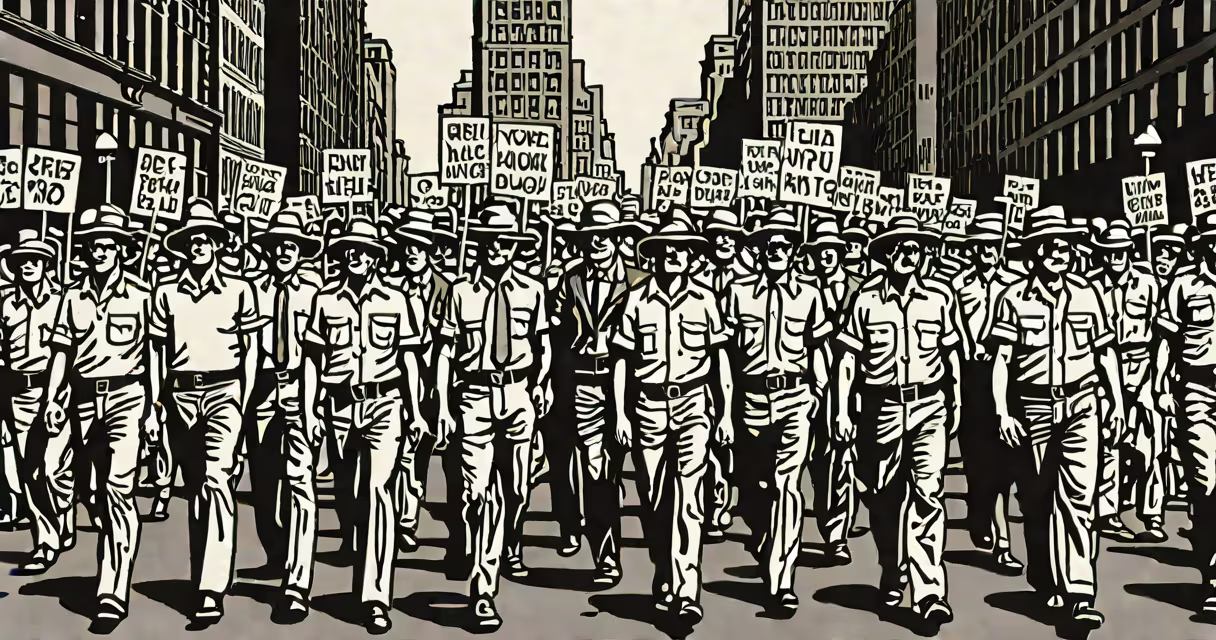
The first gay pride parade occurred on June 28, 1970, in New York City, commemorating the one-year anniversary of the Stonewall Uprising. It was organized by the Gay Liberation Front and drew around 500 participants. This event marked the beginning of annual Pride marches as a form of political protest and celebration of LGBTQ+ identity.
Gay pride parades emerged from the civil rights struggles of the late 1960s. The Stonewall Inn raid on June 28, 1969, sparked days of resistance by LGBTQ+ people and allies in Manhattan's Greenwich Village. Police harassment of gay bars was routine, but the response at Stonewall was different. Patrons fought back, and the unrest lasted for six days. The event galvanized a new wave of activism across the United States.
Organizers of the first Pride march saw the need to change anger into visibility. They chose the date of the Stonewall raid to honor the moment when LGBTQ+ people began demanding dignity. The march route stretched from Christopher Street to Central Park, with signs reading "Gay Power" and "We're here, we're queer." Participants included drag queens, transgender activists, and members of radical leftist groups.
The event was not a festival. It was a demonstration. Organizers distributed flyers, held meetings at community centers, and coordinated logistics through underground networks. There were no official sponsors, no permits, and no police protection. The march relied on volunteer coordination and word-of-mouth outreach.
Participants walked in small groups, carrying handmade signs and chanting slogans. Music came from boomboxes and spontaneous singing. Some wore costumes made from recycled materials-scarves, bed sheets, and painted cardboard. The atmosphere was defiant, joyful, and raw. There were no cameras from major news outlets. Coverage came from local newspapers and activist newsletters.
After the march, attendees gathered at a church basement for a meeting. Speakers discussed housing discrimination, job loss due to sexuality, and the need for legal recognition. The event concluded with a reading of the Declaration of Independence, followed by a call to action: "We will not be silent."
The first Pride parade was constructed from urgency, memory, and grassroots energy. It had no budget, no professional planners, and no corporate backing. Its components were human: voices, bodies, signs, and shared purpose.
Key elements included:
These elements were not decorative. They were tools of resistance. The rainbow flag, later adopted globally, did not exist in 1970. Instead, organizers used the pink triangle-a symbol reclaimed from Nazi concentration camps-to represent solidarity.
The first gay pride parade happened in New York City because that's where the uprising began. The city's dense LGBTQ+ population, existing gay bars, and established activist networks made it the epicenter of the movement. Other cities soon followed: San Francisco held its first Pride in 1972, and Los Angeles in 1973.
Parades served multiple purposes. They asserted presence in public space, challenged stigma, and built community. For many, attending was an act of survival. A 1971 survey by the New York City Department of Health found that 40% of LGBTQ+ adults reported being denied housing or employment due to their identity. Pride became a way to say: "We exist. We are not invisible."
Today, Pride events are held in over 150 countries. But the original intent remains clear: visibility as resistance. The 1970 march was not a celebration in the modern sense-it was a demand for safety, dignity, and legal rights.
Many assume the first Pride parade was peaceful or celebratory. That's incorrect. The 1970 march was confrontational. Police blocked parts of the route. Protesters were arrested. One participant, Marsha P. Johnson, was beaten during the march and later died under suspicious circumstances in 1972. Her death was ruled a suicide, though many believe she was murdered.
Another myth is that the parade was planned months in advance. In reality, it was organized in less than three weeks. The Gay Liberation Front formed in March 1970, and the march was announced at a rally in April. Resources were limited-flyers were mimeographed on leftover paper, and food was donated by sympathetic bakeries.
A lesser-known fact: the first Pride parade was not called "Pride" at the time. Organizers referred to it as "Christopher Street Liberation Day." The term "Pride" gained popularity in the 1980s, especially after the phrase "Gay Pride" appeared in a 1980 issue of *The Advocate* magazine.
Pride events have evolved since 1970. They now include parades, festivals, memorials, and educational programs. The following table outlines key differences between early and modern Pride events:
| Feature | 1970 First Parade | Modern Pride Events (2020s) |
|---|---|---|
| Size | ~500 participants | Up to 2 million in cities like NYC and London |
| Focus | Political protest, direct action | Community celebration, education, advocacy |
| Leadership | Radical collectives, no formal hierarchy | Nonprofits, city governments, corporate sponsors |
| Visibility | Underground, low media coverage | Live-streamed, broadcast on national TV |
Despite changes, core values remain. The 1970 march was not about fun-it was about survival. Today's Pride events still serve as platforms for marginalized voices, including Black, Indigenous, and transgender LGBTQ+ people who face disproportionate violence.
In 2019, I attended the New York City Pride parade on Sixth Avenue. I stood near the front, close enough to hear the bass of a drumline and feel the vibration of feet on pavement. The crowd was diverse-older couples, teenagers in homemade rainbow shirts, people using wheelchairs. I saw a man holding a sign that read: "I survived Stonewall."
That moment reminded me that Pride is not just a historical marker. It's a living tradition. The 1970 march was not a single event-it was the start of a movement. Today, Pride continues to evolve. In 2023, the Human Rights Campaign reported that 14 states banned gender-affirming care for minors. Pride protests now include demands for healthcare access, anti-discrimination laws, and refugee protection.
The first gay pride parade was not a party. It was a declaration: we are here, we are not afraid, and we will not disappear. That spirit lives on in every march, every banner, every person who walks forward with pride.