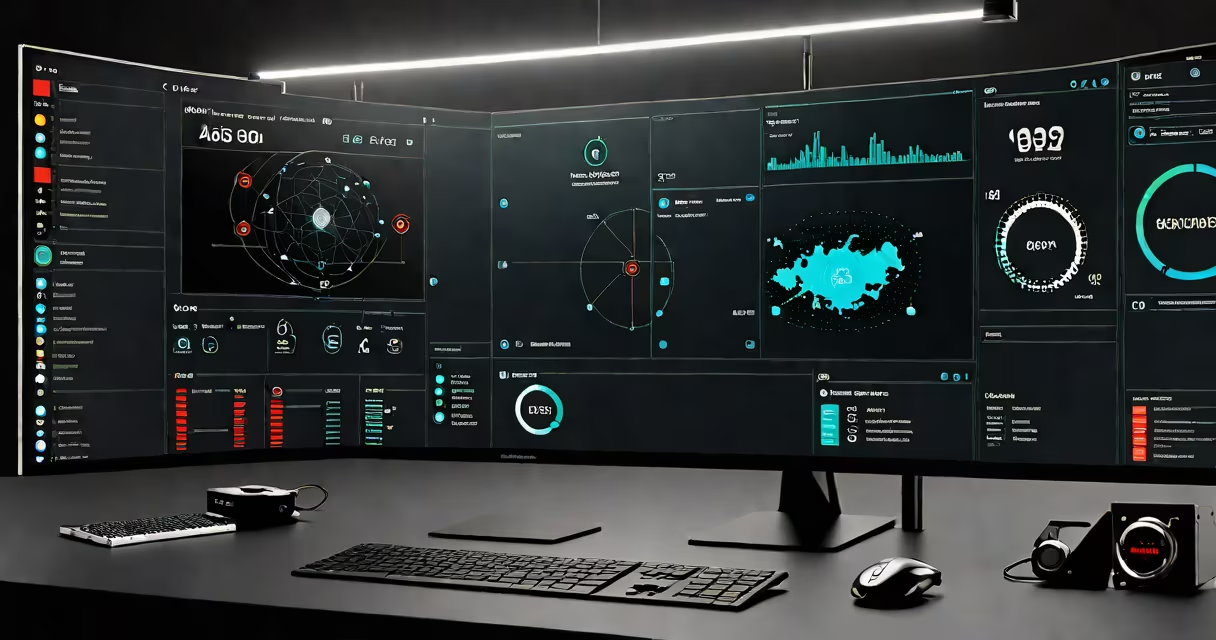
A serious AI product is a production-grade system that delivers measurable business value through reliable, auditable, and scalable machine learning workflows. It operates under strict data governance, includes continuous model validation, and supports human oversight. Unlike experimental demos or chatbots with hallucinated outputs, it is engineered for long-term operational use.
Such systems handle real-world complexity. They ingest diverse data streams-structured databases, sensor feeds, unstructured text-and process them with low-latency inference. They maintain performance across changing conditions, detect concept drift, and trigger alerts when accuracy degrades. They are not static models trained once and forgotten. Instead, they evolve through feedback loops and periodic retraining.
The foundation lies in engineering rigor. A serious AI product uses version-controlled datasets, reproducible training pipelines, and automated testing. It runs in monitored environments with rollback capabilities. Its decisions are traceable, and its failure modes are documented. It doesn't claim to "understand" context-it performs tasks within defined boundaries and signals uncertainty when needed.
At its core, a serious AI product relies on five interdependent layers: data ingestion, feature engineering, model serving, monitoring, and feedback integration. Each layer enforces constraints to prevent degradation over time.
Data ingestion involves filtering, normalizing, and labeling inputs. For example, a fraud detection system pulls transaction logs from multiple banks, validates timestamps, and flags anomalies using predefined thresholds. Data quality checks run automatically-missing fields, inconsistent formats, or outliers are logged and routed to human review.
Feature engineering transforms raw inputs into meaningful representations. In a medical imaging tool, this might involve converting MRI scans into 3D voxel grids with contrast normalization. These features are stored in a feature store, allowing reuse across models and reducing redundancy.
Model serving handles inference requests. A deployed model processes 10,000 queries per minute during peak hours, returning predictions in under 200 milliseconds. It runs on dedicated GPU clusters with load balancing and failover mechanisms. Model versions are isolated-new updates are tested in staging before rolling out.
Monitoring tracks both performance and fairness. Metrics include precision, recall, false positive rate, and demographic parity across user groups. If the model's accuracy drops below 92% in a region, an alert triggers a root cause analysis. Logs are retained for six months, meeting compliance standards like HIPAA and GDPR.
Feedback integration closes the loop. User corrections-e.g., "This was misclassified"-are collected and used to refine future training batches. This creates a closed-loop system where performance improves over time with real usage.
While all serious AI products share foundational principles, their form varies by domain. Below are common categories and real-world implementations.
| Type | Use Case | Key Requirements | Example |
|---|---|---|---|
| Real-time prediction engine | Autonomous vehicle decision-making | Sub-100ms latency, fault tolerance, safety certification | NVIDIA DRIVE OS in Tesla FSD v12 |
| Explainable recommendation system | Loan approval at JPMorgan Chase | Model transparency, audit trails, bias detection | Internal risk engine using SHAP values |
| Continuous learning platform | Customer service chatbot for telecom providers | Automated retraining, feedback scoring, human-in-the-loop | Verizon's AI support assistant updated weekly |
| Regulatory compliance monitor | Financial transaction screening | Rule-based logic, audit logs, retention policies | HSBC's AML system flagged 42,000 suspicious patterns in Q1 2023 |
Each system is built around a central principle: accountability. No black-box model operates without documentation of assumptions, training data sources, and error rates. Teams must justify why a model was chosen over alternatives-even if it's less accurate but more interpretable.
Many public-facing AI tools appear sophisticated but lack the infrastructure of a serious product. They rely on pre-trained models with no custom tuning, assume perfect data, and ignore long-term maintenance.
For example, a retail company might deploy a "smart inventory" app that uses a publicly available image classifier to detect stock levels. It works in controlled lighting but fails in dim stores. No feedback loop exists. No drift detection. No retraining schedule. This is not a serious AI product-it's a prototype.
Another frequent error is conflating speed with capability. A model that responds in 50 milliseconds may seem impressive-but if it's trained on outdated data and hasn't been validated since last year, it's dangerous. A serious AI product prioritizes correctness over response time.
One non-obvious distinction: serious AI products often have lower public visibility. They don't go viral. They don't have catchy slogans. They operate silently in back-end systems-processing insurance claims, routing emergency calls, optimizing delivery routes. Their success is measured in uptime, reduced errors, and cost savings-not engagement metrics.
In 2022, a team at Johns Hopkins Hospital launched an AI system to assist radiologists in detecting early-stage lung cancer on CT scans. The project took 18 months to develop and required collaboration between clinicians, data engineers, and regulatory experts.
The system ingested anonymized scans from 12 hospitals. Each scan was preprocessed to standardize resolution and contrast. Features were extracted using a 3D convolutional neural network trained on 45,000 annotated cases. The model was evaluated using a holdout dataset of 1,200 scans, achieving 94% sensitivity and 88% specificity.
Deployment involved strict access controls. Only licensed radiologists could view results. The AI flagged high-risk regions but did not make diagnoses. All outputs were timestamped and linked to the original scan. A daily report summarized model performance and flagged any cases where confidence scores dropped below 85%.
After six months, the system reduced missed diagnoses by 31% compared to baseline. Radiologists reported increased confidence in borderline cases. The system was audited quarterly by hospital compliance officers. It was not replaced when newer models emerged-because reliability mattered more than novelty.
This is a serious AI product. It wasn't built overnight. It wasn't marketed as "revolutionary." It was designed to integrate into clinical workflows, meet legal standards, and improve patient outcomes-without replacing human judgment.
When evaluating whether an AI system qualifies as serious, ask: Is it maintained? Can it be audited? Does it degrade gracefully? Does it respect privacy and fairness? If the answer to any of these is unclear, it's not serious.