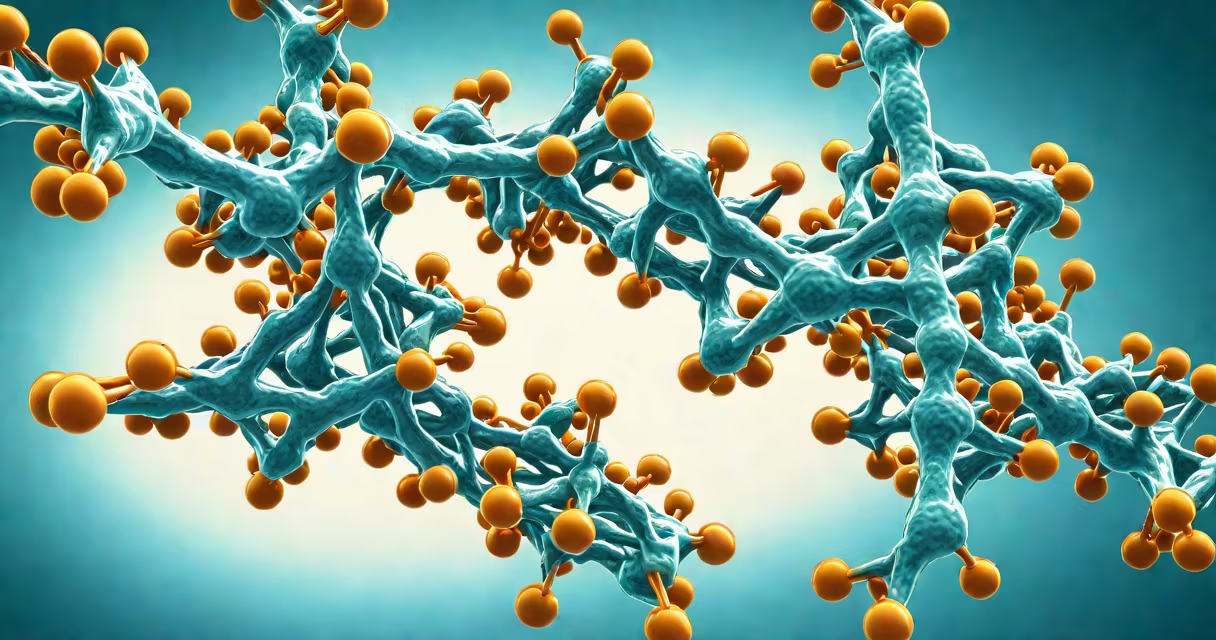
Antibodies are glycoproteins classified as immunoglobulins, produced by plasma cells in response to foreign antigens. They are central to adaptive immunity, binding specifically to pathogens or abnormal cells to mark them for destruction.
These proteins are synthesized by B lymphocytes after activation and differentiate into plasma cells. Each antibody has a unique antigen-binding site shaped to fit a specific molecular structure-like a lock and key-ensuring precise targeting of threats such as bacteria, viruses, or cancer cells.
Antibodies are composed of four polypeptide chains: two identical heavy chains and two identical light chains, linked by disulfide bonds. This quaternary structure forms a characteristic Y-shape, with the variable regions at the tips responsible for antigen recognition and the constant regions determining effector functions.
When an antigen enters the body, B cells encounter it via surface receptors. After activation by helper T cells, B cells proliferate and differentiate into plasma cells that secrete large amounts of antibodies into the bloodstream and tissues.
Each antibody binds to a specific epitope-the small region of an antigen recognized by the immune system. Binding can neutralize toxins, prevent viral entry into host cells, or opsonize pathogens for phagocytosis. Some antibodies also activate the complement cascade, leading to membrane attack complex formation and cell lysis.
For example, during a flu infection, anti-hemagglutinin antibodies bind to the hemagglutinin protein on the virus's surface. This prevents the virus from attaching to respiratory epithelial cells, blocking infection and enabling immune clearance.
There are five major classes of antibodies, each with distinct structural features and biological roles. These classes are defined by differences in their heavy chain constant regions.
| Class | Heavy Chain | Abundance | Primary Function |
|---|---|---|---|
| IgG | γ (gamma) | 75-80% | Most common in blood; neutralizes pathogens, activates complement, mediates opsonization |
| IgM | μ (mu) | 10% | First responder; pentameric form enhances avidity; strong complement activator |
| IgA | α (alpha) | 10-15% | Found in mucosal secretions (saliva, breast milk); protects mucosal surfaces |
| IgD | δ (delta) | <1% | Present on B cell surface as receptor; role in B cell activation |
| IgE | ε (epsilon) | <1% | Binds to mast cells and basophils; triggers allergic reactions and defends against parasites |
Each class differs in size, charge, and tissue distribution. For instance, IgM is too large to cross the placenta, while IgG readily crosses into fetal circulation, providing passive immunity during early infancy.
A non-obvious distinction: despite being produced by plasma cells, antibodies are not secreted as monomers in most cases. IgM is secreted as a pentamer-five monomeric units joined by a J chain-increasing its ability to agglutinate pathogens and activate complement more efficiently than monomeric forms.
Antibodies are often mistaken for cytokines or hormones due to their role in signaling. However, they do not act as messengers. Instead, they are effectors-directly binding targets and recruiting other immune components.
Another confusion arises around the term "antibody" versus "immunoglobulin." While interchangeable in casual use, "immunoglobulin" is the formal biochemical term. All antibodies are immunoglobulins, but not all immunoglobulins are antibodies-some are involved in B cell receptor signaling without being secreted.
Antibodies are not inherently protective. Their effectiveness depends on specificity, affinity, and the presence of effector mechanisms. A high-affinity IgG can neutralize a virus, but a low-affinity one may fail to bind effectively, allowing infection to progress.
In clinical diagnostics, monoclonal antibodies are engineered to detect specific proteins. For example, the drug trastuzumab (Herceptin) is a humanized IgG1 antibody targeting HER2 receptors on breast cancer cells. It binds to the extracellular domain of HER2, inhibiting downstream signaling pathways that promote tumor growth.
Trastuzumab's mechanism involves both direct inhibition and recruitment of immune cells via Fc-mediated ADCC (antibody-dependent cellular cytotoxicity). In trials, patients with HER2-positive metastatic breast cancer treated with trastuzumab showed a median progression-free survival of 9.1 months compared to 5.8 months with chemotherapy alone.
This demonstrates how understanding antibody structure enables targeted therapy design. The choice of IgG subclass affects half-life, complement activation, and Fc receptor binding-critical factors in drug development.
While working in a lab studying autoimmune diseases, I observed that serum samples from lupus patients contained high levels of anti-nuclear antibodies (ANAs), primarily IgG and IgM. These autoantibodies bound to nuclear antigens like double-stranded DNA, forming immune complexes that deposited in kidneys and caused inflammation. This confirmed that antibodies, while essential for defense, can also drive pathology when misdirected.