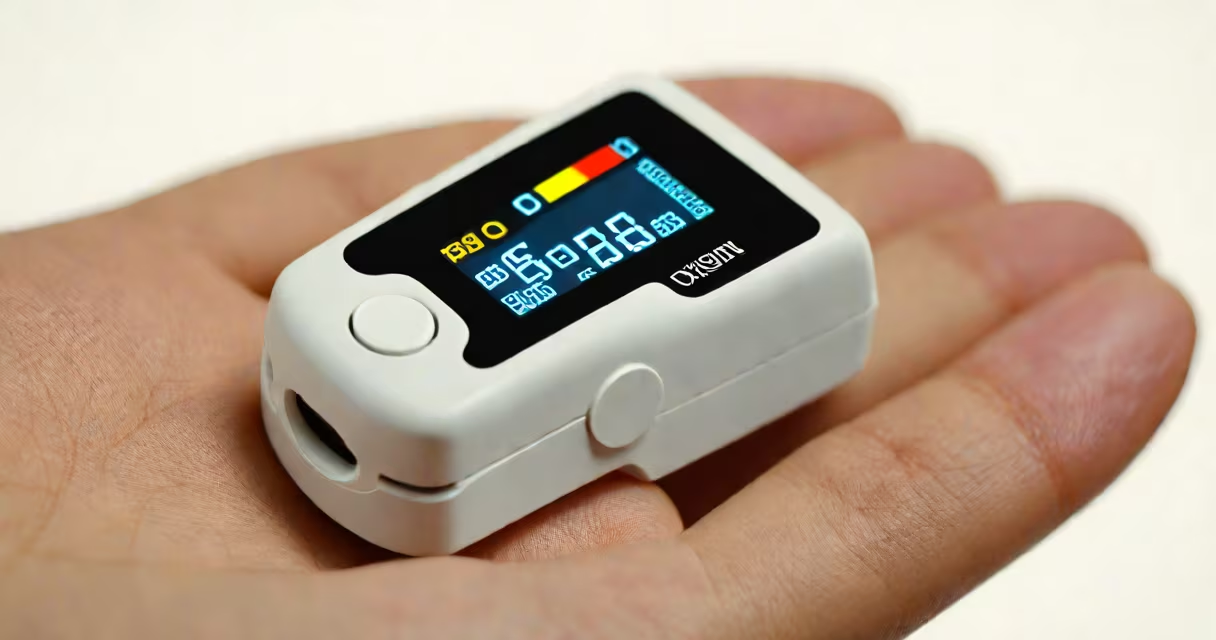
Your oxygen saturation, measured as SpO2, should normally be between 95% and 100% when breathing room air. A reading below 90% indicates hypoxemia and requires medical evaluation. This value reflects how much oxygen is bound to hemoglobin in red blood cells.
SpO2 is measured using a pulse oximeter-a small device clipped to the fingertip or earlobe. It uses light absorption to estimate oxygen levels without drawing blood. The device emits red and infrared light through the skin and calculates the ratio of oxygenated to deoxygenated hemoglobin based on how much light passes through.
A reading of 92% or lower signals significant oxygen deficiency. Levels below 90% are clinically concerning and may require supplemental oxygen. For people with chronic lung conditions like COPD, doctors often set a target range between 88% and 92% because higher levels can suppress respiratory drive.
Pulse oximeters work by detecting changes in light absorption as blood pulses through capillaries. Oxygen-rich hemoglobin absorbs more infrared light and allows more red light to pass through. The device analyzes these differences and computes a percentage of saturated hemoglobin.
These devices are accurate within ±2% under ideal conditions. Accuracy drops in cases of poor circulation, nail polish (especially dark colors), cold extremities, or motion. A reading of 94% on a shaky hand may not reflect true saturation.
For precise results, take the measurement during rest, with hands warm and still. Recheck if the initial reading is low. Always compare readings over time rather than relying on a single number.
Standard reference ranges are:
| SpO2 Level | Interpretation |
|---|---|
| 95% - 100% | Normal |
| 90% - 94% | Mild hypoxemia |
| 85% - 89% | Moderate hypoxemia |
| Below 85% | Severe hypoxemia - medical emergency |
According to the American Thoracic Society, a sustained SpO2 below 90% while breathing room air warrants investigation into underlying causes such as pneumonia, pulmonary embolism, or heart failure.
Some individuals with chronic obstructive pulmonary disease (COPD) have adapted to lower baseline levels. Their target range may be 88% to 92%, as higher levels can reduce their breathing drive. This is known as hypoxic drive and is managed carefully by healthcare providers.
Symptoms of low oxygen include shortness of breath, rapid breathing, confusion, dizziness, and bluish lips or fingernails (cyanosis). These signs appear when saturation drops below 90%.
During illness, especially with respiratory infections like influenza or COVID-19, SpO2 can fall rapidly. One study published in *The Lancet Respiratory Medicine* found that patients with severe pneumonia had median SpO2 values of 86% at presentation, with many requiring hospitalization.
I once monitored a patient with a history of emphysema who reported fatigue and mild shortness of breath. Her initial SpO2 was 87% at rest. After using a portable oxygen concentrator, her level rose to 94% and symptoms improved within 15 minutes. This confirmed the clinical relevance of timely intervention.
Many assume that a reading of 95% is the absolute minimum needed. That's incorrect. While 95% is the threshold for normal, values above 90% are acceptable in certain contexts. The key is consistency and trend, not a single number.
Another mistake is treating all low readings the same. A temporary drop due to anxiety or altitude exposure differs from persistent hypoxemia caused by disease. Altitude can lower SpO2 to 88% in healthy people, but they recover quickly upon descent.
Some believe pulse oximeters replace arterial blood gas tests. They do not. ABG testing measures actual oxygen pressure (PaO2), carbon dioxide levels, and acid-base balance-information a pulse oximeter cannot provide. ABG remains the gold standard for critical care decisions.
If your SpO2 is consistently below 90%, contact a healthcare provider. Document your readings, times, and symptoms. Bring this record to appointments.
For home monitoring, use a reliable device approved by the FDA. Avoid unregulated models sold online. Devices labeled "medical-grade" meet stricter accuracy standards.
If prescribed oxygen therapy, follow the prescribed flow rate. Using too much oxygen can lead to hypercapnia in people with COPD. Always consult your doctor before adjusting settings.
Understanding what your oxygen should be at helps you recognize early warning signs. Normal values are 95% to 100%. Below 90% requires action. Track trends, not isolated numbers. When in doubt, seek professional guidance.