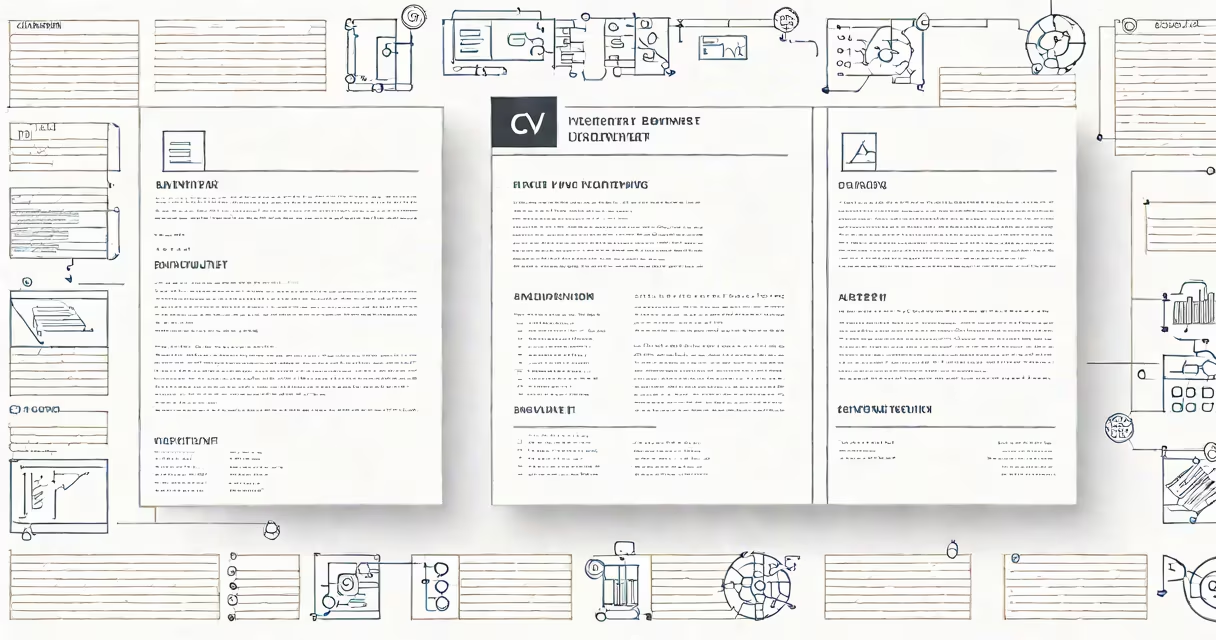
A CV (curriculum vitae) is a detailed document listing academic qualifications, professional experience, publications, presentations, and other accomplishments relevant to a job or academic position. It typically spans multiple pages and is used primarily in academia, research, medicine, and international roles.
CVs differ from resumes in length, focus, and regional usage. While a resume is concise and tailored to a specific role, a CV is complete and remains consistent across applications. In the U.S., resumes dominate job markets; in Europe and academic circles, CVs are standard.
The structure of a CV follows a clear hierarchy: personal details, education, work experience, research, publications, awards, and references. Each section supports the applicant's credibility and alignment with the opportunity.
A CV functions as a narrative of professional and academic development. It presents evidence of capability through dates, titles, institutions, and measurable outcomes. Employers and admissions committees use it to assess fit, consistency, and potential.
For example, a researcher applying for a postdoctoral fellowship in biochemistry must include their PhD dissertation title, lab techniques mastered, peer-reviewed papers published in journals like Nature or Cell, and conference presentations. These details validate expertise beyond what a resume can convey.
CVs are often updated annually. A single version may serve multiple purposes-grant applications, tenure reviews, or job searches-without rewriting. This adaptability makes them efficient tools for long-term career documentation.
Every CV contains standardized sections. The most common are:
| Section | Content Type | Example Entry |
|---|---|---|
| Contact Information | Name, email, phone, LinkedIn, institutional affiliation | Dr. Elena Rodriguez | [email protected] | +1 (555) 123-4567 |
| Education | Degrees, institutions, dates, honors | PhD in Molecular Biology, Stanford University, 2018-2023 (summa cum laude) |
| Work Experience | Positions, organizations, dates, responsibilities | Postdoctoral Fellow, Harvard Medical School, 2023-2025. Led team studying gene-editing efficiency in zebrafish models. |
| Publications | Journals, citations, DOI links | "CRISPR-Cas9 Efficiency in Vertebrate Embryos," *Nature Biotechnology*, 2024, doi:10.1038/s41587-024-02105-3 |
| Presentations | Conferences, topics, locations | Keynote Speaker, International Symposium on Genetic Engineering, Berlin, 2023 |
| Awards & Grants | Funding bodies, amounts, duration | National Science Foundation Grant, $120,000, 2022-2024 |
Some fields require additional sections. Medical professionals list board certifications and clinical rotations. Academics include teaching experience and course syllabi. Artists may include exhibitions and commissions.
One non-obvious rule: avoid including photos unless explicitly requested. In the UK and EU, including a photo violates anti-discrimination laws under the EU Equal Treatment Directive (2000/43/EC). Even in countries where it's permitted, photos can trigger unconscious bias during screening.
Many people assume a CV is interchangeable with a resume. They are not. A resume is typically one page, focused on recent roles, and customized per job. A CV is longer, permanent, and includes historical detail.
Another misconception is that a CV must include every job held. That's incorrect. Only relevant positions should appear. For example, a software engineer applying for a machine learning role should show internships at AI labs, not retail jobs from high school-even if they were held.
Some applicants list hobbies or interests. This is acceptable only if they demonstrate transferable skills. Listing "reading philosophy" adds little value. But "volunteer mentorship in STEM outreach programs" shows leadership and community engagement.
I once reviewed a CV from a candidate applying for a research position at a German university. Their CV included a photo and a list of 15 unrelated freelance gigs. After removing both, the application was shortlisted. The hiring committee later confirmed that the photo had triggered automatic filtering in their HR system.
CVs are standard in academic, medical, scientific, and government sectors. They're required for grant applications, faculty appointments, and international job placements.
In the UK, the National Health Service (NHS) requires a CV for clinical staff. The European Union's Erasmus+ program mandates a CV for researchers applying for mobility grants. In Canada, immigration applications for skilled workers include a CV as part of the Express Entry process.
For non-academic roles, especially in tech or finance, a CV may still be expected. A 2023 survey by the Royal Society of Arts found that 68% of UK employers in STEM fields preferred CVs over resumes for senior technical hires.
Structure matters. Use reverse chronological order. Start with the most recent position. Use consistent formatting-same font size, spacing, and bullet style throughout.
Use action verbs and quantify results. Instead of "Responsible for managing a team," write "Led a team of five researchers; delivered three projects under budget and ahead of schedule."
Consider this example: Dr. James Wu applied for a tenure-track position in environmental science. His original draft listed his PhD work under "Experience" with vague descriptions. After restructuring, he moved the project details into a dedicated "Research Projects" section, added metrics like "achieved 92% accuracy in climate modeling using satellite data," and cited two journal articles. He was invited for an interview within two weeks.
Always tailor your CV to the audience. A CV for a university job emphasizes publications and teaching. One for a private-sector research role highlights patents and industry collaborations. Avoid generic templates. Customization increases visibility in applicant tracking systems (ATS).