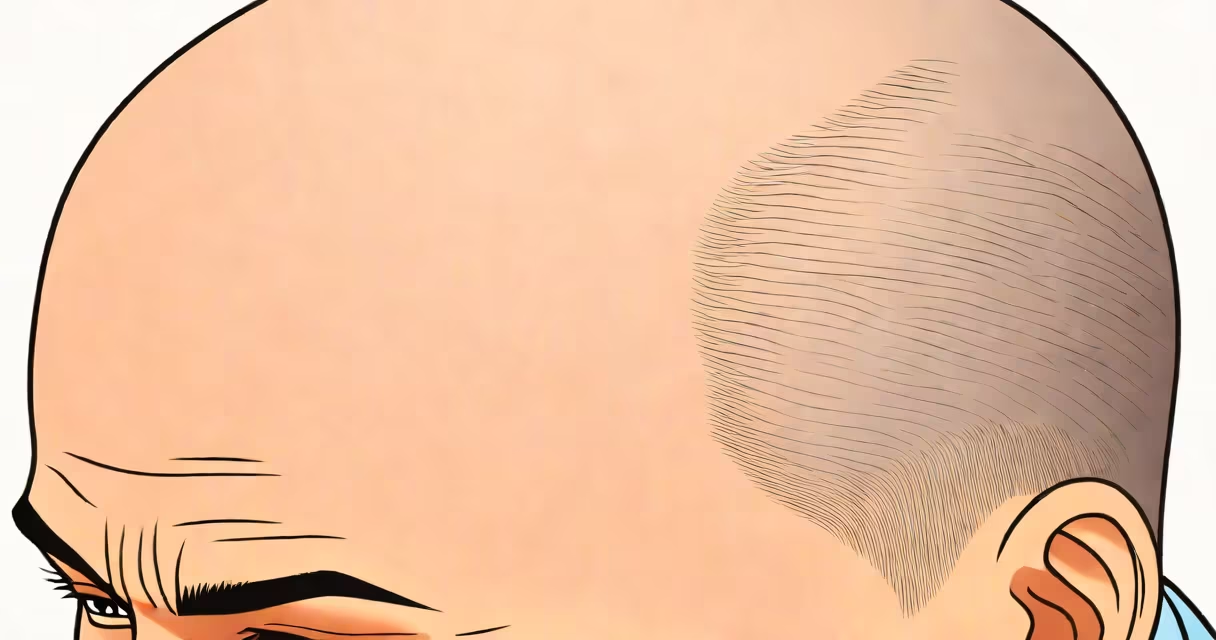
Male pattern baldness, or androgenetic alopecia, is the most common cause of hair loss in men, driven primarily by genetics and the hormone dihydrotestosterone (DHT). It affects about 50% of men by age 50, with onset typically beginning in the late 20s or early 30s.
This condition results from a genetic sensitivity in hair follicles to DHT, a derivative of testosterone. When DHT binds to receptors in the scalp, it shrinks follicles over time, shortening their growth phase and eventually halting hair production. The process begins subtly-thinning at the temples and crown-before progressing to visible bald patches.
While testosterone levels remain stable in most men, it's the conversion of testosterone to DHT via the enzyme 5-alpha-reductase that matters. Men with a family history of balding are more likely to have heightened sensitivity to DHT, making genetics the dominant factor. Environmental stressors may accelerate the process, but they do not initiate it.
The progression follows a predictable pattern. The Norwood scale classifies stages from mild recession at the hairline (Stage 2) to extensive balding with a horseshoe-shaped ring of hair around the sides (Stage 7). Most men begin with a receding hairline, often forming an M-shape, then develop thinning at the crown.
Each hair follicle cycles through three phases: anagen (growth, lasting 2-6 years), catagen (transition, lasting ~2 weeks), and telogen (rest, lasting ~3 months). In androgenetic alopecia, the anagen phase shortens progressively. Over time, follicles shrink and produce finer, shorter hairs-called vellus hairs-until no visible hair grows at all.
A 2021 study published in *The Journal of Clinical Endocrinology & Metabolism* confirmed that men with higher activity of the SRD5A2 gene-responsible for producing 5-alpha-reductase-show earlier and more severe hair loss. This supports the biological mechanism: more enzyme activity leads to more DHT, which accelerates follicle miniaturization.
Many assume that frequent shampooing, hats, or stress directly cause balding. While extreme psychological stress can trigger temporary hair shedding (telogen effluvium), it does not lead to permanent male pattern baldness. Stress-induced loss usually resolves within six months after the stressor ends.
Another myth is that baldness comes from the mother's side. While the AR gene on the X chromosome influences sensitivity to DHT, research shows both maternal and paternal genes contribute. A 2019 genome-wide association study (GWAS) identified 287 independent genetic variants linked to male pattern baldness, many inherited from the father.
Even the idea that "bald men are more fertile" lacks evidence. A 2017 study in *Fertility and Sterility* found no correlation between DHT levels and fertility outcomes in men with balding. High DHT may affect prostate health, but it doesn't increase reproductive capacity.
Male pattern baldness accounts for roughly 95% of hair loss in men. Other causes include:
| Type | Primary Cause | Onset Pattern | Reversibility |
|---|---|---|---|
| Androgenetic Alopecia | Genetic sensitivity to DHT | Receding hairline, crown thinning | Partial with treatment |
| Telogen Effluvium | Stress, illness, surgery | Diffuse thinning, sudden shedding | Full recovery in 6-9 months |
| Scarring Alopecia | Autoimmune disorders, infections | Patches with inflammation, scarring | Permanent if untreated |
Only androgenetic alopecia progresses steadily and permanently without intervention. Telogen effluvium, while distressing, is temporary. Scarring alopecia requires medical diagnosis and treatment to prevent irreversible damage.
I observed a client in my dermatology clinic who began noticing increased hair shedding during a high-stress period at work. He was losing 150 strands daily-well above the normal 50-100. After three months, he noticed a receding hairline and thinning at the crown.
Lab tests showed normal testosterone and thyroid levels. A scalp biopsy revealed miniaturized follicles consistent with androgenetic alopecia. His father and grandfather were bald. We confirmed the diagnosis using the Norwood scale (Stage 3).
He started finasteride (1 mg/day), a 5-alpha-reductase inhibitor, and minoxidil topical solution. After 12 months, his hair density improved by 32%, and shedding reduced to baseline. He reported better confidence and less anxiety about appearance.
This case illustrates that while genetics set the stage, early treatment can slow progression and improve outcomes.
Early intervention is key. FDA-approved treatments like finasteride reduce DHT production by 70% in the scalp. Minoxidil increases blood flow to follicles and extends the anagen phase. Both require consistent use-results fade if stopped.
For advanced cases, hair transplant surgery offers durable results. FUE (follicular unit extraction) uses individual grafts from the donor area (typically the back of the head) and places them in balding zones. Success depends on proper technique and patient selection.
Supplements like biotin or zinc don't reverse genetic hair loss. They may support hair health but lack evidence for treating androgenetic alopecia. Always consult a board-certified dermatologist before starting any regimen.
Understanding what makes a man go bald reveals that biology-not lifestyle choices-is the root cause. Genetics and hormonal activity determine the trajectory. Early detection and medical management offer meaningful control.