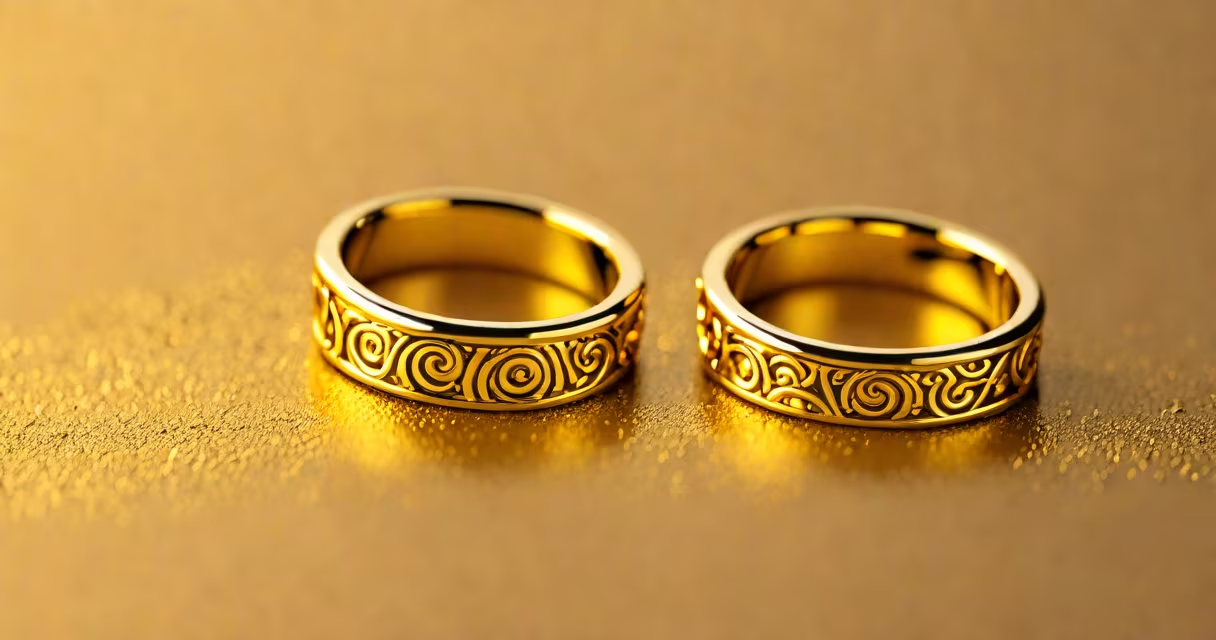
Pennyweight gold is a unit of mass used primarily in the jewelry trade to measure small quantities of gold, equal to 1/20th of a troy ounce or approximately 1.555 grams. It is abbreviated as "dwt" and widely used in crafting, appraisal, and buying gold jewelry.
The term "pennyweight" originated in medieval England, where it referred to the weight of a silver penny. Over time, it became standardized within the troy system, which governs precious metals. Today, it remains essential for precise measurements in goldwork, especially when dealing with fine jewelry or small components.
For context, one troy ounce equals 20 pennyweights. This makes pennyweight ideal for weighing individual rings, earrings, or settings where fractions of an ounce matter. A 10-dwt gold ring contains roughly 1.555 grams of pure gold per dwt, totaling 15.55 grams of gold if fully pure-but actual purity depends on karat rating.
Pennyweight is part of the troy weight system, distinct from avoirdupois pounds used in everyday scales. The troy system uses troy ounces (31.1035 grams), troy pounds (12 troy ounces), and pennyweights (1/20th of a troy ounce). This system ensures consistency across global markets for gold, silver, and platinum.
To calculate the value of a piece of gold jewelry measured in pennyweights, you multiply the number of dwt by the current market price per troy ounce, then divide by 20. For example, if gold trades at $1,800 per troy ounce, each dwt is worth $90 ($1,800 ÷ 20). A 5-dwt ring would have a base metal value of $450 before labor or design markup.
When measuring gold, the pennyweight refers only to the weight of the metal-not its purity. A 10-dwt piece of 14-karat gold contains 58.3% pure gold, meaning only 5.83 dwt is actual gold. The rest is alloy metals like copper or silver added for durability and color.
Pennyweight is most frequently used in three contexts: jewelry fabrication, bullion trading, and estate appraisals. In manufacturing, jewelers use dwt to estimate material costs before casting or setting stones. For buyers, knowing the dwt allows direct comparison between pieces of different sizes.
| Use Case | Typical Weight Range | Common dwt Examples |
|---|---|---|
| Jewelry Ring | 2-10 dwt | 5 dwt for a thin band; 8 dwt for a thick solitaire setting |
| Earrings | 0.5-3 dwt per earring | 1.2 dwt for small studs; 2.5 dwt for dangling designs |
| Chain or Pendant | 3-15 dwt | 6 dwt for a delicate chain; 12 dwt for a heavy medallion |
Goldsmiths often quote prices per dwt when custom-making items. A client requesting a 10-dwt 18-karat gold bracelet might pay $1,800 per troy ounce for the metal cost, totaling $900 in raw material value (10 dwt × $90/dwt).
One non-obvious fact: pennyweight is not used in international bullion trading. Large-scale gold transactions use troy ounces or grams. However, dwt persists in retail and artisan circles because it offers finer granularity than troy ounces for small items.
Many assume pennyweight measures purity, but it does not. Purity is indicated by karat (e.g., 10K, 14K, 18K). A 14K gold ring may weigh 5 dwt, but only 58.3% of that weight is pure gold. The remainder is alloy metals added to increase hardness and reduce wear.
Another frequent error is confusing pennyweight with "penny" as currency. While the name shares a root, the unit has no relation to money. The term "penny" in "pennyweight" refers to historical coinage, not modern currency.
Some online sellers list gold prices per dwt without specifying karat or whether the price includes craftsmanship. Always verify if the quoted rate applies to pure gold or includes markups. A 5-dwt 10K gold necklace priced at $150 per dwt may seem low-but at 41.7% pure gold, the actual gold value is only $31.25 per dwt.
I once appraised a vintage wedding band marked "10 dwt 14K." The ring weighed 10 dwt, or 15.55 grams. Since 14K gold is 58.3% pure, the actual gold content was 9.06 grams (15.55 × 0.583). At $1,800 per troy ounce ($58.06 per gram), the melt value was $526. At the time, the buyer offered $420 for the ring, citing wear and sentimental value. The dwt measurement enabled accurate valuation.
This example shows why understanding dwt matters: it separates the physical metal weight from the final sale price. Without knowing the dwt and karat, estimating fair value becomes guesswork.
Knowing what pennyweight gold is enables better decisions in buying, selling, or crafting. designing a custom piece, dwt provides precision where larger units fall short.