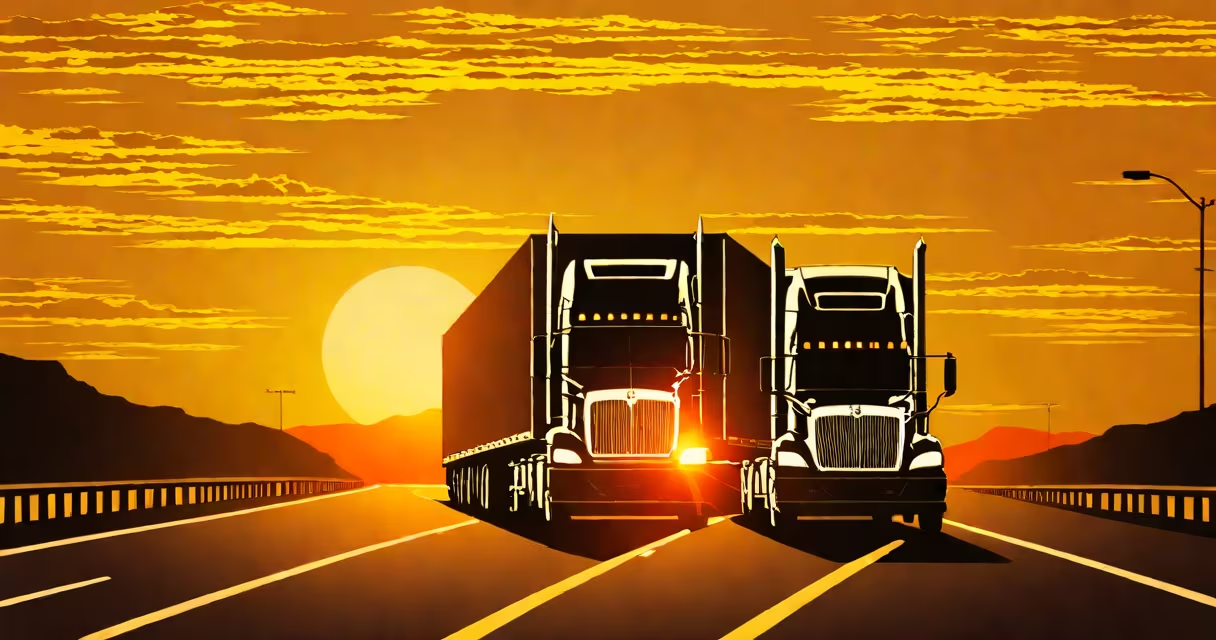
Over the road trucking is the transportation of freight across state lines using large commercial motor vehicles, typically driven by professional drivers under federal regulations. It involves long-distance hauls, often spanning hundreds or thousands of miles, and forms the core of national supply chains.
These trucks carry everything from electronics and clothing to food and industrial materials. Drivers operate under strict Department of Transportation (DOT) rules governing hours of service, vehicle inspections, and safety standards. Most over the road drivers work for carriers, owner-operators, or contract freight companies.
The term "over the road" specifically refers to interstate travel, distinguishing it from local or regional delivery routes. It's not just about driving-it's about logistics, compliance, and reliability. A single shipment may cross multiple states, requiring coordination between dispatchers, terminals, and shippers.
Every over the road trip begins with a load assignment. Dispatchers match available trucks with freight that needs moving. The driver receives a route, pickup location, delivery address, and a deadline. This information is often sent via electronic logging devices (ELDs) and fleet management software.
Before departure, the driver performs a pre-trip inspection. This includes checking brakes, tires, lights, fluid levels, and cargo securement. The Federal Motor Carrier Safety Administration (FMCSA) mandates this process to prevent accidents and ensure vehicle safety. Failure to complete it can result in fines or grounding.
During transit, drivers must follow the 11-hour driving limit and 14-hour duty window set by FMCSA. They must take a 30-minute break after 8 consecutive hours of driving. These rules are enforced through ELDs that automatically track driving time and require daily logs. Violations can lead to penalties or suspension of operating authority.
There are several categories based on cargo type, equipment, and schedule. The most common include:
| Type | Cargo | Typical Distance | Driver Schedule |
|---|---|---|---|
| Flatbed | Heavy machinery, steel, lumber | 500-1,500 miles | Week-long trips, weekends off |
| Reefer | Perishable goods, frozen foods | 300-1,000 miles | Shorter runs, frequent stops |
| Step Deck | Large equipment, construction materials | 400-1,200 miles | Variable, often weekend trips |
| Container (Dry Van) | General freight, retail goods | 1,000+ miles | Extended trips, 7-14 days on the road |
Each type requires specialized training and equipment. For example, reefer drivers must monitor temperature settings to prevent spoilage. Flatbed drivers need to secure loads with straps and chocks to avoid shifting during transit.
A lesser-known fact: many over the road drivers don't return home until their entire trip ends. Some run 14-day cycles, staying in motels along the route. Others work "backhaul" schedules, picking up a load in one city and returning with a new one to reduce empty miles.
Over the road trucking handles roughly 70% of all freight movement in the United States by volume, according to the American Trucking Associations (ATA). It's essential for moving goods between manufacturing hubs, distribution centers, and retail chains.
For example, a shipment of 40-foot containers from a factory in Los Angeles travels to a warehouse in Chicago. A team of over the road drivers takes turns covering the 2,000-mile stretch, splitting the process into segments. Each leg is assigned to a qualified driver with a valid Commercial Driver's License (CDL) and a clean record.
Without this system, retailers couldn't restock shelves in time. Supply chains would collapse. Even online orders depend on over the road routes-Amazon's fulfillment centers rely on long-haul trucks to move packages from sorting hubs to regional centers.
Many people assume over the road trucking is just driving. But it's a regulated profession involving scheduling, paperwork, and constant communication. Drivers aren't free agents-they report to dispatchers, log every hour, and comply with federal rules.
Another myth: all over the road drivers earn high pay. While experienced drivers can make $60,000-$80,000 annually, entry-level positions start around $40,000. Pay varies by region, carrier, and load type. Reefer drivers often earn more due to higher fuel costs and temperature control requirements.
Some confuse over the road with local delivery. Local routes stay within a 100-mile radius and usually involve shorter shifts. Over the road trips last days or weeks. The difference isn't just distance-it's operational structure and regulatory oversight.
I once drove a dry van from Atlanta to Seattle with a team of three drivers. We covered 2,500 miles in five days. The route included mountain passes, desert stretches, and urban zones. Each driver took a 12-hour shift, alternating with rest periods. We logged every mile, stopped at designated rest areas, and reported issues through the carrier's app. It wasn't just endurance-it was precision.
Over the road trucking requires a CDL Class B or C, depending on vehicle weight. Drivers must pass written exams, vision tests, and a skills test. They also need a medical examiner's certificate every two years.
Federal law requires all trucks over 10,000 pounds to have ELDs. These devices record driving time, engine use, and location. Data is stored for six months and can be audited by FMCSA. Non-compliance results in fines up to $10,000 per violation.
Carriers must also maintain a safety management program. This includes tracking accident rates, drug testing, and driver training. The FMCSA assigns safety ratings (e.g., "Satisfactory," "Unsatisfactory") that affect a company's ability to operate.
Understanding how over the road trucking functions helps clarify its role in everyday life. It's not just about big rigs on highways-it's about delivering the products we use daily, safely and efficiently.
Over the road trucking is a complex, regulated system that keeps the economy moving. It relies on trained professionals, standardized procedures, and continuous monitoring. Without it, modern commerce would stall.